
FAA 107 Test Study Plans for Shift Workers
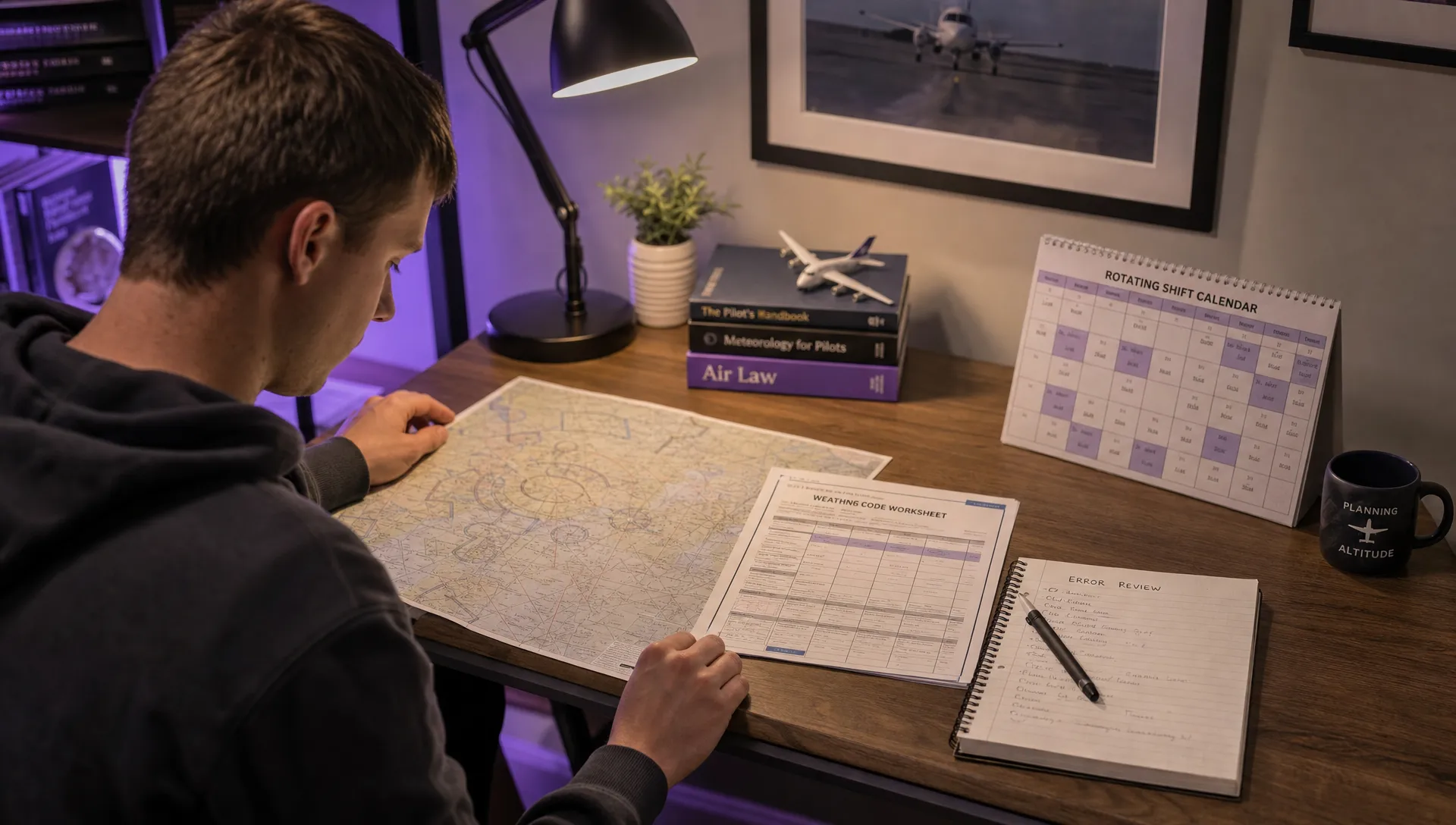
Preparing for the faa 107 test while working nights, rotating shifts or emergency call-outs needs a different approach from a conventional evening study timetable. Your available hours change, fatigue makes difficult material harder to absorb and a missed session can quickly disrupt a rigid plan.
The solution is to organise revision around repeatable study blocks rather than fixed weekdays. Below are four-, six- and eight-week options, a practical subject sequence and clear checks for deciding when to book. The schedules are planning examples, not official study-hour requirements or guarantees of passing.
Start with the right exam and official materials
This guide focuses on the initial Unmanned Aircraft General, Small (UAG) knowledge test associated with the US Remote Pilot Certificate. If you already hold an FAA pilot certificate, check the FAA’s certification pathways before booking, as your route may differ.
The FAA Airman Knowledge Testing Matrix lists the UAG test as 60 questions, with two hours allowed and a passing score of 70%. Check that document again when booking rather than relying on an old course screenshot.
For faa 107 test preparation, build your syllabus from the Remote Pilot document available through the FAA’s Airman Certification Standards page. Its subject areas include operating rules, airspace, weather, aircraft performance, emergency procedures and human factors.
Choose one main learning resource that follows that syllabus, then add practice questions and an error notebook. Switching between several courses can create the appearance of progress while leaving the same weak topics unresolved.
Keep certification administration separate from revision. Dronedesk’s step-by-step Part 107 application guide provides a separate place to explore that process without turning every study session into a booking task.
Choose a timetable that survives your rota
Use three session lengths: a 10-minute retrieval session, a 25-minute focused lesson and a 50-minute application session. Short retrieval sessions maintain familiarity; longer sessions give you room to work through charts and scenarios without rushing.
Choose your schedule using the least predictable week in your rota, not the easiest one.
| Plan | Best fit | Core study blocks each week | Core study time per week |
|---|---|---|---|
| Four weeks | Candidates with relevant aviation knowledge and reliable recovery time | Five 25-minute blocks plus one 50-minute block | 2 hours 55 minutes |
| Six weeks | Shift workers who can protect several short sessions | Four 25-minute blocks plus one 50-minute block | 2 hours 30 minutes |
| Eight weeks | Beginners or people with frequent overtime and changing shifts | Three 25-minute blocks plus one 50-minute block | 2 hours 5 minutes |
For each faa 107 test schedule, add two separate two-hour mock-test appointments. Those are additional to the weekly study blocks shown above. Allow further time to review mistakes and expand the plan if your diagnostic results reveal substantial gaps.
Place sessions relative to your main sleep period: “after waking”, “before leaving for work” or “on a recovery day”. That is more durable than promising to study every Tuesday at 19:00.
Leave at least one unallocated slot each week. A rota without spare capacity has nowhere to absorb overtime, family commitments or a difficult topic.
A six-week faa 107 test study plan
The six-week option provides a useful starting point because it separates first exposure from mixed practice. Work through the sequence even if your calendar weeks start on different days.
| Week | Main focus | Evidence that you are progressing |
|---|---|---|
| 1 | Diagnostic questions, operating rules and unfamiliar terminology | A topic checklist and an error notebook organised by subject |
| 2 | Airspace, sectional charts and the testing supplement | You can explain the chart evidence behind an answer |
| 3 | Aviation weather and weather information | You can decode the material and explain its operational significance |
| 4 | Loading, performance, human factors and emergency procedures | You can reason through unfamiliar scenarios rather than recall isolated facts |
| 5 | Mixed practice, weak-topic repair and the first full mock | Your remaining weaknesses are specific and identifiable |
| 6 | Spaced review, a second full mock and test-day preparation | Your performance remains consistent on different questions |
Treat each week’s output as a checkpoint, not a demand to finish a set number of videos. Watching a lesson on airspace does not establish that you can interpret a new chart extract.
At the end of each week, explain one difficult concept aloud without notes. Then check the explanation against your source. If you cannot explain why the tempting wrong answer is wrong, that topic needs another session.
A disrupted week does not require restarting the programme. Move unfinished topics into the buffer slot and preserve the sequence.
Compressing the plan to four weeks
Combine the first two weeks only if a diagnostic shows that you already understand the fundamentals. Keep chart interpretation and weather application as substantial tasks rather than squeezing them into spare minutes.
A four-week faa 107 test plan should shorten the calendar, not remove retrieval practice or mock-test review. Candidates with previous aviation experience may still need focused work on drone-specific material.
If work changes unexpectedly, extend the plan. A booking date is not evidence of readiness, and using annual leave for exhausted last-minute revision defeats the purpose of choosing a manageable schedule.
Stretching the plan to eight weeks
Spread the first four subject weeks across six weeks, then retain two weeks for mixed practice and mock tests. Revisit earlier subjects throughout, rather than leaving them untouched until the end.
The main risk with a longer schedule is forgetting material between sessions. Start each focused block with three questions from an earlier topic before opening the new lesson.
Keep the scope stable. Eight weeks gives you more spacing and recovery, not a reason to collect additional courses or rewrite every page of the study guide.
Match the task to your level of alertness
Not every available half-hour is equally useful. Put unfamiliar material into the part of your waking period when you can concentrate best, rather than automatically studying after work.
After a demanding shift, a faa 107 test session might consist of reviewing five familiar questions and recording tomorrow’s starting point. That can preserve continuity without pretending that tired reading is effective learning.
Use the following task allocation as a starting point:
- High concentration: New sectional-chart problems, unfamiliar weather material and full mock tests.
- Moderate concentration: A short lesson followed by closed-book questions and answer explanations.
- Low concentration: Familiar flashcards, organising errors and choosing the next study task.
If you keep rereading the same explanation or making errors you would normally catch, stop introducing new material. Move the session rather than borrowing time from your main sleep period.
Workers on call need an interruption rule as well. Pause ordinary revision when called away, but mark a disrupted mock as interrupted. Its score may still reveal knowledge gaps, although it is less useful as a measure of timed readiness.
Never turn a driving commute, active duty period or safety-critical monitoring task into a revision slot. Use genuinely available time, not time already committed to another responsibility.
Study for application, not answer recognition
Practice-question scores can improve simply because the wording becomes familiar. To check understanding, explain your answer before displaying the options or change one detail in the scenario and reconsider the outcome.
For chart questions, identify the relevant symbols and boundaries first. For weather questions, decode the information before deciding what it means for the operation. Keep the testing supplement beside you when the question requires it, so you practise finding information as well as recalling it.
Maintain a compact error notebook with four entries: the topic, your mistaken reasoning, the corrected explanation and the source you used to check it. Separate knowledge gaps from chart-reading mistakes and rushed reading. Each needs a different fix.
This approach makes faa 107 test revision useful beyond the exam. A survey crew or utility inspection team needs to explain decisions, not just select an answer. For a practical bridge into operational thinking, consider how the same information would fit into a structured drone flight risk assessment.
Revisit errors after a gap, using a fresh question where possible. Spaced repetition is more revealing than answering the same item correctly immediately after reading its explanation.
Use AI for practice structure, not regulatory authority
An AI assistant can turn a short passage of public FAA study material into retrieval prompts. Ask it to use only the supplied passage, identify the supporting text for each answer and flag anything the passage does not establish.
Then check its output yourself. Plausible explanations can still be wrong, especially where a question depends on a regulatory exception or a chart detail. Do not treat an AI-generated answer key as an official source.
For employers introducing these tools across a training group, French-language workplace AI training for employees and managers offers a route to developing prompting and document-based workflows. That is training in AI use, not Part 107 instruction.
Keep client information and sensitive operational documents out of personal study tools unless your employer has expressly approved their use. Public learning material is sufficient for building revision prompts.
Use mock tests to decide when to book
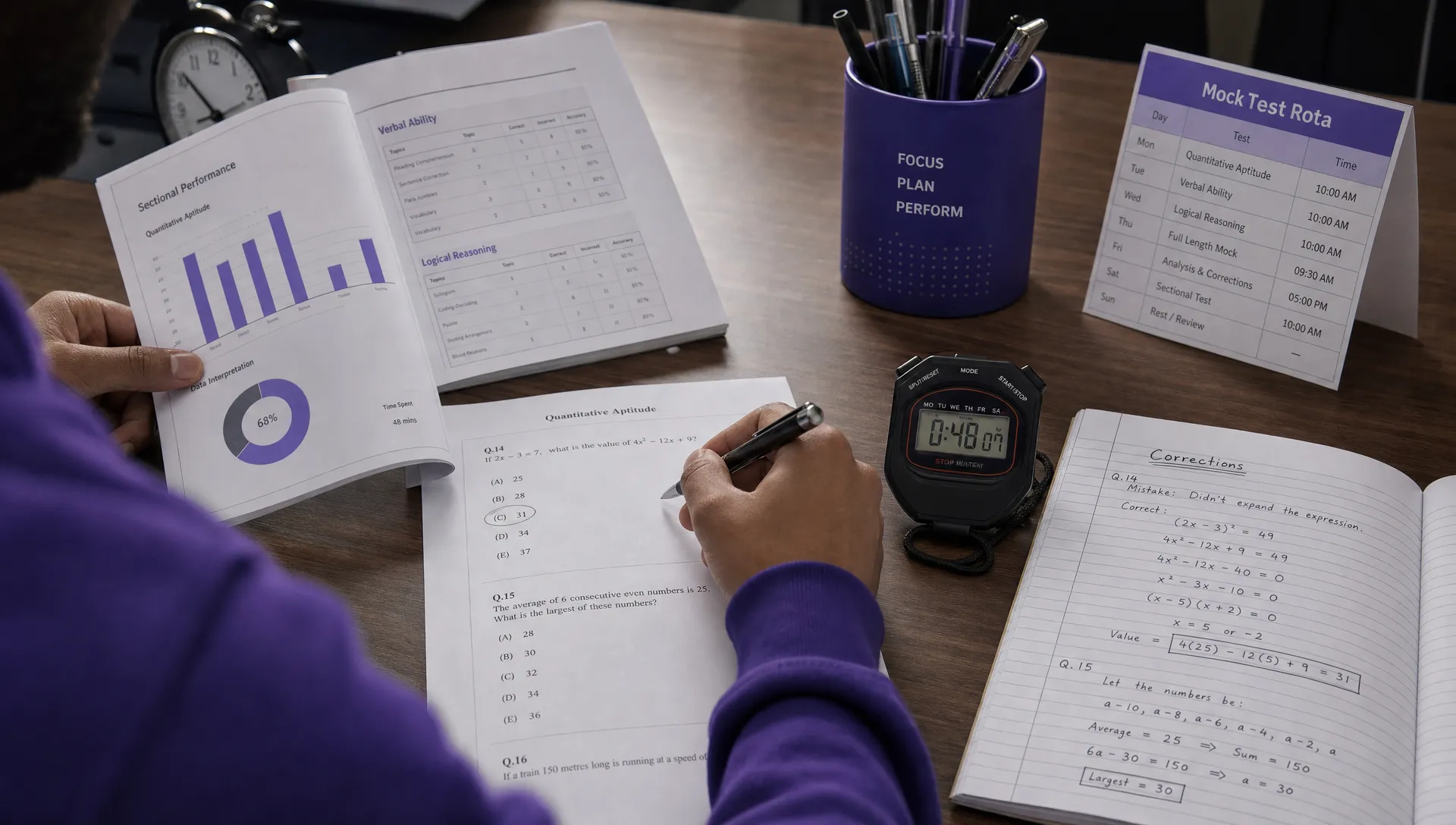
Reserve full mocks for an uninterrupted period after adequate rest. Use a representative set that you have not already memorised, follow its instructions and avoid pausing to look up answers.
For your faa 107 test preparation, a useful internal readiness target is at least 85% on two different, representative timed mocks. This is a suggested preparation margin, not an FAA requirement or a guarantee of passing.
The score alone is not enough. Review whether you can explain your answers, locate information in the supplement efficiently and maintain concentration throughout. A high overall score can hide a persistent weakness in one subject.
After the first mock, spend the next sessions repairing the weakest area rather than immediately taking another test. Check the second result with a different question set so that familiarity does not disguise the problem.
If you cannot complete a mock without interruption, arrange protected time before booking the real appointment. Shift workers may need to coordinate this with a manager or household member rather than hope a quiet window appears.
Choose an appointment that suits your actual sleep pattern. An early morning slot is not automatically sensible for someone finishing nights. Check the testing provider’s current identification, arrival and rescheduling instructions, then leave enough travel time to avoid starting under pressure.
Frequently asked questions
How hard is the faa 107 test for someone without aviation experience? The unfamiliar language can be the main obstacle. Charts, weather information and airspace concepts need repeated application, not just reading. Start with a diagnostic to locate gaps, then judge progress through explanations and fresh practice questions rather than how quickly you finish a course.
Can I prepare using only 15 minutes a day? Short sessions work well for retrieval and reviewing errors, but they are a poor fit for every task. Combine them with longer blocks for chart exercises, scenario work and full timed mocks. Your plan needs both continuity and uninterrupted practice.
What should I do if overtime wipes out a study week? Preserve your sleep and resume from the last completed checkpoint. Use your buffer slot for the most important unfinished task, then move the remaining schedule if necessary. Do not cram several missed sessions into one exhausted evening.
Should I book before I start studying? A date can provide structure, but it can also create pressure if your rota changes. A practical compromise is to identify a provisional test window, check appointment availability and commit once representative practice results support it. Review the provider’s current change and cancellation terms first.
Turn the plan into your next three sessions
Start your faa 107 test preparation by checking the official syllabus, completing a short diagnostic and assigning three study blocks around your next sleep periods. Choose the longer timetable if your rota regularly changes at short notice.
Once exam preparation is under control, review Dronedesk’s features against the way your team plans and manages drone work. Keep exam readiness and operational readiness as separate tasks, with deliberate time for both.
 FAA 107 Test Study Plans for Shift Workers →
 How to Match a DJI Flight Log to a Client Job →
 Drone Regulations Under 250 Grams for Mixed-Weight Fleets →
 Drone Safety Guidelines for Working Near Water →
 FAA Rules and Regulations for Drones on Shared Worksites →
 Drone Pilot 107 Refresher Training After a Career Break →
 How to Track Drone Regulations Worldwide as a Business →
 FAA Rules for Flying Drones at Night During Emergency Missions →
 How to Onboard an FAA 107 Pilot for Utility Inspections →
 FAA Drone Rules for Commercial Use on Construction Sites →