
How Utility Drones Fit Into Planned Maintenance Programmes
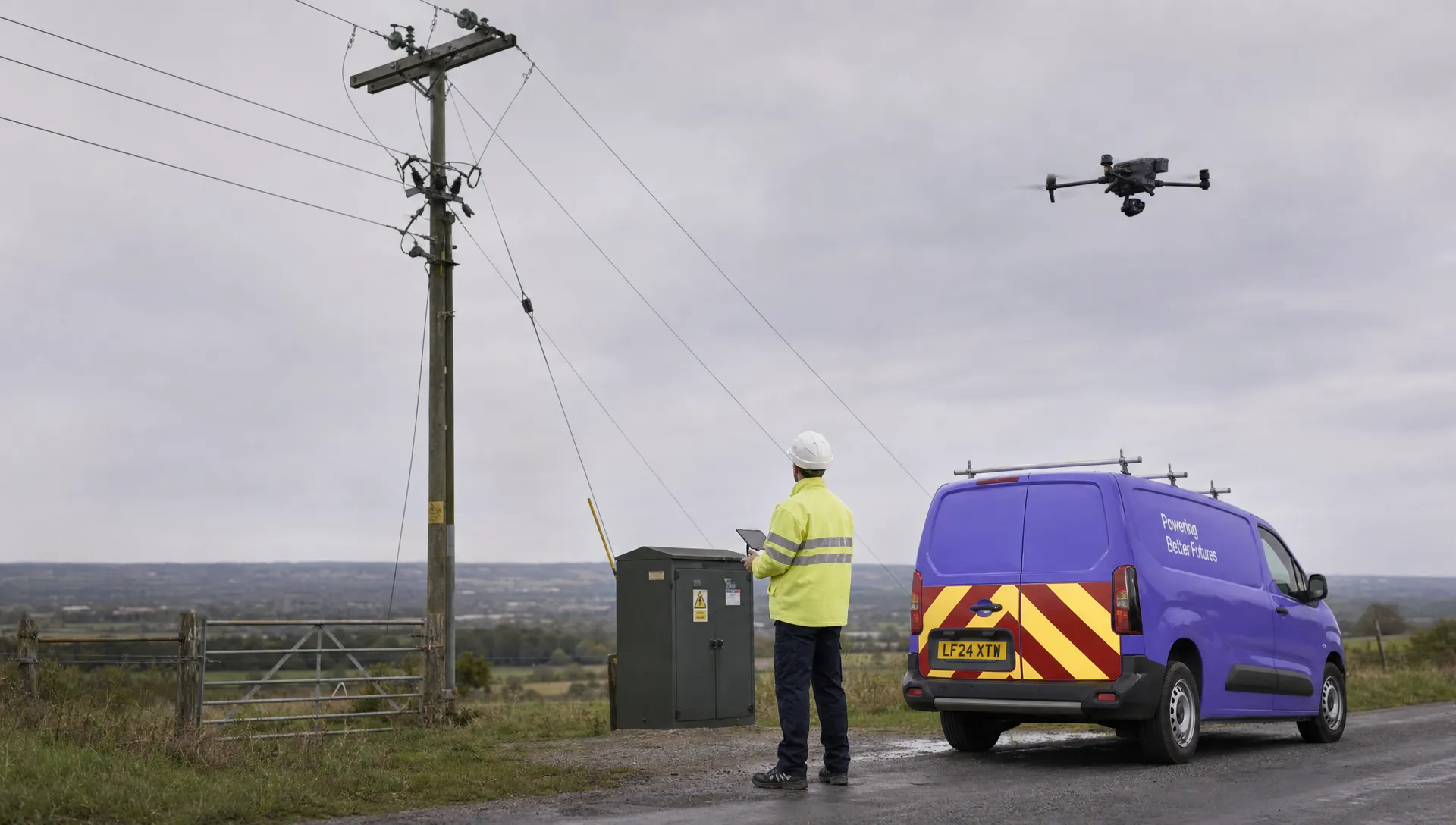
Utility drones fit into planned maintenance programmes as a repeatable inspection method, not as a replacement for the maintenance programme itself. Their value depends on whether the evidence they collect helps an asset engineer decide what needs attention, when work should happen and whether a repair has resolved the problem.
That distinction matters when inspections compete for limited budgets. A flight can produce hundreds of clear photographs without answering the question that prompted it. Equally, a small set of well-specified images can support a maintenance decision without requiring an initial close-access inspection.
For utility companies and their inspection contractors, the practical task is to connect aerial data collection with existing asset records, engineering review and work orders. Start with the maintenance decision, define the evidence needed to make it and then select the aircraft, sensors and operating model. Buying equipment first reverses that process.
Where utility drones fit in the maintenance cycle
A planned maintenance programme normally combines scheduled tasks with responses to observed deterioration. Drone inspections can inform both, provided their scope and limitations are clear.
For calendar-based maintenance, aerial evidence can help teams prepare access arrangements, identify components needing closer examination and estimate the work involved. For condition-based maintenance, comparable observations over time can help engineers assess whether deterioration warrants intervention.
| Asset or inspection area | Useful aerial evidence | Maintenance decision supported |
|---|---|---|
| Overhead lines and towers | Visible component damage, corrosion and vegetation proximity | Prioritise closer inspection, vegetation work or component replacement |
| Substations | Detailed visual records and thermal anomalies | Identify equipment requiring engineering investigation |
| Water infrastructure | External roof, structure and surface condition | Plan access, coating repairs or further structural assessment |
| Accessible pipeline corridors | Visible erosion, surface disturbance and encroachment | Target ground surveys or maintenance visits |
These observations do not establish every aspect of asset health. An external image cannot confirm internal pipe condition, and a thermal anomaly is not a diagnosis on its own. Electrical testing, structural assessment and other inspection methods remain necessary where the asset-care strategy requires them.
Assign an engineering owner to each inspection type before collection starts. That person should define what the evidence can support and when another method is needed.
Build a repeatable inspection specification
Utility drones produce more useful maintenance evidence when every crew works to the same inspection specification. A request to “inspect the tower” leaves too much open to interpretation.
Define the component being assessed, the defect being sought and the detail needed to recognise it. Include required viewing angles, contextual images and rules for identifying incomplete coverage. Reference images can help contractors understand what an acceptable submission looks like.
Each inspection package should contain:
- The asset identifier and component reference used by the maintenance team.
- Capture date, inspection purpose and relevant operating conditions.
- Required views with enough context to locate each observation.
- A record of obscured, inaccessible or uninspected components.
- A named reviewer and an agreed route for escalating concerning findings.
Avoid treating the number of photographs as a quality measure. Twenty nearly identical images may provide less coverage than six carefully specified views.
Repeatability also matters for comparison. If successive inspections use different viewpoints, resolutions or asset labels, apparent changes may reflect the collection method rather than deterioration. Where exact repeat capture is impractical, record the difference so reviewers understand the limits of the comparison.
Match the sensor to the defect
Selecting utility drones should follow the inspection requirement. Aircraft suitability depends on the payload, working environment and evidence quality needed, rather than a general ranking of the best inspection drone.
| Sensor | Useful maintenance applications | Main limitation to manage |
|---|---|---|
| RGB camera | Visible corrosion, damaged fittings and external condition records | Image detail, viewing angle, lighting and obscuration |
| Thermal camera | Finding temperature patterns that warrant investigation | Loading, weather, surface properties and reflected heat affect interpretation |
| LiDAR | Corridor geometry, vegetation assessment and spatial measurement | Survey accuracy, classification quality and the measurement method |
For thermal inspections, record relevant equipment loading and environmental conditions where available. Comparing images taken under very different conditions can produce misleading conclusions. A temperature difference should be reviewed in its engineering context rather than assigned a universal maintenance threshold.
For measured clearances, specify the required uncertainty and validation method. An attractive point cloud is not automatically suitable for an engineering measurement.
Assess the aircraft against the complete job as well. Payload compatibility, usable endurance, image stability and manufacturer-stated environmental limitations all affect delivery. Account for the return flight and contingencies when estimating coverage. Around electrical infrastructure, include electromagnetic interference and the aircraft manufacturer’s operating guidance in the planning assessment.
Connect findings to the asset-management system
The maintenance value of utility drones depends on a reliable handover between inspection and engineering. A folder of photographs should not become a separate, unofficial asset register.
Use the same asset identifiers as the organisation’s enterprise asset management system or computerised maintenance management system, often shortened to EAM and CMMS. Where location matters, align records with the geographic information system (GIS). Component-level references are particularly useful when several similar fittings appear on one structure.
Separate the observation from the decision. “Visible surface corrosion on the lower connection plate” describes evidence. “Replace within the next maintenance window” is an engineering instruction and should have an accountable approver.
An effective record links the observation to its supporting image, location, review status and resulting work order. Closure should include evidence that the action was completed, with follow-up inspection where the engineer requires it.
Computer vision can help sort large image collections or flag suspected defects. Validate it against representative assets and conditions before relying on its outputs. Measure missed defects as well as false alarms, and retain human review appropriate to the consequences of an error.
Agree data handling before collection
Inspection imagery can reveal infrastructure layouts and other sensitive information. Agree approved storage locations, access permissions, transfer methods and retention periods before appointing a supplier.
Specify ownership of raw images and processed outputs, including what happens when a contract ends. Check whether processing services upload data to external platforms and whether those arrangements meet the utility’s security requirements.
Require a sample handover before the main programme begins. Testing file formats, asset identifiers and import arrangements early is less disruptive than discovering that a completed survey needs manual relabelling. Do not assume that two systems exchange data simply because both support exports.
Plan operations around the asset and the site
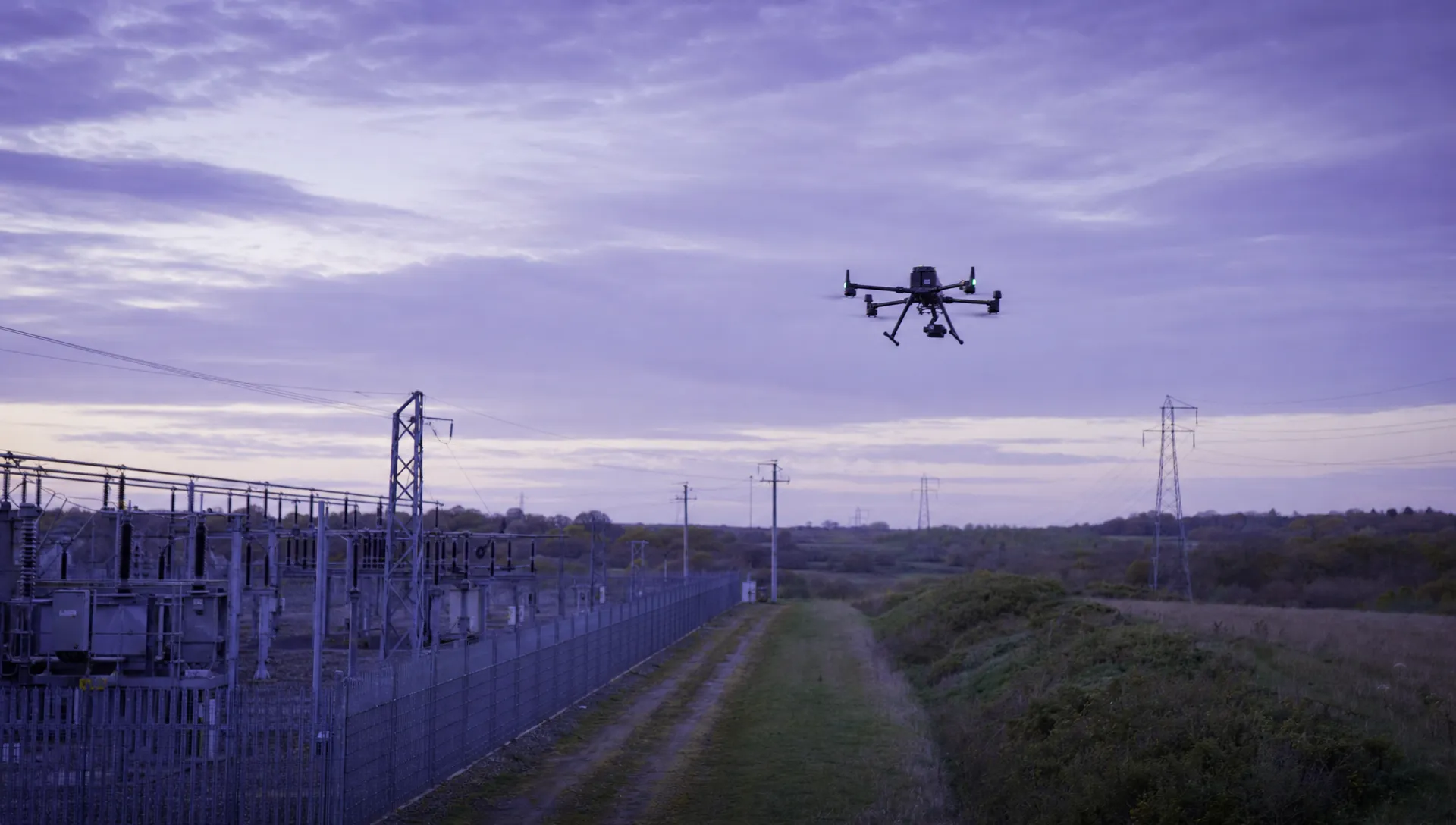
Using utility drones can reduce the need for some initial close-access work, but it introduces a different set of operating risks. Assess those risks separately rather than treating remote inspection as inherently safe.
Planning should account for people, adjacent roads, access arrangements, nearby structures and the consequences of losing control of the aircraft. For electrical sites, agree separation arrangements and site controls with the asset owner. A camera’s zoom capability does not establish a safe operating distance.
Coordinate with the maintenance schedule. Equipment configuration, site activity and loading conditions can affect both flight delivery and the usefulness of the evidence. Weather-related cancellations also need room in the programme, particularly where access windows are limited.
For UK work, make the CAA’s current drone guidance part of the pre-planning review with the person responsible for aviation compliance. Confirm the requirements applicable to the proposed operation before committing to a delivery date, rather than assuming that a previous inspection settles the question.
Choose who will deliver the inspections
An in-house team can be useful where inspections recur frequently and staff already understand the assets. Its workload extends beyond flying: training, equipment readiness, scheduling and quality assurance all need named owners and allocated time.
Outsourced inspection can suit intermittent demand, specialist sensors or dispersed sites. The contract still needs a clear specification and an internal engineering reviewer. Outsourcing collection does not remove the utility’s responsibility for deciding what the findings mean for maintenance.
A mixed model may suit programmes where routine visual work stays in-house and specialist surveys are commissioned separately. The important constraint is consistency: different teams should use compatible asset references, acceptance criteria and reporting conventions.
Before expanding the use of utility drones, compare delivery models against the annual inspection workload, geographic spread and availability of competent staff. Include cover for absence and equipment downtime rather than assuming that every planned working day is available for inspection.
Dronedesk’s utility-company case study provides a sector-specific reference for discussions about organising inspection planning. Assess any operating model against your own asset mix and delivery requirements.
Calculate cost per accepted inspection
Hardware price alone is a poor basis for a programme budget. Include sensors, batteries, software, training, staff time, travel, equipment upkeep and data processing. Engineering review and system handover belong in the calculation too.
A useful measure is:
Cost per accepted asset inspection = total attributable programme cost ÷ inspections meeting the agreed acceptance criteria.
For utility drones, this denominator matters because a completed flight is not necessarily a completed inspection. Poor coverage, unusable thermal conditions or incorrect asset labels may require another visit.
Consider a hypothetical inspection day costing £1,200, including collection and review. If 24 asset inspections meet the specification, the cost is £50 each. If only 18 are accepted, it rises to about £66.67. These figures illustrate the calculation, not typical market prices.
Compare that figure with the existing method on an equivalent basis. Include any genuinely avoided access work, but retain the cost of follow-up activities still required. Do not count an outage or maintenance visit as a saving unless the revised process actually removes it.
Also distinguish financial savings from capacity gains. Releasing engineering time can be valuable even where it does not reduce the annual budget, but it should be reported accurately.
Measure the maintenance outcome
Track whether inspection evidence reaches the people who can act on it. Useful measures include first-pass acceptance rate, time between collection and engineering review, repeat visits caused by missing evidence and time taken to raise an approved work order.
For utility drones, flight count is an activity measure rather than proof of maintenance value. A programme can fly more often while creating a growing backlog of unreviewed observations.
Review a sample of accepted inspections for missed defects and inconsistent grading. Track whether completed repairs have suitable closure evidence. Where an inspection leads to a changed maintenance interval, record the engineering rationale and the evidence used to support it.
Avoid targets based only on finding more defects. Such targets can encourage over-reporting without improving asset decisions.
Pilot a complete maintenance workflow
Start with one asset class and a defined decision, such as identifying visible defects that need closer examination during a planned access window. Choose sites that reflect normal operating conditions, including some awkward access or visibility constraints.
Run the pilot through engineering review and work-order handling. Stopping at data capture leaves the hardest handover untested. Ask reviewers whether they could identify the component, judge the evidence and request an action without returning to the inspection crew for clarification.
The pilot should establish where utility drones fit, where another method remains necessary and what causes incomplete inspections. Record the time spent preparing, collecting, processing and reviewing the evidence, not only time airborne.
Use those results to revise the specification and delivery model before expanding. Inspection frequency should follow asset condition, failure consequences and the organisation’s maintenance strategy. A convenient flying schedule is not a sufficient reason to inspect every asset at the same interval.
Set expansion criteria in advance: acceptable coverage, dependable handover and a workload the engineering team can review. If those conditions are not met, improve the process before adding more sites or aircraft.
Frequently asked questions
Can drone inspections replace scheduled utility maintenance? They can inform its timing and scope, but an aerial inspection does not perform a repair or establish every aspect of asset health. Changes to maintenance tasks or intervals need the appropriate engineering review.
How much do utility drones cost to operate? The answer depends on the sensor, staffing model, travel, processing requirements and inspection volume. Compare total programme cost per accepted asset inspection rather than aircraft purchase price or cost per flight alone.
Which drone is best for utility inspections? Select against the defect and evidence requirement. Detailed visual work, thermal assessment and corridor measurement need different payload capabilities. Then check aircraft suitability for the site, operating conditions and planned method of operation.
How often should infrastructure be inspected by drone? There is no single interval suitable for every asset. Base frequency on the maintenance strategy, known condition, failure consequences and the purpose of the inspection. Keep enough consistency between surveys to make comparisons meaningful.
Review your next maintenance inspection cycle
Choose one recurring inspection and document its required evidence, engineering owner and acceptance criteria. Confirm how an observation becomes a work order and how completion will be recorded.
When assessing the administration around that workflow, review Dronedesk’s published features against your requirements. The aim is a repeatable inspection process that produces evidence your maintenance team can use.
 How Utility Drones Fit Into Planned Maintenance Programmes →
 How to Specify Drone Surveying Deliverables Before Hiring →
 Choosing Drones for Agricultural Use Beyond Crop Spraying →
 9 Drone Applications for Utility Asset Management →
 How to Write a Drone Business Plan That Tests Your Margins →
 How to Choose a Search and Rescue Drone for Rural Operations →
 How to Carry Out a Drone Site Survey Before Mobilising →
 How to Evaluate Drone Companies for Long-Term Contracts →
 What a First Responder Drone Programme Needs Before Deployment →
 Law Enforcement Drones and Their Role in Evidence Collection →