
A Procurement Checklist for Hiring Drone Contractors
Hiring drone contractors means buying a usable result, not simply booking an aircraft and a pilot. A roof inspection needs evidence that maintenance staff can act on. A survey needs data that meets an agreed accuracy specification. An emergency response assignment needs a workable mobilisation plan, with clear limits on what the supplier can promise.
Procurement should test those outcomes before comparing prices. A polished showreel says little about survey quality, while a low day rate may exclude processing, repeat visits or the rights you need to use the data.
Use the eight checks below to build your brief, assess evidence and agree the contract. They suit survey companies, utilities and emergency services commissioning external support, as well as operators choosing subcontractors. Apply them in proportion to the assignment, but resolve any gaps before awarding the work.
1. Give drone contractors a deliverable-led brief
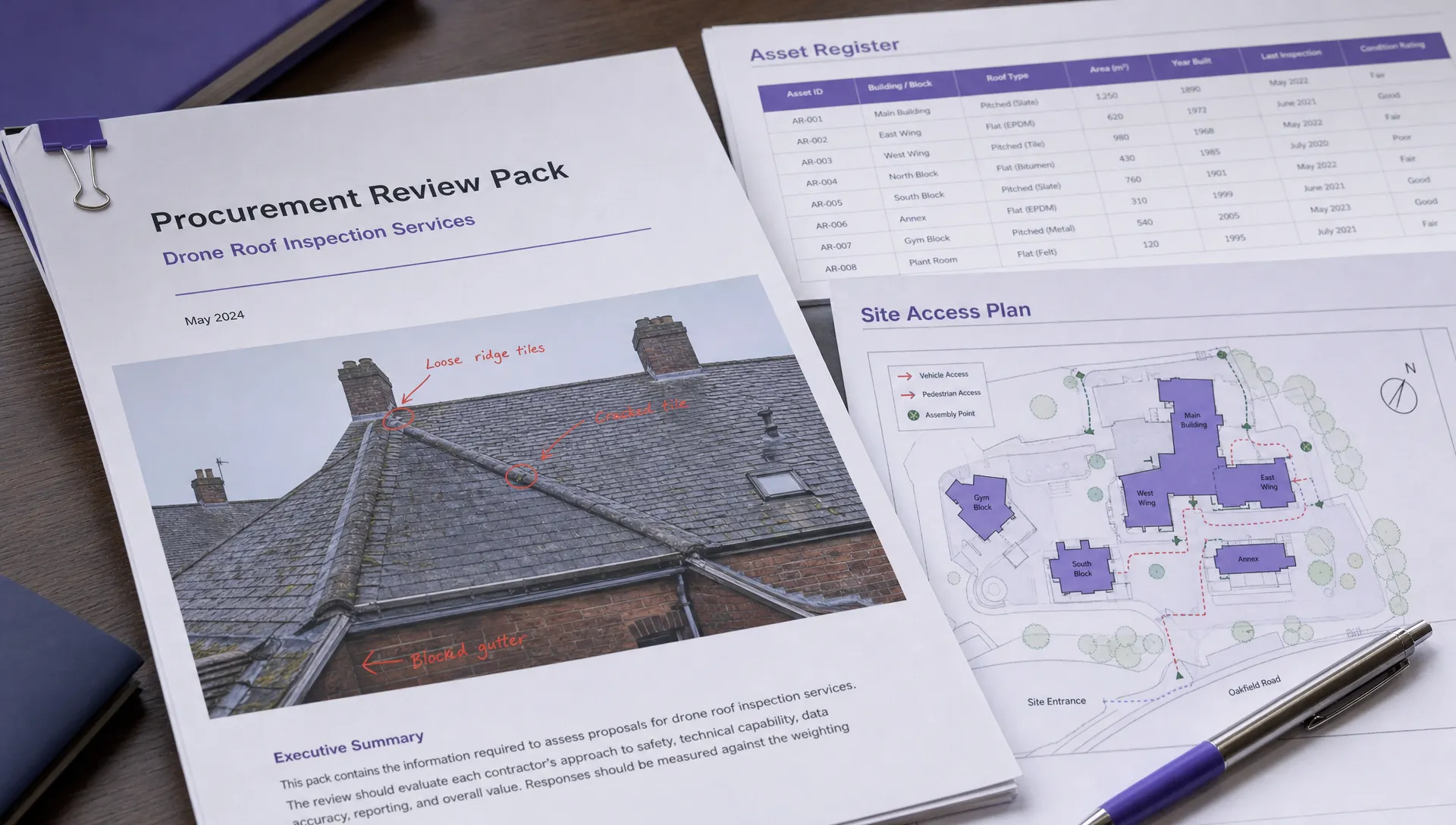
Start with the decision the work must support. “Inspect the roof” leaves too much open. “Provide location-referenced photographs and an annotated defect register covering the agreed roof areas” gives bidders something they can price and demonstrate.
Specify the site boundary, assets in scope and intended users of the output. Then define what constitutes an acceptable delivery.
| Assignment | Specify in the brief | Evidence to request |
|---|---|---|
| Mapping or survey | Coverage, coordinate reference system, height datum, file formats and accuracy acceptance method | Comparable dataset and quality report |
| Visual inspection | Asset identifiers, image coverage, defect categories and reporting format | Redacted inspection report linked to source images |
| Thermal inspection | Inspection purpose, required data type, capture conditions and interpretation scope | Relevant report explaining findings and limitations |
| Progress monitoring | Repeat viewpoints, capture frequency, naming conventions and archive structure | Example showing consistent reporting across visits |
For surveys, keep ground sampling distance separate from positional accuracy. Small image pixels do not, by themselves, demonstrate that mapped features are correctly positioned. Ask how accuracy will be checked independently of the observations used to produce the dataset.
The guide to choosing a drone mapping service provides further context for mapping-specific briefs.
When comparing drone contractors, ask each bidder to identify exclusions explicitly. An unobserved surface or an inaccessible asset should not disappear into a vague statement that the inspection is complete.
2. Check the proposed team, not just the company portfolio
A supplier may have excellent examples produced by people who will not work on your assignment. Request the names or defined roles of the proposed flight crew, data processor and person responsible for technical interpretation.
Experience should match the task. Attractive property photographs do not demonstrate competence in measuring stockpile volumes. Equally, operating the aircraft and diagnosing an electrical defect are different responsibilities. Establish who performs each part and what evidence supports their competence.
Request a redacted example of comparable work, together with an explanation of how it was checked. For higher-value assignments, seek a reference from a customer whose project had similar constraints. Ask whether the outputs passed acceptance, how the supplier handled omissions and whether the final invoice matched the agreed scope.
Check whether work will be subcontracted and how replacement personnel will be approved. The same scrutiny should apply to a substitute crew as to the original bidder.
Strong drone contractors should be able to explain their quality checks without exposing another customer's confidential information. Marketing awards and manufacturer badges may add context, but they do not replace evidence that the proposed team can deliver your specification.
3. Make operational verification a separate award gate
Do not treat a website claim of being “fully licensed” as sufficient evidence for your assignment. Ask the supplier to explain its proposed operating method and provide the credentials and permissions on which that proposal depends.
Have a competent aviation reviewer check the evidence against the current UK Civil Aviation Authority drone guidance. This checklist is a procurement framework, not regulatory sign-off or a substitute for checking the current rules for the actual operation.
Keep a verification record showing which documents were reviewed, by whom and when. Match the evidence to the supplier's contracting entity and proposed personnel rather than accepting an unrelated certificate in a tender attachment.
The contract should allocate responsibility for identifying and obtaining any aviation, land-access or site permissions needed for the agreed work. Record dependencies and deadlines so that unresolved matters are visible before mobilisation.
Ask drone contractors to explain what happens if the proposed method cannot be accepted for the site. A revised plan, changed scope or postponed visit should trigger a documented decision, rather than an improvised change after the crew arrives.
4. Match insurance to the assignment and its consequences
Ask for current insurance evidence and review it against the work being commissioned. Check the named insured, policy period, territorial scope and declared activities. Confirm relevant limits, exclusions and excesses with your insurance adviser; do not assume that one headline cover figure answers every question.
Separate the risks of an operational incident from losses caused by incorrect advice or data. Where survey outputs or inspection interpretations will support expensive decisions, discuss professional indemnity cover with your adviser and ask the bidder what its policy actually covers.
The acceptance process also matters. A contract that leaves defects undefined makes it harder to distinguish a supplier error from a change in the customer's requirements.
Require updated evidence if cover expires before completion, including any later processing or reporting period. Where necessary, seek confirmation through the supplier's broker or insurer.
Insurance is one part of assessing drone contractors, not a substitute for competent delivery. Your review should consider who bears the financial consequences of an error and whether the proposed contractual liability allocation is acceptable to your organisation.
5. Test site access, weather and mobilisation assumptions
Give bidders enough site information to identify practical constraints. Include access arrangements, working hours, nearby activities and any restrictions on photography or communications equipment. Tell them about occupied areas, moving vehicles and other contractors sharing the site.
Ask for a site-specific delivery plan. A generic risk assessment may be background evidence, but it does not explain how the supplier intends to manage your location.
Useful questions include:
- Who will arrange access, inductions and any agreed exclusion areas?
- What conditions would cause the supplier to postpone or stop work?
- How will the crew communicate with the site contact during the assignment?
- Who decides whether an incomplete visit should be repeated, and who pays?
Weather provisions need commercial detail. Define the decision point for postponement, how much notice each party receives and how travel or mobilisation charges are handled. Ask whether conditions could permit flying but still prevent data meeting the specification, such as imagery affected by glare or unsuitable conditions for the intended thermal analysis.
For emergency services, distinguish an acknowledgement time from a mobilisation target and an arrival estimate. Identify out-of-hours arrangements and the limits of any standby commitment.
Reliable drone contractors should be willing to stop when conditions do not support safe work or acceptable outputs. Do not design payment terms that reward completing a flight regardless of data quality.
6. Agree data handling, ownership and acceptance
Identify who will receive the data and what they must do with it. A view-only portal may suit one customer, while another needs downloadable source files for engineering software or a controlled asset-management system.
State the required formats and distinguish raw capture, processed outputs and interpreted reports. Ask for a small sample early enough to test compatibility before the full assignment.
Agree ownership and usage rights expressly. Cover reuse by your organisation, sharing with advisers and any proposed supplier use in marketing. Do not assume that paying an invoice settles every question about future access or reuse.
For sensitive infrastructure or incident imagery, review storage locations, access controls and any external processing services. Set retention and deletion periods, including what happens to backups and how you will retrieve data if an online service closes.
Acceptance should be measurable: check coverage, file integrity, reference systems where relevant and compliance with the agreed report structure. Set a review period and a process for reporting defects, then distinguish correction of non-conforming work from a paid change in scope.
7. Compare the total evaluated price
Send the same pricing schedule to every bidder. A day rate is difficult to compare when one proposal includes processing and another treats it as an optional extra.
Ask suppliers to separate mobilisation, site work, processing and reporting. Identify charges for specialist interpretation, additional visits and any equipment or site support that your organisation must provide. Confirm whether prices include VAT so the comparison uses a consistent basis.
Use a defined scenario to expose differences. For example, ask each bidder to price the original assignment plus one weather postponement and an additional visit caused by newly available site access. This is a comparison exercise, not a prediction that those events will happen.
Review assumptions alongside the price. A cheaper quote may cover fewer assets, offer a longer turnaround or exclude the dataset your technical team needs. Record those differences rather than treating the totals as equivalent.
When assessing drone contractors, compare the cost of obtaining an accepted deliverable, not merely the cost of attendance. Also ask anyone supplying a shortlist to disclose referral fees, ownership links or other commercial interests that could influence their recommendations.
8. Put responsibilities and remedies into the contract
Turn the winning proposal into a clear statement of work. Attach the accepted specification and pricing schedule, and resolve conflicting assumptions before signature.
Name the buyer's project lead, the supplier's operational contact and the person authorised to approve changes. Define milestones for planning information, capture, draft outputs and final acceptance. Where access or customer decisions affect those dates, record the dependencies.
The contract should address subcontracting and personnel changes, together with confidentiality and agreed data rights. Include cancellation and rescheduling terms rather than relying on an informal understanding reached during tender discussions.
Define what happens when work fails acceptance. Set out the correction process, response times and responsibility for a repeat visit. Your commercial or legal team should review the liability terms, especially where inaccurate outputs could influence engineering or safety decisions.
For framework agreements, specify how each call-off establishes its own scope, delivery dates and pricing. A broad appointment does not resolve the details of every future site.
Before appointing drone contractors, confirm that all qualifications, exceptions and clarifications are captured in the signed documents. Keep an approval record so a later project manager can understand what was agreed without reconstructing an email chain.
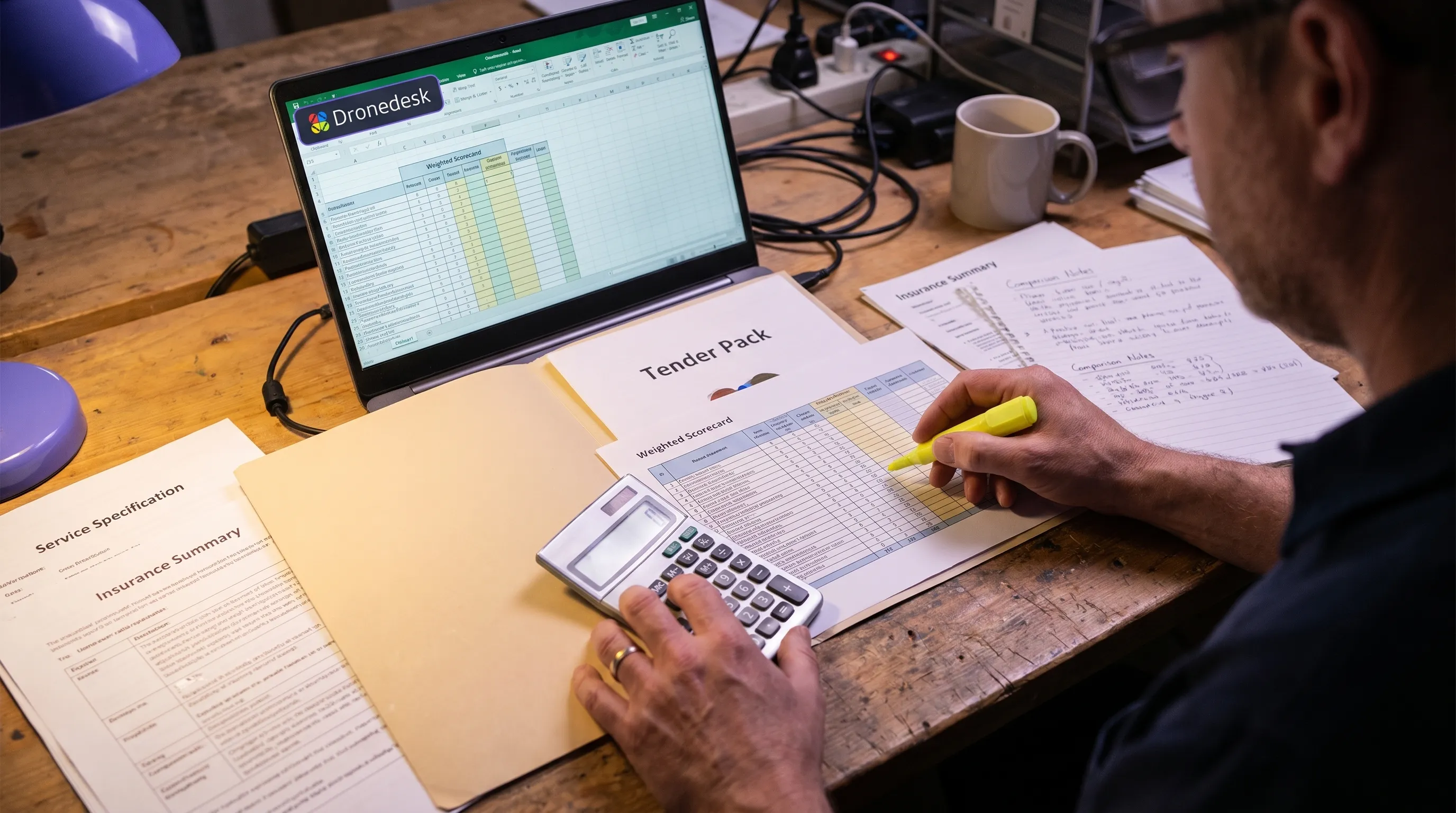
Use a weighted scorecard after the mandatory checks
Resolve mandatory checks before scoring commercial preferences. A strong portfolio should not compensate for unresolved operational evidence or an unacceptable insurance position.
Agree criteria and weights before reviewing bids, following your organisation's procurement process. The example below gives more weight to usable outputs than price; adjust it to reflect the assignment.
| Evaluation criterion | Example weighting | What to assess |
|---|---|---|
| Technical fit and deliverables | 25% | Match to specification and proposed acceptance method |
| Relevant team competence | 25% | Comparable assignments and capability of named personnel |
| Operational planning | 20% | Site-specific approach and handling of delivery constraints |
| Data handling and handover | 10% | Usable formats, access controls and clear rights |
| Total evaluated price | 15% | Comparable cost including the agreed contingency scenario |
| Contract clarity | 5% | Responsibilities, exclusions and correction terms |
Score each criterion out of five and multiply the score by its weighting divided by five. A score of four on a 25% criterion contributes 20 percentage points.
Record the evidence supporting each score. When two drone contractors finish close together, use targeted clarification questions or a proportionate paid pilot assignment. Do not let an attractive presentation substitute for proof that the proposed deliverables will work.
Frequently asked questions
What should I request before awarding a drone services contract? Request a defined delivery proposal, evidence of relevant team competence and operational credentials for review. Obtain insurance information, comparable output samples and a complete price. Resolve site responsibilities and acceptance terms before signing.
Should I choose the lowest-priced bid? Only if it meets the mandatory checks and offers the best value under your agreed evaluation method. A lower price is not directly comparable if it excludes processing, limits data access or leaves repeat-visit charges undefined.
Can I use the same supplier for surveys and inspections? Yes, provided it can demonstrate the required capability for each assignment. Evaluate the proposed personnel and technical outputs separately rather than assuming competence transfers between services.
How often should I review approved drone contractors? Set a review cycle that reflects your workload and risk, then refresh project-specific evidence before each assignment. Reassess after personnel changes, insurance renewals, delivery failures or changes to the intended work.
Make the next appointment evidence-led
Turn these checks into a tender schedule and an approval record. Before award, the project owner should know exactly what will be delivered, how it will be accepted and who pays if another visit is needed.
If you are also reviewing how your own drone team works, consult the Dronedesk features page to assess whether the platform fits your requirements.
 A Procurement Checklist for Hiring Drone Contractors →
 Choosing Drones for Fire Departments Beyond Thermal Imaging →
 What Drone Safety Culture Looks Like in a Busy Operations Team →
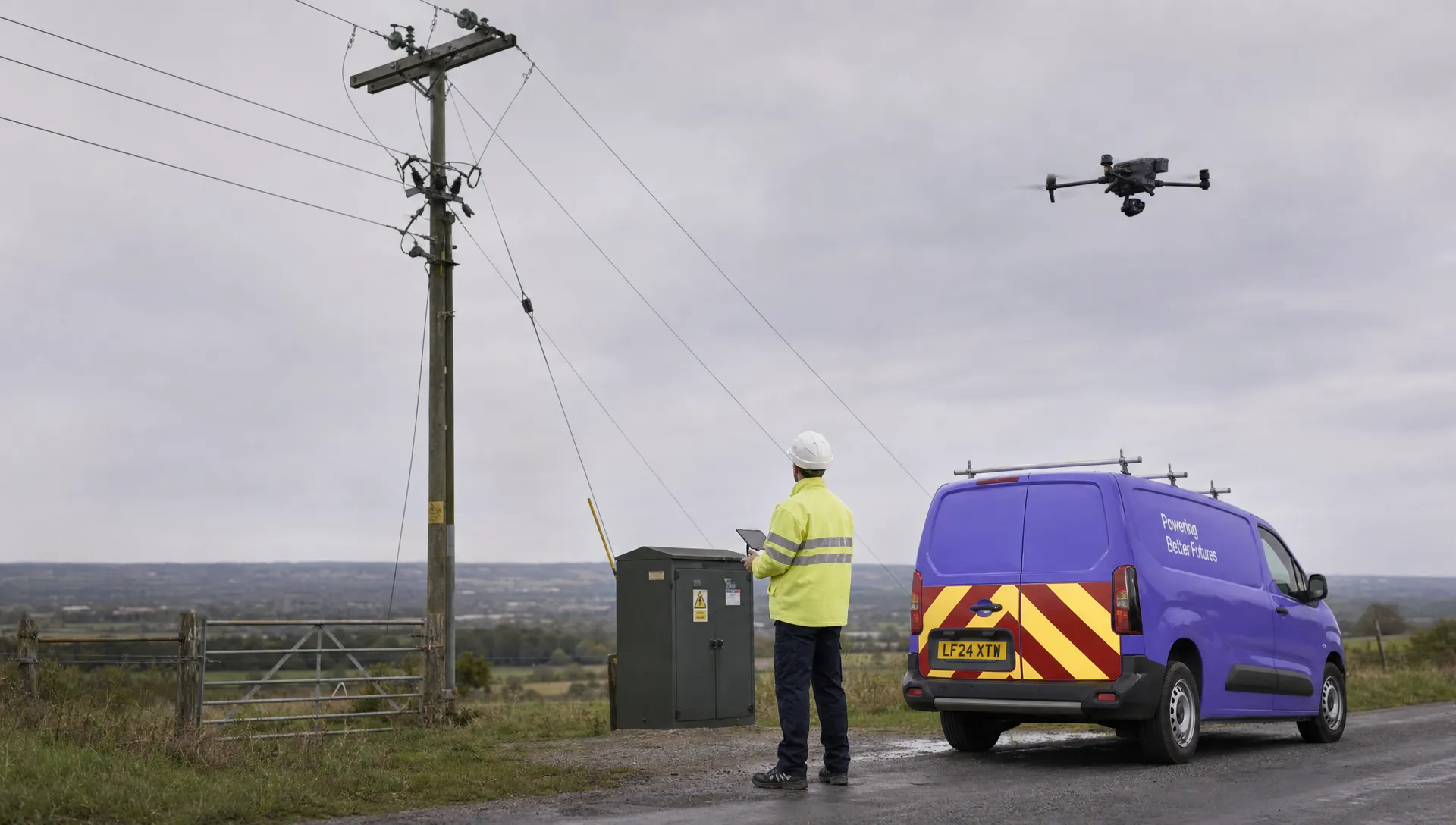 How Utility Drones Fit Into Planned Maintenance Programmes →
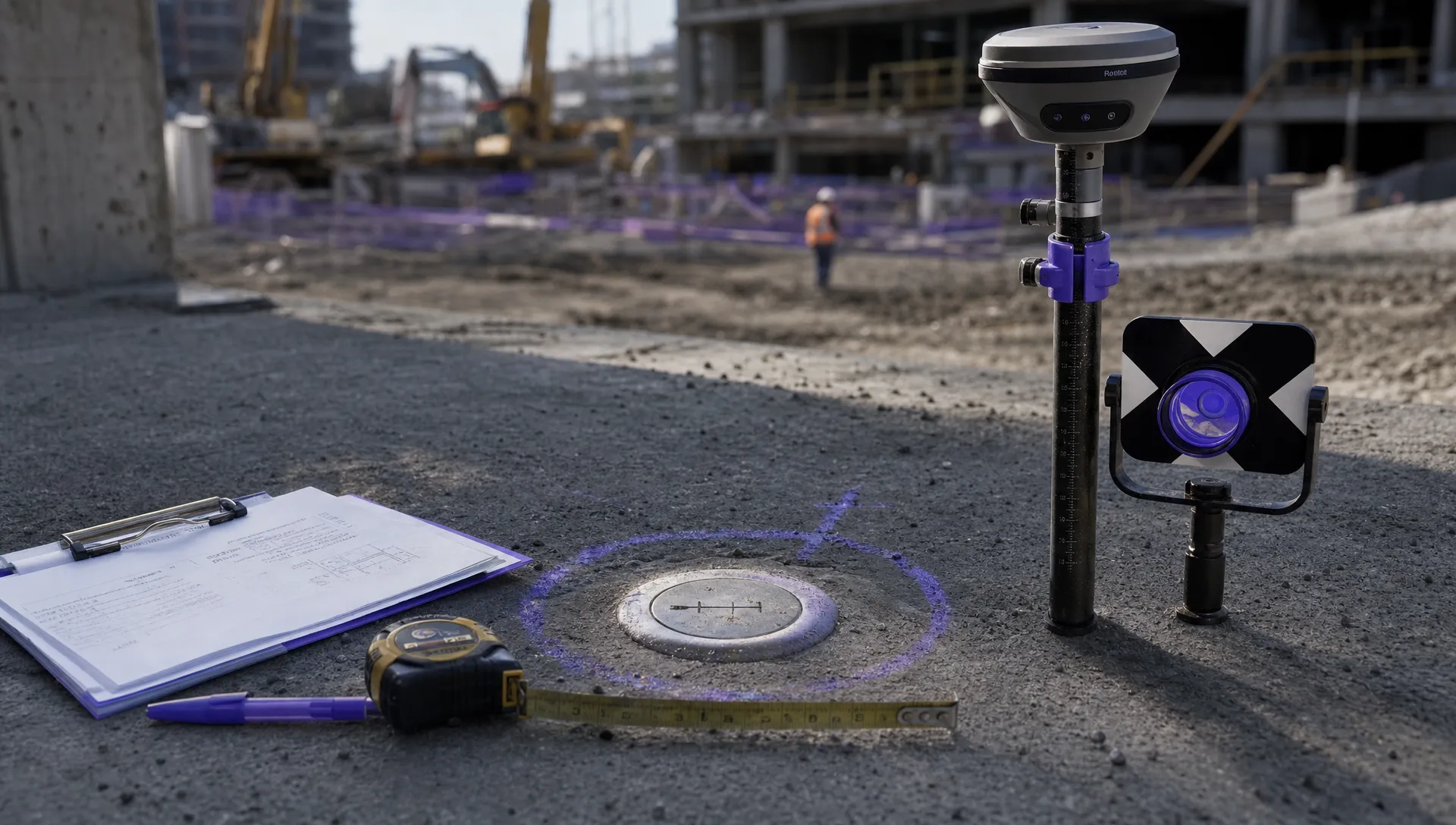 How to Specify Drone Surveying Deliverables Before Hiring →
 Choosing Drones for Agricultural Use Beyond Crop Spraying →
 9 Drone Applications for Utility Asset Management →
 How to Write a Drone Business Plan That Tests Your Margins →
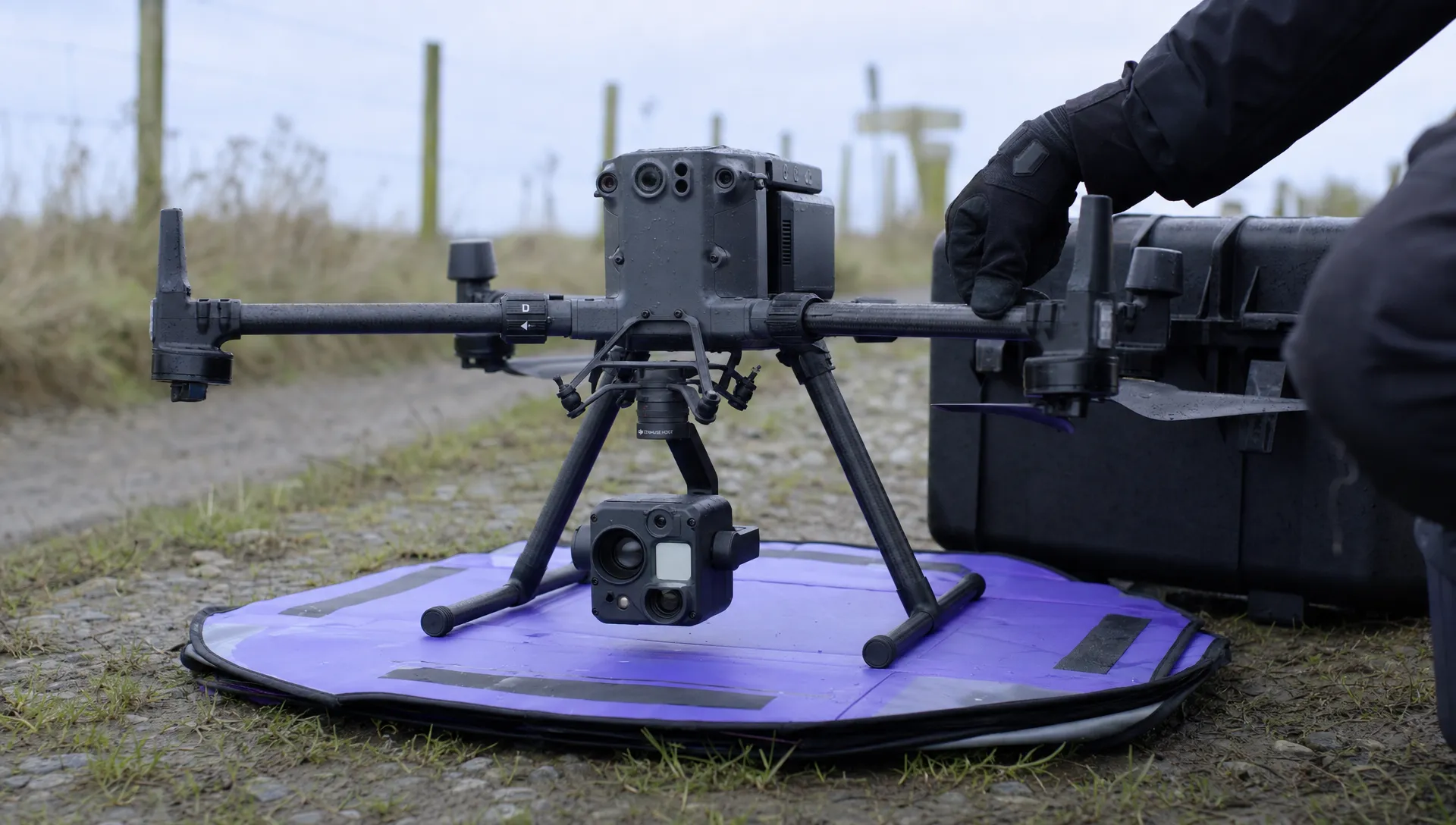 How to Choose a Search and Rescue Drone for Rural Operations →
 How to Carry Out a Drone Site Survey Before Mobilising →