
What Drone Safety Culture Looks Like in a Busy Operations Team
A drone safety culture shows up in the decisions a team makes when completing the job becomes inconvenient. A pilot pauses an inspection because site access has changed. A scheduler accepts a delay without asking someone else to attempt the same flight. A reported battery fault leads to an equipment decision rather than disappearing into a message thread.
Written procedures support those decisions, but they do not guarantee them. People also respond to what managers praise, what customers are promised and what happens after someone reports a mistake.
For busy survey, utility and emergency services teams, the practical test is whether safe decisions remain straightforward under pressure. That means clear ownership, usable preparation and a reporting process that produces visible action. It also means accepting that a well-managed operation sometimes ends without the planned flight.
What drone safety culture looks like on a busy day
Culture is the gap between the published process and the behaviour people believe will protect their standing in the team.
An organisation might say that anyone can stop an operation. If a pilot then has to defend every weather-related cancellation to a frustrated manager, the message changes. People learn that stopping is permitted on paper but costly in practice.
A healthier team makes the operational decision and the commercial response separate tasks. The pilot explains the conditions and constraints. The manager handles the customer conversation, revised schedule and contractual implications without bargaining over the launch decision.
That distinction makes drone safety observable. You can examine what happened when a job changed, rather than asking staff whether they think the organisation takes safety seriously.
Use recent work as evidence: a postponed survey, an equipment defect or a concern raised during a briefing. Look at who spoke up, how others responded and whether the underlying issue was resolved. An uneventful flight alone tells you little about the quality of the decisions behind it.
Give people clear decision rights
“Everyone is responsible” is a weak instruction unless people know what they must do and who can resolve a disagreement.
Before allocating work, define who accepts the job, who checks readiness and who handles site coordination. Establish a team rule that anyone can call a pause for a safety concern, with an agreed process for resolving it before work resumes.
The person facing delivery pressure should not be able to overrule an unresolved concern simply because a vehicle, client or inspection crew is waiting. Equally, a pause should trigger a useful conversation, not leave everyone wondering what happens next.
Make the restart decision explicit. Record what changed, which controls now apply and who confirmed that the team could continue. A supervisor saying “carry on” is not a substitute for resolving the original concern.
In a consistent drone safety culture, managers also own the pressures they create. That includes unrealistic travel schedules, insufficient preparation time and promises made before a site has been assessed.
As teams grow, these responsibilities need to sit within a shared drone operations management process, rather than depending on the most experienced pilot remembering everything. The aim is continuity when someone is unavailable, not another approval layer for every routine decision.
Make readiness checks visible before dispatch
A busy team should discover avoidable gaps before people arrive on site.
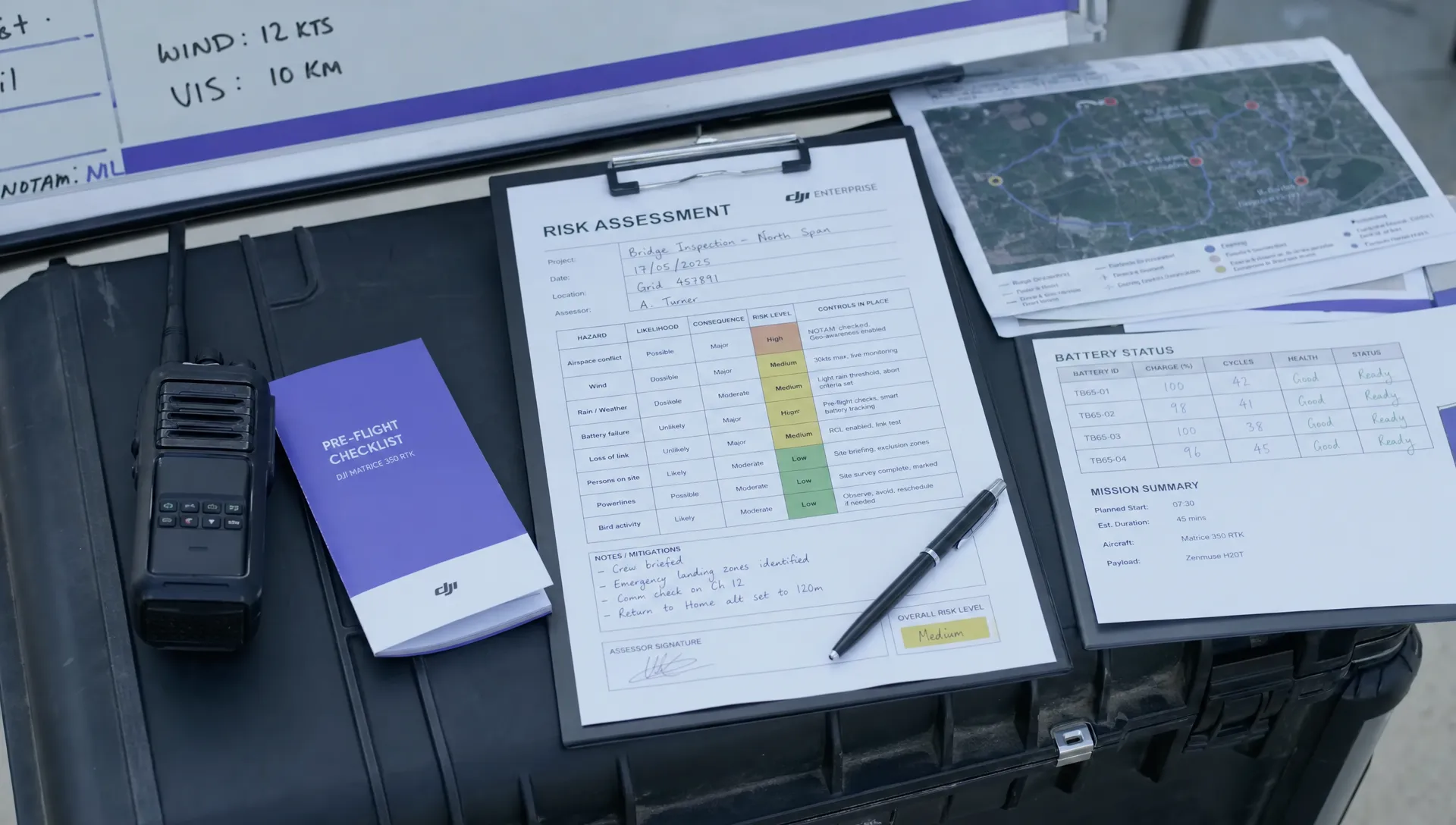
Assign responsibility for checking the operating basis for the job, the people involved and the aircraft being allocated. Keep relevant registration, competency and authorisation information accessible for checking against the proposed operation. Treat these as substantive checks, not a collection of documents that nobody compares with the task.
For UK work, make the CAA’s drone guidance a starting point for checking applicable requirements. Use current official aeronautical information through the UK Aeronautical Information Service where relevant to the planning process. This article does not set out category-specific operating rules.
Airspace maps need the same disciplined treatment as other planning inputs. Check the source, its currency and what the display does not cover. A saved screenshot should not become a permanent assurance that a location remains suitable.
Good drone safety preparation also separates information available at the desk from conditions that require confirmation on arrival. A mapped open area may contain parked vehicles. A planned launch point may be inaccessible. Work on an adjacent asset may introduce people or equipment that were absent during the initial assessment.
The job handover should make those unresolved checks visible. “Confirm pedestrian access remains controlled before setup” is useful. “Site checked” gives the receiving crew very little to work with.
Keep the briefing short enough to use
A briefing should help people understand this operation, not demonstrate that somebody can read the standard procedure aloud.
Use a small set of prompts that expose the decisions the crew may need to make:
- Site and airspace: What has changed since planning, and which assumptions still need checking?
- Weather and equipment: Are conditions suitable for the task, and have aircraft condition, batteries and relevant maintenance status been checked?
- People and communication: Who is doing what, how will the crew communicate and who handles approaching members of the public?
- Abnormal events: What are the responses to a lost link, an unexpected aircraft, a battery warning or a person entering the operating area?
- Landing and stopping: Where can the aircraft land safely, and which conditions trigger a pause or abandonment?
Ask crew members to explain their own actions rather than merely confirm that they understand. Someone describing how they will report an approaching vehicle gives better evidence of a shared plan than a row of signatures.
For drone safety briefings to remain useful, supervisors must leave room for disagreement. A new observer may notice that the planned landing area is beside an active access route. Their concern should receive the same attention as one raised by the lead pilot.
Include privacy in the briefing where relevant. Agree how the camera will be used, how unnecessary capture will be avoided and who will answer questions. Do not leave a busy pilot to improvise the public-facing response while operating the aircraft.
Treat changing conditions as a decision point
The original plan cannot account for every site change. The team needs a repeatable way to recognise when it no longer fits.
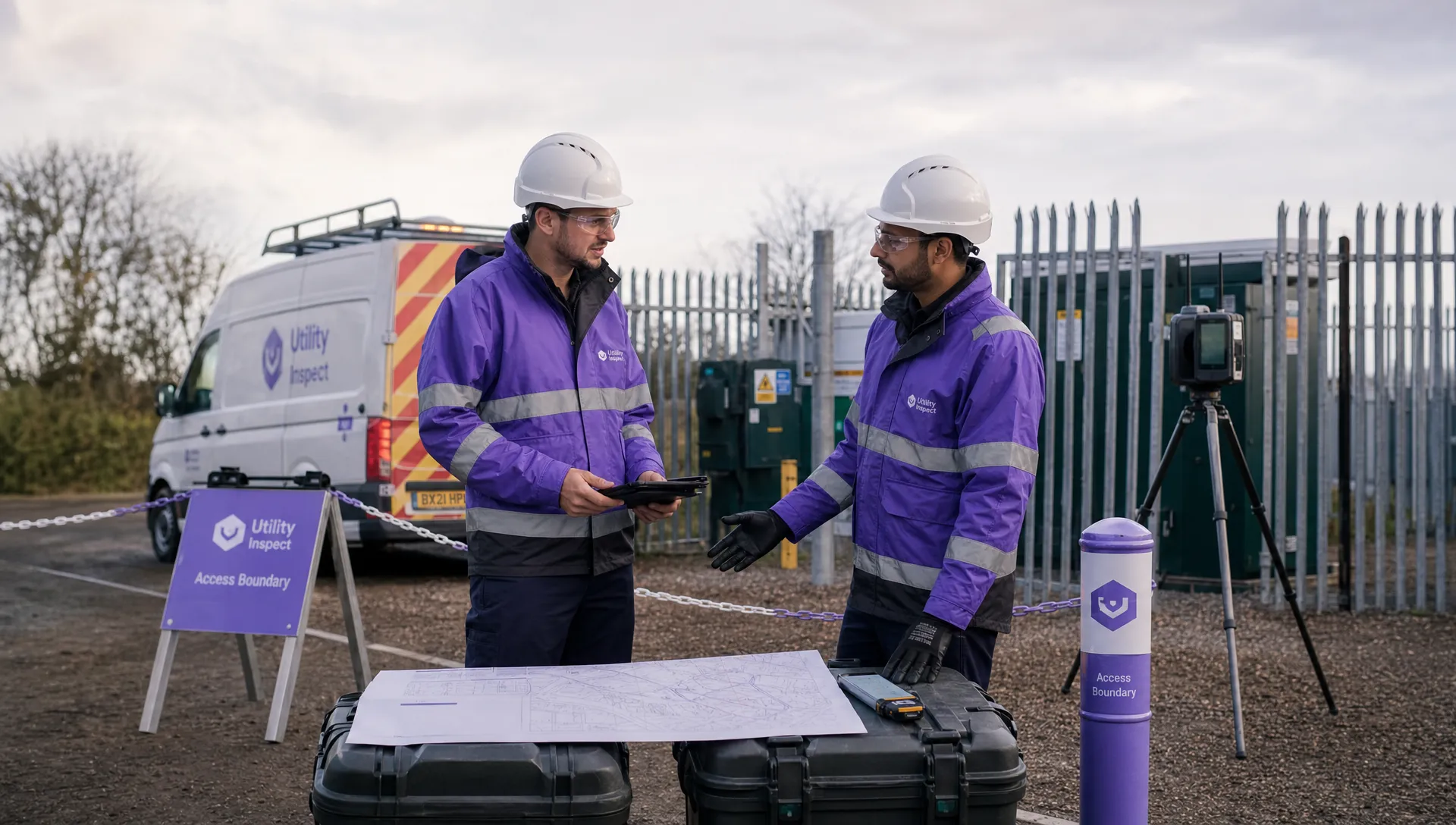
Consider a hypothetical utility inspection where a delivery vehicle blocks the agreed landing area. Moving a few metres might appear to solve the problem, but the alternative position could change sight lines, pedestrian exposure or the route back to the aircraft.
The useful habit is to pause, identify which assumptions have changed and reassess the affected controls. Do not treat a small physical movement as proof that the operational effect is also small.
Make that pause socially easy. A simple call such as “Hold, landing area changed” should be enough to get attention. The crew can then agree whether to adapt the plan, wait or abandon the task.
For emergency services, urgency belongs in this discussion rather than outside it. Agree how the drone crew communicates its limits to the incident command structure and coordinates with other responding teams. An urgent request should trigger a clear operational response, not an assumption that the normal assessment can be skipped.
The same principle applies to fatigue. If a pilot reports that they cannot maintain attention after an extended shift, the staffing response belongs with management, not with the pilot’s willingness to push through.
Make reporting produce a visible response
People soon notice whether submitting a concern changes anything. A reporting form that generates no acknowledgement can discourage the next report, even if managers genuinely want the information.
Keep the initial report proportionate. Capture what happened, the conditions, the decision taken and any immediate action. Preserve relevant evidence, then gather further detail when needed rather than making every report an investigation-length exercise.
Separate learning from assumptions about blame. An honest mistake, an unclear instruction and a deliberate disregard of an agreed control require different responses. Good-faith reporting should not automatically become a disciplinary process, but fair treatment does not mean ignoring reckless behaviour.
A credible drone safety reporting process tells the person what happened next. That might be an equipment inspection, a changed briefing prompt or a decision that the existing control remains appropriate, with an explanation.
When technical evidence is needed, review the flight record alongside the crew’s account and site conditions. For DJI records, the DJI flight log analysis tool is a resource for that review. A log cannot, by itself, explain a confusing instruction or pressure to meet a deadline.
Give each corrective action an owner and a review date. Closing a report because someone sent an email is different from confirming that the revised process works. Share the lesson with the people who need it, while avoiding unnecessary disclosure of personal details.
Measure learning rather than rewarding silence
“Zero incidents reported” is an ambiguous measure. It may reflect uneventful operations, but it may also reflect uncertainty about what to report or reluctance to attract attention.
Use a small set of indicators that show how the team responds to concerns. Review them alongside operational context, including workload and the type of work undertaken.
| Indicator | What to examine | Misleading interpretation to avoid |
|---|---|---|
| Concerns and near misses | Reporting themes, acknowledgement and follow-up | Fewer reports always mean safer work |
| Paused or abandoned jobs | Whether decisions were supported and causes addressed | Every cancellation is a delivery failure |
| Corrective actions | Clear ownership and evidence that the change works | An action is complete when a document is updated |
| Repeated equipment defects | Recurrence and the quality of equipment decisions | Repeatedly clearing the same warning is normal |
| Preparation quality | Whether job-specific assumptions were checked | More completed fields mean better preparation |
Review examples as well as totals. One well-documented pause can reveal a useful control; ten incomplete reports may reveal a reporting process that needs attention.
Managers strengthen drone safety culture when they ask what made a decision difficult, rather than only whether the crew followed the form. That question can expose staffing problems, confusing handovers or a customer expectation that the planning process never addressed.
Avoid league tables of individual pilots’ report counts or cancellations. They can encourage people to optimise the number instead of making the right operational decision. Discuss patterns with enough context to understand them.
Frequently asked questions
Who owns safety culture in a drone team? Senior leaders shape it through staffing, scheduling and their response to concerns. Supervisors turn those expectations into working habits, while crew members carry out checks and raise issues. Responsibilities should be specific enough that everyone knows who decides, who acts and who follows up.
How can a small team build consistent habits without adding excessive paperwork? Start with a usable briefing, clear pause-and-restart decisions and a short reporting process. Reuse information where appropriate, but require people to confirm job-specific conditions. Add documentation when it supports a decision or preserves useful evidence, not simply because another form is possible.
What should a manager do after a pilot cancels a job? Address any immediate operational needs, support the customer conversation and review the decision against the information available at the time. Look for planning improvements without judging the pilot solely by whether the feared event eventually occurred.
Does a rise in near-miss reports mean standards are falling? Not necessarily. It can reflect greater confidence in reporting or a change in workload. To assess drone safety, examine what is being reported, whether similar events recur and whether corrective actions work. The report count alone cannot answer that question.
Test the process against one real job
Choose a recent operation that was delayed, changed or cancelled. Ask whether the crew had the right information, could raise concerns and received a clear response. Agree one improvement, assign an owner and check it on subsequent work.
If inconsistent records or fragmented preparation are part of the problem, review Dronedesk’s features against those specific gaps. Keep the buying test practical: whether the proposed setup supports the decisions your team actually needs to make.
 What Drone Safety Culture Looks Like in a Busy Operations Team →
 How Utility Drones Fit Into Planned Maintenance Programmes →
 How to Specify Drone Surveying Deliverables Before Hiring →
 Choosing Drones for Agricultural Use Beyond Crop Spraying →
 9 Drone Applications for Utility Asset Management →
 How to Write a Drone Business Plan That Tests Your Margins →
 How to Choose a Search and Rescue Drone for Rural Operations →
 How to Carry Out a Drone Site Survey Before Mobilising →
 How to Evaluate Drone Companies for Long-Term Contracts →
 What a First Responder Drone Programme Needs Before Deployment →