
How to Write a Drone Business Plan That Tests Your Margins
A drone business plan should prove that customers will pay enough to cover the whole job, including the hours when the aircraft stays in its case. A full diary can still produce poor earnings if travel, processing, unsuccessful quotes and weather disruption consume the margin.
Start with a service you can sell, estimate its true delivery cost and test how many completed jobs you need to support the business. Equipment choices come after those calculations, not before them.
The worked example below uses a UK-based owner-operator selling commercial roof imagery. All financial figures are illustrative planning assumptions, not market rates, supplier quotations or earnings forecasts. Replace them with evidence from your intended customers and suppliers. An established survey company or an internal utility team can use the same method, with adjustments for staffing and the value of work brought in-house.
Define the customer problem in your drone business plan
Choose a buyer and a specific deliverable before describing your aircraft. “Drone services for construction” leaves too much unanswered. “Repeat roof-condition imagery for commercial property managers within a defined service area” gives you something to investigate and price.
Specify the output, turnaround and boundaries of the service. A roof-imagery package might include an agreed set of photographs and annotated locations of visible defects. Do not describe it as an engineering assessment unless you have the competence and arrangements to provide one.
Identify who commissions the work, who approves spending and who uses the output. Those may be different people. A facilities manager might want imagery, while procurement controls supplier onboarding and a surveyor determines whether the photographs are usable.
Your initial proposition should explain what the buyer receives, what it replaces and why they would commission it again. That is more useful than a broad claim about demand for drones.
Validate demand before buying equipment
Build a local prospect list using business directories, property portfolios, procurement notices and relevant professional networks. Review competing providers’ service descriptions, sample outputs, geographical coverage and stated qualifications. Public asking prices alone do not reveal their margins or actual selling prices.
Your drone business plan needs evidence of buying behaviour, rather than a large national market estimate. Ask prospective customers about their last comparable purchase, its scope, the approval process and what would cause them to reject a supplier.
Set an initial research target, perhaps ten buyer conversations and three paid pilot assignments. Those numbers are milestones, not proof of demand. Record actual objections and agreed prices, including requests for additional processing or reporting.
Separate signed work, repeat purchases and expressions of interest in your forecast. A positive conversation should not enter the revenue column as a confirmed booking.
Cost the proposed operation before committing
Get written quotations for the aircraft, payload, batteries, processing tools, storage, insurance and training needed for your chosen service. Check whether existing equipment can produce an acceptable deliverable before assuming you need a specialist purchase.
Treat regulatory suitability as a verification task, not an assumption copied from another business’s template. Use the CAA’s official drone guidance to establish the requirements relevant to your proposed UK operation before setting launch dates or committing expenditure. An overseas licensing checklist is not a substitute for that check.
If the service depends on a complex authorisation, obtain advice on feasibility, application costs and lead times before promising availability. The drone operations consultants directory provides a place to find support.
In your drone business plan, record each unresolved dependency, its budget allowance and who will confirm it. Also obtain advice on business structure, accounting and contracts. Match insurance quotations to the intended activities and client requirements, checking exclusions and excesses rather than comparing premiums alone.
For software, use the operations software cost guide to structure supplier questions, then obtain current prices for your team and intended use. Budget for implementation and training where applicable.
Calculate contribution per completed job
Begin with what remains after costs that increase with each assignment. This is the job’s contribution towards fixed overheads, owner remuneration and any remaining profit.
Assume one owner-operator delivers a defined roof-imagery package, using equipment purchased upfront. Prices and costs below exclude VAT. The model also excludes borrowing costs and tax, which must be added where applicable.
| Item | Illustrative amount |
|---|---|
| Selling price per completed job | £950 |
| Travel, parking and site access costs | £70 |
| Usage-based processing and delivery costs | £45 |
| Battery wear, maintenance and replacement reserve | £35 |
| Consumables and miscellaneous direct costs | £20 |
| Total variable cost per job | £170 |
| Contribution per completed job | £780 |
| Fixed overheads per month | £900 |
| Target owner remuneration per month | £3,000 |
The £900 overhead assumption must be supported by a separate schedule covering items such as insurance, subscriptions, accounting and marketing. It is not a suggested budget for every operator.
A useful drone business plan distinguishes owner remuneration from profit. Here, the £3,000 monthly target represents payment for the owner’s work before personal tax. For a sole trader, drawings are not an accounting wage expense, but the business still needs to generate enough money to support its owner.
The replacement reserve is a management allowance. Do not also subtract depreciation for the same equipment in this simple economic model without adjusting for the overlap. Accounting profit and cash movements need separate treatment.
Set a price floor and a capacity ceiling
Annual overheads are £10,800 and target owner remuneration is £36,000. Together they require £46,800 of contribution.
At £780 contribution per job, break-even is:
£46,800 ÷ £780 = 60 completed jobs a year.
At 72 completed jobs, the average price needed to cover the same costs is:
£170 + (£46,800 ÷ 72) = £820 per job.
That is a modelled floor, not a recommended selling price. It provides no surplus above the stated owner remuneration and allowances. At only 60 jobs, the floor rises to £950.
Your drone business plan must also show that the workload fits. Assume 220 available working days annually, with 48 allocated to selling, general administration and other non-delivery work. That leaves 172 days for assignments.
If each completed job takes two days across preparation, travel, site work, processing and delivery, the theoretical ceiling is 86 jobs. A forecast of 72 consumes 144 delivery days and leaves 28 days of headroom.
Test the two-day assumption on paid work. At 2.5 days per assignment, capacity falls to 68 whole jobs before allowing further headroom. Buying more aircraft does not solve an editing bottleneck in a one-person business.
Stress-test the annual forecast
Do not present one optimistic revenue total. Change completed volume and realised price independently, then test them together.
The following scenarios retain £170 variable cost per job, £10,800 annual overheads and £36,000 owner remuneration.
| Scenario | Completed jobs | Average price | Revenue | Surplus after stated costs and owner remuneration |
|---|---|---|---|---|
| Base case | 72 | £950 | £68,400 | £9,360 |
| Lower completed volume | 54 | £950 | £51,300 | -£4,680 |
| Discounted pricing | 72 | £850 | £61,200 | £2,160 |
| Lower volume plus discounting | 54 | £850 | £45,900 | -£10,080 |
The drone business plan now exposes a decision: a £100 discount removes £7,200 from the annual surplus at 72 jobs. More bookings may not compensate if the extra work exceeds capacity or requires paid assistance.
Make seasonal assumptions explicit. For example, 12 completed jobs in each of the first and fourth quarters, plus 24 in each middle quarter, totals 72. That pattern is illustrative, not a prediction of UK demand.
Check whether the busy quarters are deliverable and whether quiet quarters need cash support. Weather disruption can delay both an assignment and the invoice attached to it.
Separate start-up funding from working capital
Profitability does not tell you how much cash you need to launch. Prepare an upfront purchase budget and a monthly cash forecast separately.
For illustration, suppose aircraft, payload, batteries and spares total £8,000. A computer, storage and field equipment add £2,500, while training, setup and professional fees add £1,500. That creates a £12,000 initial purchase requirement before working capital.
If your monthly cash forecast supports a further £12,000 reserve, total funding would be £24,000. This is arithmetic based on assumed purchases, not a claim about the usual cost of starting a drone business. Renting equipment or using existing assets changes the calculation.
Your drone business plan should show when customers actually pay. Model agreed payment terms, possible delays and any deposits you can negotiate. A profitable invoice does not fund this month’s insurance bill until it is paid.
Enter equipment payments when cash leaves the account. Show tax provisions, any VAT timing and finance repayments separately. Do not treat a reserve transfer as another external cash payment when the underlying maintenance bill is also included.
Size working capital against the lowest forecast cash balance, then test a slower collection scenario. Avoid choosing a reserve simply because the resulting funding request looks affordable.

Connect the sales forecast to acquisition effort
State how customers will find you and how much effort each sale requires. For property imagery, you might test direct outreach to facilities managers, relationships with survey practices or registration with relevant buyers. Track each channel separately before increasing spending.
Suppose half of the 72 forecast jobs come from repeat customers and half require new bookings. At an assumed 25% acceptance rate for qualified quotations, 36 new bookings require 144 quotations annually, or 12 per month.
Those are testable assumptions, not conversion benchmarks. If repeat work fails to appear, winning all 72 jobs at the same acceptance rate would require 288 quotations.
Include that workload in your drone business plan. At one hour per quotation, 144 quotes consume 18 eight-hour days. Doubling that volume would use 36 of the 48 non-delivery days already allowed, leaving little room for other administration.
Define scope controls before selling. State what the fee includes, how revisions are handled and what triggers a revised quotation. Agree responsibility for access arrangements and address cancellations in the contract.
After each assignment, compare estimated hours, direct costs and realised price with the quotation. Separate processing overruns from travel delays so you can change the right assumption. Use actual results to update the forecast rather than preserving an attractive original margin.
Use this fill-in drone business plan template
Write the executive summary last. Keep the supporting calculations in a spreadsheet so changes to price, delivery time or completed volume flow through the model.
| Section | What to enter |
|---|---|
| Business and ownership | Proposed structure, ownership, relevant experience and roles requiring outside support. |
| Buyer and service | Named customer type, purchase trigger, deliverable, service area and scope exclusions. |
| Demand evidence | Buyer interviews, paid pilots, accepted quotations, repeat orders and competitor observations. |
| Delivery model | Equipment, skills, verification tasks, supplier dependencies and hours per assignment. |
| Pricing and contribution | Realised selling price, variable costs, contribution and treatment of owner labour. |
| Capacity and sales | Available days, completed-job forecast, acquisition channels and quotation workload. |
| Funding and cash | Initial purchases, monthly payments, collection assumptions and lowest forecast cash balance. |
| Risks and decision rules | Downside scenarios, corrective actions, spending limits and review dates. |
Add an evidence column in your working version. Mark each assumption as quoted, observed, contracted or untested. Give untested assumptions a validation action and a deadline.
For a lender, explain repayment capacity and the supporting evidence. For an investor, explain how delivery capacity and customer acquisition could expand without worsening unit economics. A self-employed start-up should make owner income and cash exposure especially visible.
Finish with a decision rule. You might postpone a specialist payload purchase until paid pilot jobs demonstrate acceptable delivery times and margins. Set the threshold before enthusiasm for the equipment influences the forecast.
Adapt the model for an in-house drone team
Survey companies, utilities and emergency services may be assessing an internal capability rather than a standalone sales business. In that case, the drone business plan should compare delivery options using a consistent scope and quality standard.
Replace customer revenue with evidenced subcontracting costs avoided or another measurable operational benefit. Include internal staff time at a realistic employment cost, alongside equipment, training, supervision and processing.
Do not assume every drone assignment replaces an external purchase. Some work may be additional activity that previously went undone. Keep service improvements separate from cash savings, particularly where benefits concern safety or response capability.
An internal team can still calculate cost per accepted deliverable, annual capacity and the point at which ownership becomes cheaper than outsourcing. Make clear which benefits release cash and which improve service without reducing expenditure.
Frequently asked questions
How much does it cost to start a drone business? There is no useful single figure without a defined service. Price the equipment, skills, software, insurance and working capital needed for your deliverable. The example above uses £12,000 of initial purchases plus an assumed £12,000 cash reserve, not a market-wide estimate.
What should a drone business plan include? Include a defined buyer, evidence of demand, a delivery model, pricing, contribution per job, realistic capacity and a cash forecast. Show owner remuneration explicitly and test at least one scenario in which volume or selling price falls.
How do I choose a profitable niche? Compare accessible buyers, repeat-purchase likelihood, delivery time, equipment costs and achievable prices. Paid pilot assignments provide better evidence than interest alone. A higher-priced service can still be less profitable if processing and reporting consume the available working week.
Can I turn the template into a PDF? Yes. Copy the template into a document and export it after completing the supporting spreadsheet. Include an assumptions appendix so a reader can understand the figures. Keep the editable model because prices, collection times and delivery costs will change.
What permissions and insurance should I budget for? Verify the requirements for your actual operation through official CAA guidance and obtain insurance advice matched to the activities and contracts. Do not base the budget on a generic commercial-drone checklist or another operator’s arrangements.
Check the assumptions before committing funds
Before buying equipment, complete the contribution calculation and a monthly cash forecast. Obtain paid evidence for the assumptions that most affect the outcome, especially price and delivery time.
When assessing software, compare your requirements with the Dronedesk features page and enter the applicable quoted cost in your model. The guide to whether operations software is worth its cost can help structure that assessment.
Revisit your drone business plan after the first paid assignments. If actual margins fall short, change the scope, price or delivery method before committing to more fixed costs.
 How to Write a Drone Business Plan That Tests Your Margins →
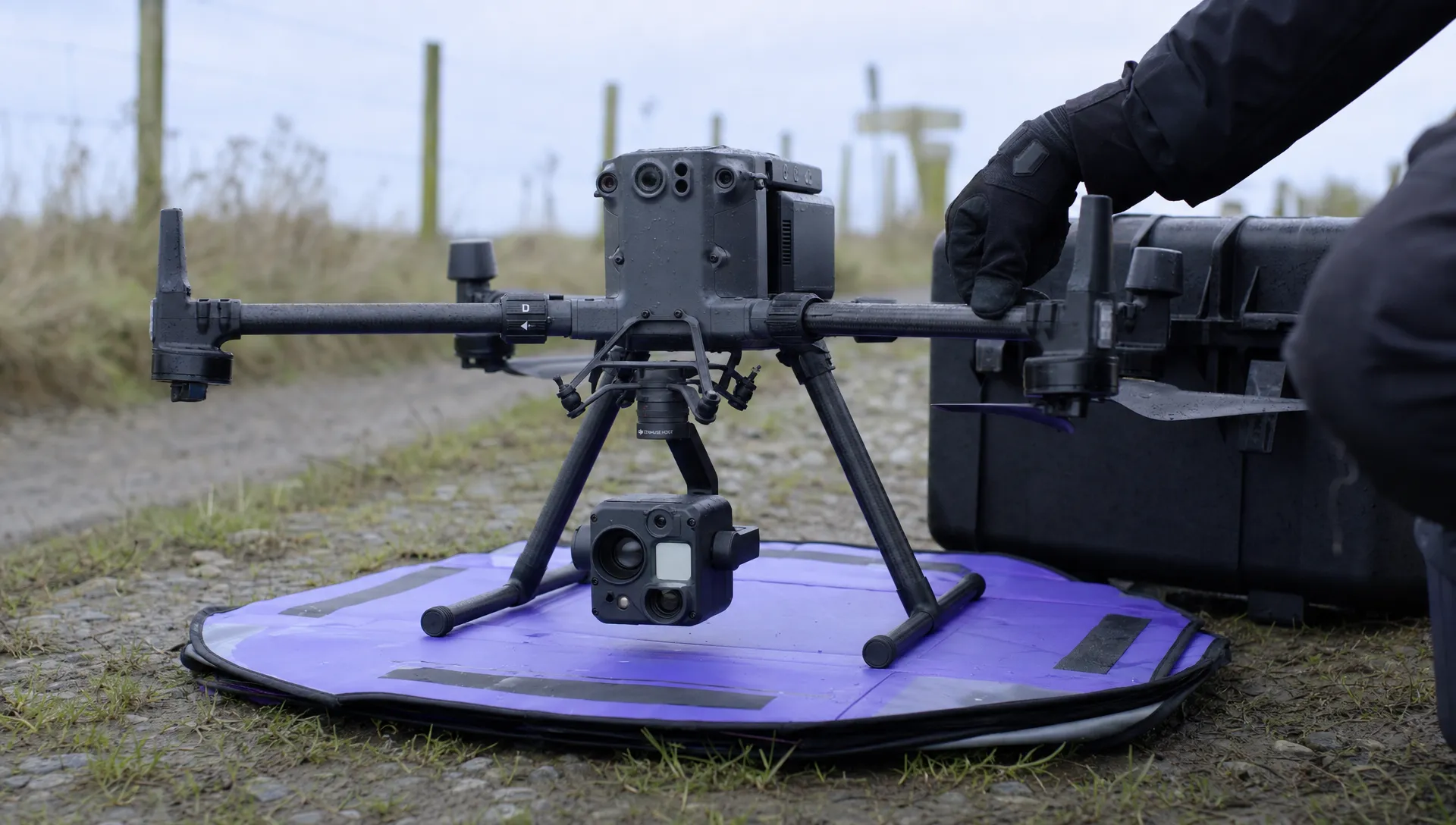 How to Choose a Search and Rescue Drone for Rural Operations →
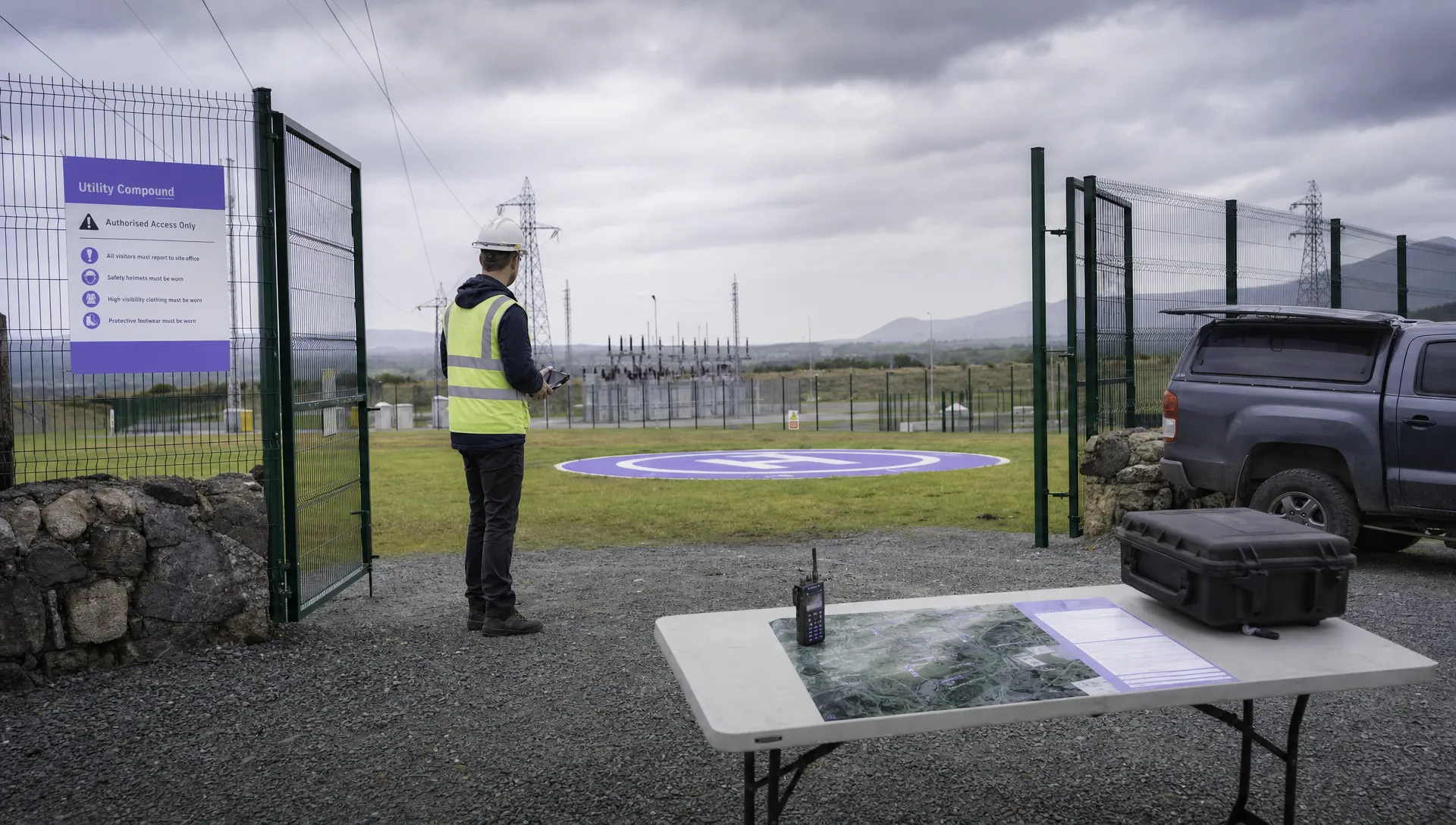 How to Carry Out a Drone Site Survey Before Mobilising →
 How to Evaluate Drone Companies for Long-Term Contracts →
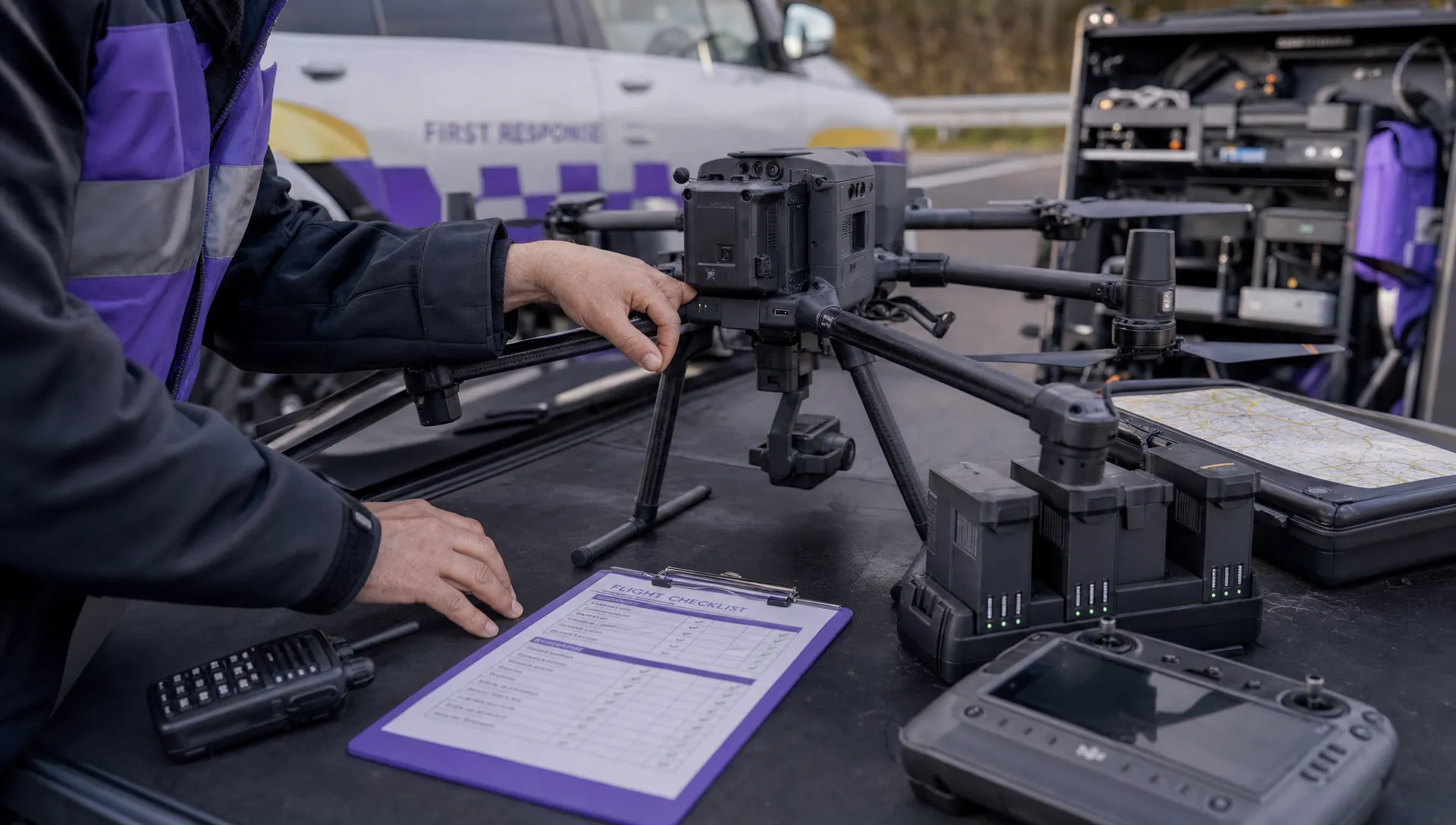 What a First Responder Drone Programme Needs Before Deployment →
 Law Enforcement Drones and Their Role in Evidence Collection →
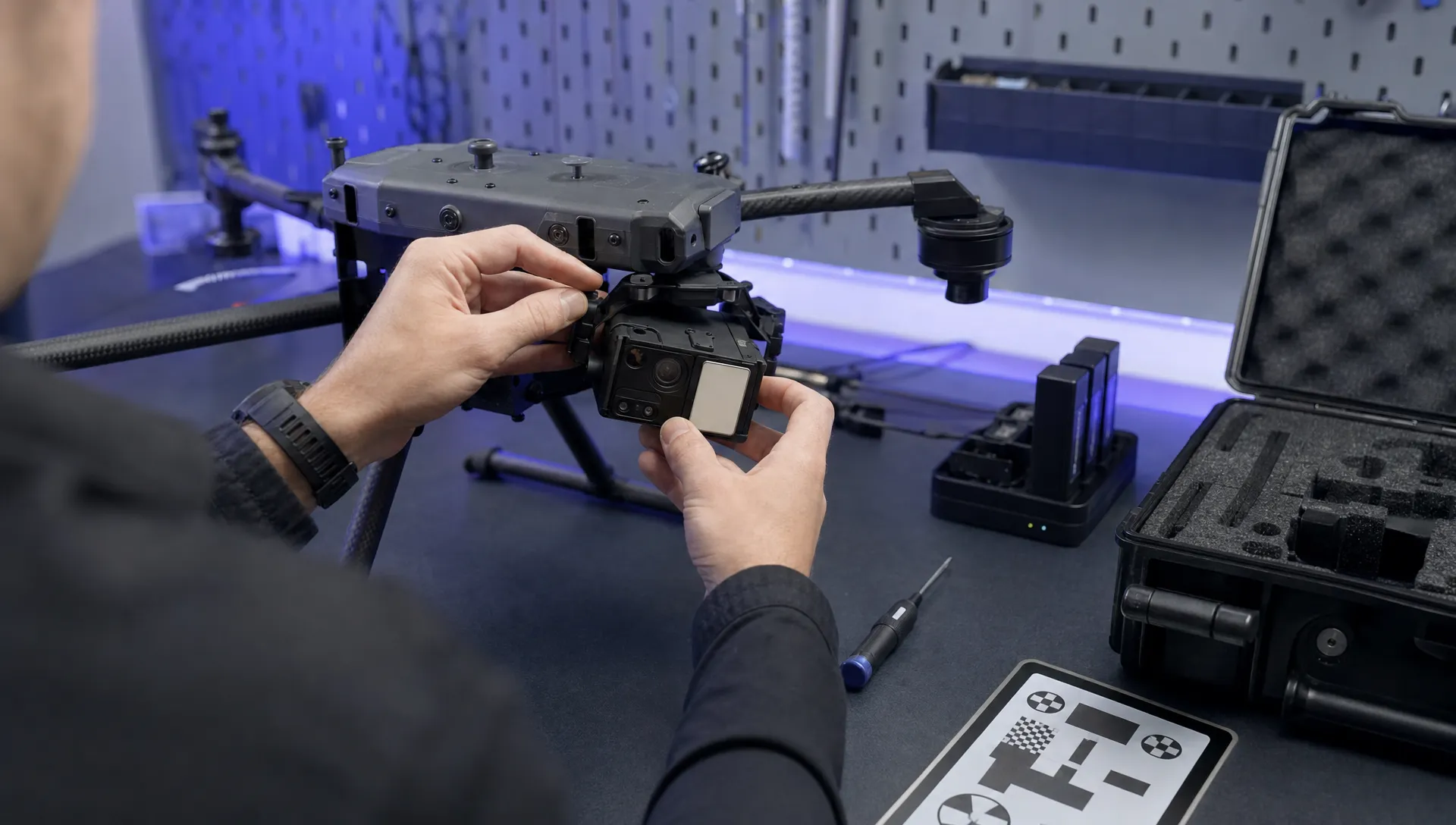 What Are UAV Systems? Aircraft, Payloads and Ground Equipment →
 7 Best Flight Planning Apps for Commercial Drone Teams →
 How Police Drones Support Incident Command →
 FAA Drone Flight Regulations for Operations From Moving Vehicles →