
BVLOS Drone License: Understanding the US Approval Path
Searching for a bvlos drone license in the United States can lead you to pilot courses, FAA waiver services and aircraft suppliers, but these address different parts of the approval process. For an operation using the FAA’s Part 107 framework, pilot certification and permission to fly beyond visual line of sight are separate matters. Buying training or a capable aircraft does not, by itself, authorise the flight.
For survey companies, utilities and emergency services, the useful starting point is the proposed operation: what will fly, where it will fly, who will control it and how risks will be managed.
Scope: This guide explains the established Part 107 waiver pathway and how to evaluate other approval routes. It does not confirm the status of later BVLOS rulemaking. Check the linked official FAA sources and your actual approval documents before relying on a regulatory route.
Separate pilot credentials from operational permission
BVLOS means beyond visual line of sight. Under the Part 107 framework, the relevant visual-line-of-sight requirement is found in 14 CFR §107.31. The FAA’s waiver process provides a route for requesting relief from specified operating rules, supported by an explanation of how the proposed operation can be conducted safely.
That distinction matters when comparing providers. A course completion certificate, a remote pilot certificate and an operational waiver are not interchangeable.
| Approval layer | What it addresses | What not to assume |
|---|---|---|
| Pilot qualification | The credentials required for the person acting as remote pilot | A pilot credential alone permits BVLOS |
| Operational permission | The proposed operation and any approved departure from applicable rules | Permission covers every aircraft, location or mission |
| Airspace access | Access to the airspace involved in the mission | A BVLOS approval automatically supplies every necessary airspace authorisation |
| Other applicable requirements | Aircraft, operating and local constraints relevant to the mission | Resolving one requirement resolves all the others |
When a supplier advertises a bvlos drone license, ask which of these layers the service actually addresses. Request the name of the FAA approval involved, who holds it and what operating conditions it contains.
For the pilot qualification component, Dronedesk’s Part 107 application guide provides a separate starting point. Keep that workstream distinct from the operational approval application.
Choose the regulatory route before buying equipment
Assess whether Part 107 fits the operation
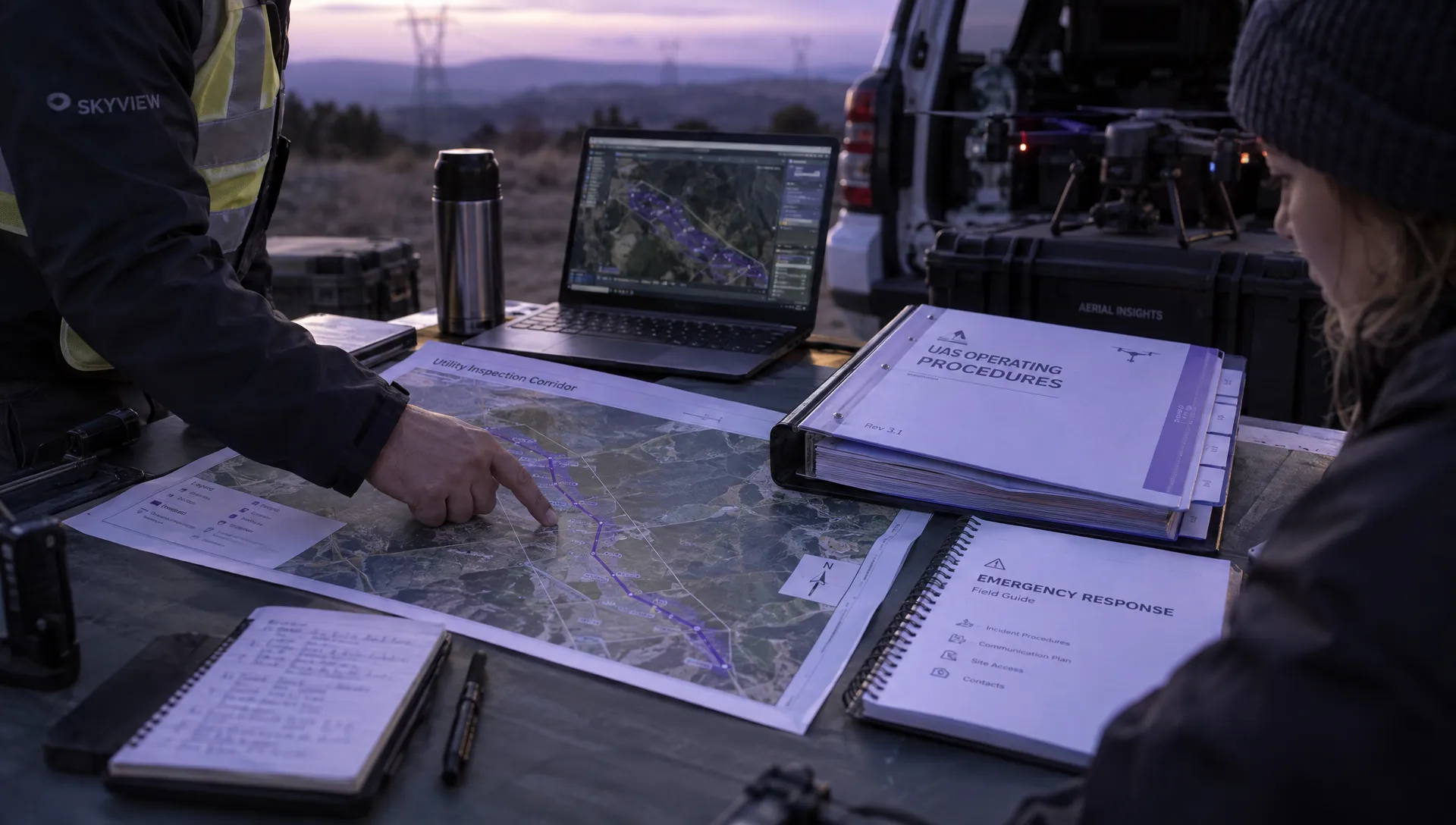
Start with a short concept of operations, usually called a ConOps. Describe the aircraft, payload, route, operating area, crew arrangement and intended mission. Include whether the aircraft will pass near people, roads, buildings or other aircraft activity.
Then use the FAA’s Part 107 waiver guidance to identify the provisions relevant to that operation and the information required for an application. Do not treat the visual-line-of-sight issue as the only possible regulatory constraint.
For example, a utility inspection along a sparsely populated corridor presents a different operating environment from repeated flights above busy streets. Even if both missions involve the same aircraft, their risks and supporting evidence may differ substantially.
The practical question behind a bvlos drone license enquiry is therefore not simply whether the pilot is qualified. It is whether the selected approval route can cover the proposed operation and its specific departures from the normal rules.
Identify missions needing a different route
Some operations require a broader discussion with the FAA rather than an assumption that a Part 107 waiver will resolve everything.
The FAA maintains separate guidance for package delivery by drone, including the role of Part 135 certification. An organisation planning delivery services should examine that guidance before building its business model around a standard inspection waiver.
Emergency services should also assess whether a civil operating route or a public aircraft route is appropriate. The FAA’s public safety and government guidance is the relevant starting point. Being a government organisation does not, on its own, answer every aircraft status or approval question.
If a proposal or supplier refers to Part 108 or another developing BVLOS framework, establish whether an applicable final rule is effective and what its transition arrangements require. A proposed rule, consultation document or anticipated approval cannot serve as permission to conduct a flight.
Build evidence for a bvlos drone license request
Once the route is clear, focus on a consistent safety explanation. The application should connect each operational risk with a practical control and evidence that the control works.
Under 14 CFR §107.200, the FAA’s waiver decision concerns whether the proposed operation can be conducted safely under the waiver’s terms. A collection of manufacturer brochures is not a substitute for explaining your own operation.
Define the operating boundaries
Be specific about the intended operating envelope. “Rural inspection flights” leaves too much unresolved. A useful description establishes the route, terrain, nearby aviation activity, population exposure and conditions in which the operation will stop.
Relevant planning questions include:
- Operating volume: Where will the aircraft fly and what boundaries will keep it within the planned area?
- Ground exposure: Who could be affected by a malfunction and how will the operation reduce that exposure?
- Air traffic interaction: How will the crew identify and respond to potential conflicts with other aircraft?
- Command and control: What coverage, performance limits and failure responses apply to the control link?
- Contingencies: What will happen after a lost link, navigation problem, unexpected aircraft encounter or emergency landing?
For a bvlos drone license application package, these answers need to agree across the ConOps, risk assessment and operating procedures. If one document assumes a dedicated observer and another assumes a single-person crew, resolve that contradiction before submission.
Dronedesk’s guide to building a drone flight risk assessment can help structure the risk discussion, but the relevant FAA application guidance remains the authority for submission requirements.
Distinguish capabilities from demonstrated performance
A stated aircraft range is not proof that the command-and-control link will remain reliable throughout a particular route. Likewise, a product described as having detect-and-avoid capability needs to be assessed against the operating environment and the proposed safety function.
Document what the system can do, its limitations and how the crew responds when those limits are reached. Depending on the operation, supporting material might include test results, coverage assessments, maintenance records and procedure validation.
Avoid promising performance that has not been demonstrated. It is better to propose a narrower operating envelope supported by evidence than a broad one resting on assumptions.
Keep BVLOS permission and airspace access separate
A BVLOS approval and an airspace authorisation solve different problems. Check the mission against both the operational approval and the applicable airspace requirements.
The FAA’s LAANC guidance explains its airspace authorisation service. Do not interpret an airspace approval as permission to depart from visual-line-of-sight requirements, or assume a BVLOS waiver grants unrestricted access to controlled airspace.
Before deployment, match the actual flight to the approval documents. Review the aircraft, location, altitude, crew arrangements and operating conditions. Where a document imposes a limitation, treat it as an operational boundary rather than background information.
A bvlos drone license search can make the process sound like obtaining one portable credential. In practice, the operational question is whether this particular flight fits the permissions and conditions held by the operator.
Turn the approval process into manageable workstreams
Assign responsibility for the evidence
Applications become difficult to manage when nobody owns the complete safety explanation. Assign a lead who can reconcile the technical evidence, crew procedures and intended operating scope.
A useful division of work gives operational staff responsibility for the ConOps and procedures, technical staff responsibility for system evidence and a designated reviewer responsibility for consistency. Smaller teams may combine these roles, but the responsibilities still need to be explicit.
Maintain a requirements register connecting each identified requirement or approval condition to a document, responsible person and supporting evidence. This helps expose gaps before they become unanswered questions in the application.
Budget for more than the submission
The cost of a bvlos drone license project is not meaningfully captured by a training fee or application service quote alone. The project may also involve testing, technical documentation, communications assessments, crew preparation and changes to the intended operating model.
Ask advisers and suppliers to distinguish their deliverables from the FAA’s decision. Clarify who prepares the application, who responds to follow-up questions and what happens if the proposed scope needs revision.
Do not base mobilisation dates on an assumed approval deadline. Plan for clarification requests and keep commercial commitments consistent with the permissions actually obtained.
Prepare for operations after approval
Approval documents need to become usable instructions for the people conducting the flights. Before the first mission, translate their conditions into crew briefings, checklists and clear decisions about when not to fly.
The records retained during operations should help demonstrate that the team stayed within the approved envelope. Relevant records may include crew assignments, aircraft configuration, maintenance status, weather assessments and flight information, depending on the applicable conditions.
Where DJI flight logs form part of your technical review, the DJI flight log analysis tool is a relevant resource to examine. Log analysis can inform an investigation or operational review, but it does not itself establish regulatory compliance.
A bvlos drone license project should also include change control. A replacement aircraft, altered route or different communications setup may affect the assumptions supporting an approval. Check the document’s scope and obtain any necessary clarification before treating a change as routine.
Frequently asked questions
Is a Part 107 remote pilot certificate enough for BVLOS? Not by itself under the Part 107 waiver pathway described here. Pilot qualification and permission to depart from the visual-line-of-sight requirement are separate issues. Check the current FAA framework and the conditions applying to your operation.
Can a BVLOS training course grant FAA operating permission? A training certificate is not an FAA operational approval. Ask the provider whether its service covers training, application preparation or operations conducted under a specific approval, then examine the relevant documents.
Does another operator’s approval cover our organisation? Do not assume it does. Examine the approval holder, authorised scope and operating conditions. A case study can inform your planning without granting permission for your own flights.
How long does approval take? Avoid treating any estimate as a guaranteed decision date. Scope, supporting evidence and clarification requests can affect the process. Use the FAA’s current application instructions for planning guidance.
What should I ask a bvlos drone license consultant? Ask which regulatory route they recommend, what evidence they will produce, who will hold the approval and which costs are excluded. They should distinguish their own services from decisions only the FAA can make.
Start with a defined mission
Before purchasing aircraft or commissioning an application, write a concise ConOps and check the approval route against official FAA guidance. That gives your team a concrete basis for discussing evidence, responsibilities and costs.
When selecting supporting software, compare Dronedesk’s published features with your operational recordkeeping requirements. Keep the distinction clear: software can support the work around an application and subsequent flights, but the FAA’s applicable rules and approval conditions determine what you may do.
 What a Drone Line of Sight Waiver Means for Project Scope →
 Drone Regulations for Commercial Use With Mixed Aircraft Fleets →
 FAA 107 Test Study Plans for Shift Workers →
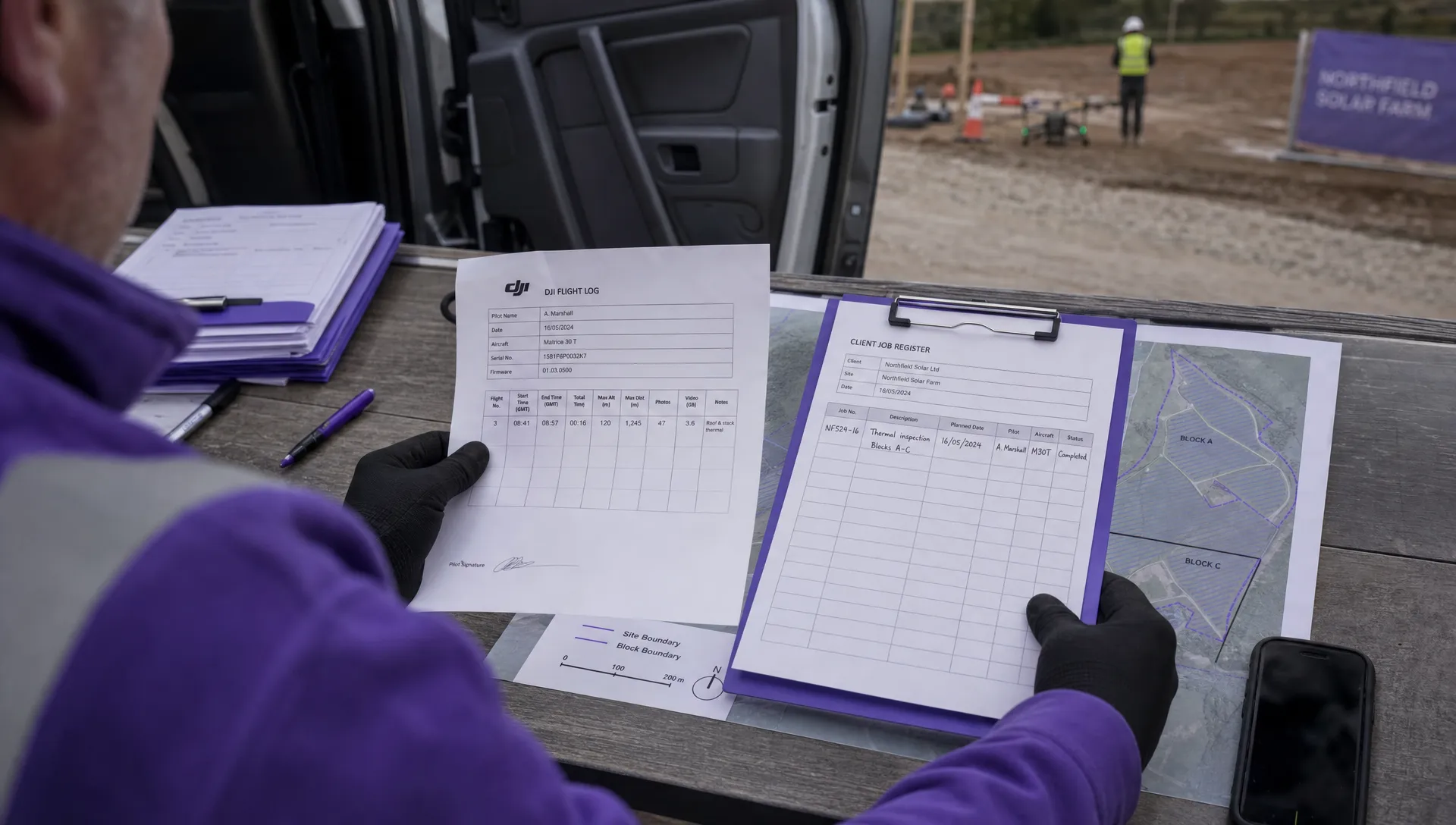 How to Match a DJI Flight Log to a Client Job →
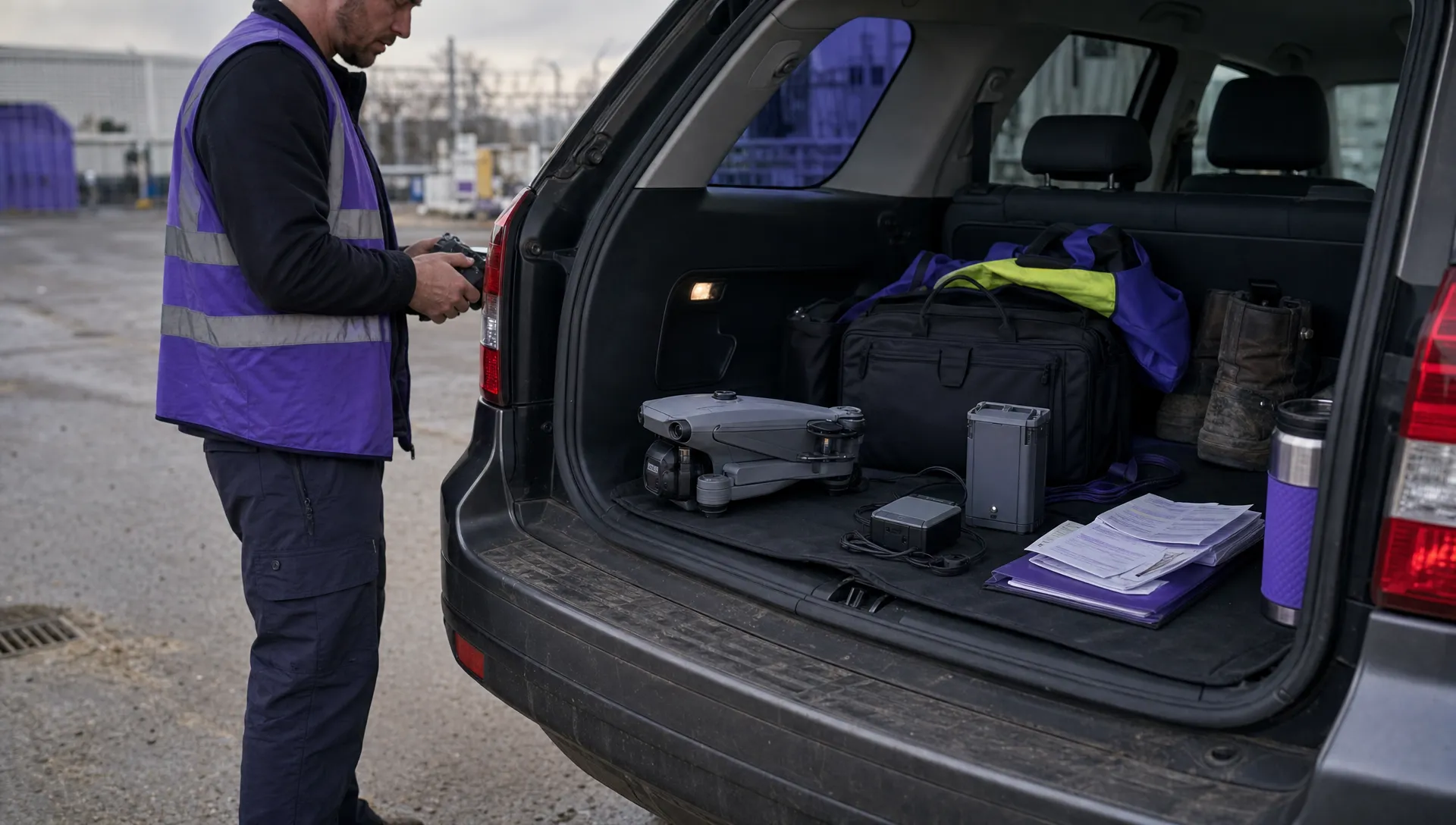 Drone Regulations Under 250 Grams for Mixed-Weight Fleets →
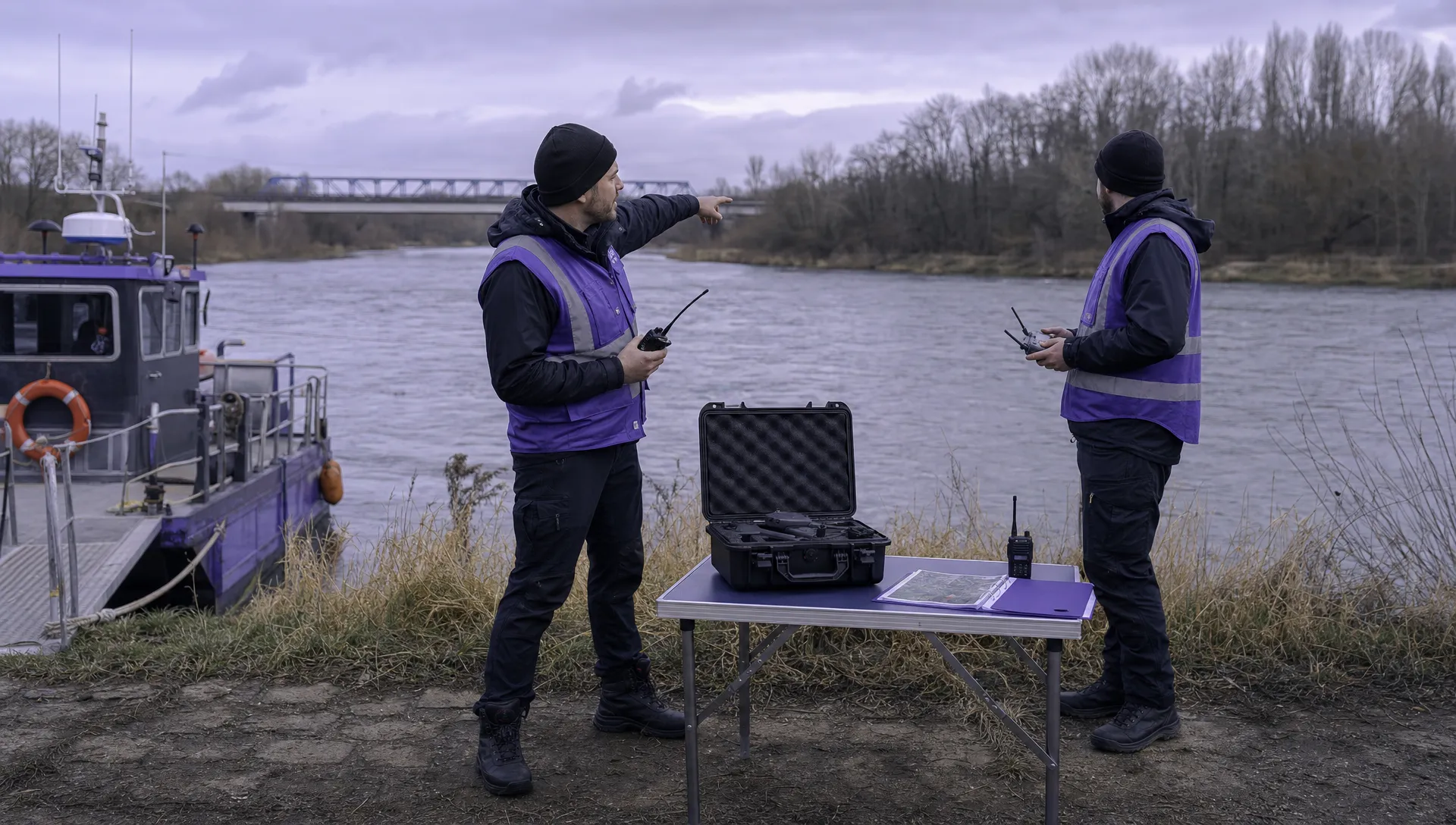 Drone Safety Guidelines for Working Near Water →
 FAA Rules and Regulations for Drones on Shared Worksites →
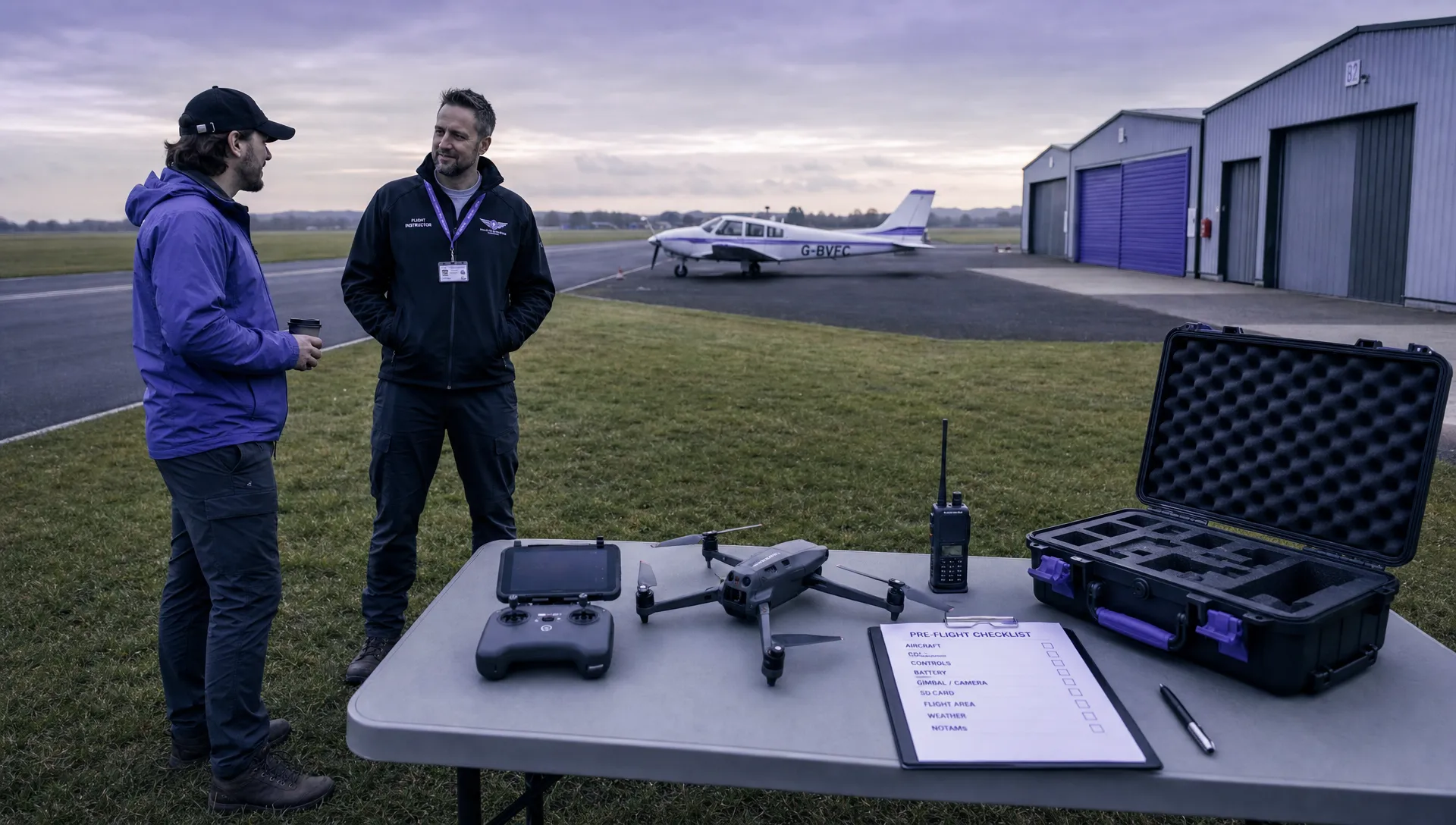 Drone Pilot 107 Refresher Training After a Career Break →
 How to Track Drone Regulations Worldwide as a Business →
 FAA Rules for Flying Drones at Night During Emergency Missions →