
Part 107 License Records Every Commercial Operator Needs
Commercial drone compliance is not just about passing the FAA knowledge test. A part 107 license may be the credential that lets you fly commercially, but your records are what prove you operated legally, safely and professionally when a client, insurer, auditor or FAA representative asks questions later.
For survey companies, utility inspection teams and emergency services, records also protect the continuity of the operation. If the remote pilot in command is unavailable, the job file should still show which aircraft flew, who crewed the mission, what authorisations applied, what risks were assessed and what happened after landing.
This guide focuses on the records a commercial operator should keep after certification. It is not legal advice, and FAA rules should always be checked against the live FAA and eCFR sources before you update an operations manual or compliance procedure.
Why part 107 license records matter once you start flying
The FAA’s Part 107 overview sets the operating framework for most non-recreational small UAS work in the United States. The FAA does not require every commercial drone operator to keep a full binder for every routine flight, but several records, documents and reports are directly tied to compliance.
Under 14 CFR §107.7, a remote pilot must make required documents, records and reports available to the FAA, NTSB, law enforcement or TSA representatives when requested. The remote pilot certificate and identification must also be in physical possession or readily accessible when exercising remote pilot privileges.
That is the narrow regulatory reason. The business reason is broader. Good part 107 license records help you answer the practical questions that come up after a flight: was the pilot current, was the aircraft registered, was the airspace authorisation valid, were site hazards briefed and were any defects dealt with before the aircraft flew again?
The core part 107 license records every operator should hold
A simple record system should separate mandatory FAA evidence from business records that support safety, insurance and client confidence. The categories below give commercial teams a practical baseline without pretending that Part 107 mandates the same documentation for every type of job.
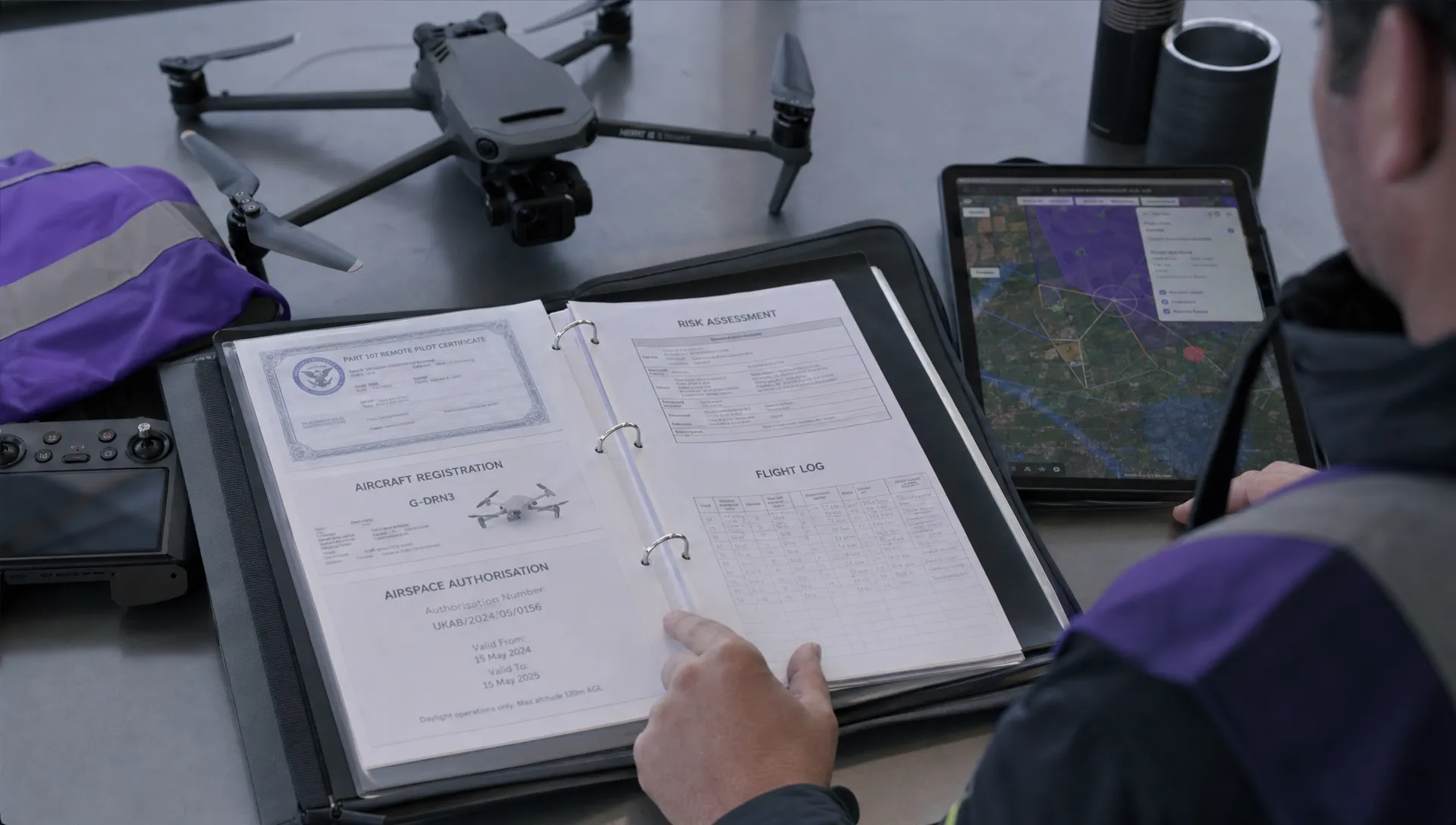
Pilot certificate, ID and currency records
Every operation needs a clear record of who acted as remote pilot in command. Keep a copy or secure digital record of the remote pilot certificate with small UAS rating, plus enough information to confirm the pilot was current on the day of the flight.
Under 14 CFR §107.65, remote pilots must meet recurrent aeronautical knowledge requirements within the previous 24 calendar months. In practice, that means keeping proof of the initial test and subsequent recurrent training or testing, as applicable to the pilot’s certification pathway.
For larger teams, part 107 license records should also capture mission roles. Record the remote pilot in command, any person manipulating the controls, visual observers and payload or data specialists who were directly involved. If a client later queries a data set or a safety decision, the crew record gives you a reliable chain of responsibility.
Aircraft registration and Remote ID records
Commercial operators should maintain a file for each aircraft in the fleet. At minimum, that file should include FAA registration details, the registration number displayed on the aircraft and the aircraft make, model and serial number. Any payloads, sensors or modifications that affect normal operation should be documented in the same fleet record.
Remote ID should be treated as part of the aircraft compliance file. The FAA’s Remote ID guidance explains that most drones operating in U.S. airspace must broadcast identification and location information, unless they fall into a permitted exception. For a commercial operator, the record should show whether the aircraft has built-in Standard Remote ID or uses a broadcast module, along with the relevant serial number used in registration.
This matters operationally as well as legally. If a utility inspection team swaps aircraft at short notice, the job file should still show that the substitute aircraft was registered, Remote ID compliant and fit for the planned task.
Airspace authorisations and waivers
If a job takes place in controlled airspace, keep the LAANC or FAA DroneZone authorisation with the mission record. Under 14 CFR §107.41, operations in certain controlled airspace require prior authorisation. The record should show the authorisation reference, approved altitude, date, time, location and any conditions attached to the approval.
Waivers need the same discipline. If an operation relies on a waiver granted under Part 107, keep the approval letter, effective dates, operating area, listed mitigations and any crew briefing that explains the waiver conditions. A waiver is not a general permission slip. It is a conditional approval, and the part 107 license file should make those conditions easy to check before the aircraft leaves the ground.
For complex jobs, add a one-page summary of the authorisation or waiver to the operational pack. This helps field teams avoid relying on memory when they are already managing site access, weather, client expectations and aircraft readiness.
Pre-flight assessment and risk assessment records
Part 107 places responsibility on the remote pilot to assess the operating environment before flight. 14 CFR §107.49 covers pre-flight familiarisation, inspection and actions, including weather, airspace, flight restrictions, the location of people and property, ground hazards and crew briefing.
A written pre-flight assessment is one of the simplest ways to prove that this happened. It does not need to be overcomplicated for a low-risk job, but it should be specific to the location and task. A generic tick-box form that says “hazards checked” is weaker than a short record that notes overhead lines, public access points, temporary restrictions, emergency landing areas and the decision that followed.
For operators standardising this process, Dronedesk’s guide on building a drone flight risk assessment that works is a useful companion because it focuses on making assessments practical rather than ceremonial.
Operational records that protect your business
Not every useful record is specifically named in Part 107. Some records exist because they help you manage safety, defend decisions and meet client or insurance expectations. For commercial operators, these records often become more valuable than the minimum compliance documents.
Flight logs and crew notes
A good flight log should tell the story of the sortie without forcing someone to reconstruct it from memory. Record the date, location, aircraft, pilot, crew, take-off and landing times, batteries used, general weather conditions, purpose of flight and any abnormal events.
The FAA does not impose a universal Part 107 flight log format for every operation, but a consistent log is still one of the strongest part 107 license support records a business can keep. It links the pilot, aircraft, authorisation and client deliverable in one place.
Where DJI aircraft are used, raw logs can also help with troubleshooting and post-flight review. Dronedesk provides a DJI flight log analysis tool that can help operators inspect flight data when they need to understand what happened during a mission.
Maintenance, defect and battery records
Under 14 CFR §107.15, the remote pilot in command must not operate a small unmanned aircraft unless it is in a condition for safe operation. If the aircraft is no longer safe, the operation must stop.
The practical record should show how you reached that safety decision. Keep pre-flight inspection results, defects, repairs, firmware updates, propeller changes, payload changes and maintenance actions. For batteries, track identifiers, cycle counts, condition notes, incidents, retirements and storage concerns where relevant.
Battery records deserve special attention for repeat commercial work. A mapping aircraft might fly multiple packs in one morning, and weak battery discipline can create avoidable risk. If a battery shows swelling, abnormal voltage behaviour or overheating, the record should show that it was quarantined or removed from service.
Incident, accident and corrective action records
FAA accident reporting is specific. Under 14 CFR §107.9, the remote pilot in command must report certain accidents to the FAA within 10 calendar days if they involve serious injury, loss of consciousness or qualifying property damage over the regulatory threshold.
Your internal threshold should be lower. Near misses, flyaways, hard landings, lost-link events, damaged propellers, unexpected public interaction and site incursions should be captured even when no FAA accident report is required. A tidy part 107 license record does not just say what went wrong. It shows the corrective action, such as pilot briefing changes, updated checklists, aircraft inspection or a revised site control plan.
For emergency services, incident notes can also support after-action reviews. For survey and utility teams, they help protect future operations by making lessons visible across the whole organisation rather than leaving them with one pilot.
Client, permission and data records
Part 107 compliance is only one part of a commercial operation. Keep client scopes of work, landowner permissions, site access instructions, indemnity or insurance documents and any local permits that apply to the job.
Data records matter too. Survey companies may need to show chain of custody for deliverables. Utilities may need to connect imagery to asset IDs, inspection dates and engineer review. Public bodies may need clearer rules around retention, privacy and onward sharing. These are not all FAA requirements, but they are part of running a professional drone operation.
Part 107 license records checklist for commercial teams
The table below separates records that are directly tied to FAA obligations from records that are operationally prudent. Retention periods are practical suggestions, not a universal FAA rule. Your contracts, insurance terms and legal advice may require longer retention.
| Record type | Why it matters | Keep with |
|---|---|---|
| Remote pilot certificate and ID evidence | Shows who was authorised to act as remote pilot in command | Pilot file and mission file |
| Recurrent training or knowledge currency proof | Supports the 24 calendar month recency requirement | Pilot file |
| Aircraft registration and Remote ID details | Confirms the aircraft was registered and identifiable | Fleet file and mission file |
| Airspace authorisation or waiver | Shows the flight was approved where authorisation was required | Mission file |
| Pre-flight assessment and crew briefing | Documents environmental review and operational decision-making | Mission file |
| Flight log and crew notes | Connects the aircraft, pilot, site, time and task | Mission file |
| Maintenance, defect and battery records | Supports safe-condition decisions and fleet control | Fleet file |
| Accident report and incident review | Shows reporting, investigation and corrective action | Safety file and mission file |
| Client scope, permissions and site access notes | Protects commercial, access and deliverable obligations | Job file |
A checklist like this should be adapted to the risk of the work. A one-acre real estate shoot and a linear utility inspection near controlled airspace should not generate identical paperwork, but both should leave enough evidence for a competent person to understand the decision-making.
How long should part 107 license records be kept?
Part 107 does not create one simple retention period for every record a drone company might hold. That means operators need a risk-based retention policy that fits their work, clients and insurance requirements.
As a practical baseline, keep current pilot certificates, recurrent training evidence, aircraft registration, Remote ID details and active waivers for as long as they are relied upon. Keep mission records long enough to cover client queries, insurance questions and internal safety reviews. Many operators choose to retain flight, maintenance and risk assessment records for several years because drone projects often remain commercially relevant long after the flight date.
For accident, incident and claim-related files, take advice before deleting anything. If there has been an injury, property damage, investigation, complaint or insurance notification, the record may need to be preserved for longer than your routine job files.
A written retention policy also prevents accidental over-collection. Holding everything forever can create its own administrative and privacy burden, especially for public sector work or missions that capture sensitive infrastructure.
A practical part 107 license record workflow
The easiest record system is built around the job. Instead of keeping separate folders that only make sense to the chief pilot, create one job file that links the client, location, aircraft, crew, authorisations, risk assessment, flight logs and close-out notes.
Use consistent names for files and missions. For example, include the date, client, site and job number in the same order every time. Small habits like this make records searchable when someone needs a document months later.
For growing teams, spreadsheets and shared folders can become fragile. Permissions drift, versions multiply and field notes end up on personal devices. A dedicated operations platform can centralise the workflow, especially when several pilots, aircraft and clients are active at once.
Dronedesk is built for drone operations management and includes client management, fleet management, team management, airspace intelligence, proximity intelligence, flight planning, flight logging, data reporting, configurable checklists and risk assessments. You can review those capabilities on the Dronedesk features page and decide how they fit your operational model.
Whatever system you use, add a routine compliance review. Once a month, check a sample of job files and confirm that pilot currency, aircraft status, authorisations, risk assessments and logs match the work that was actually flown. This simple review catches gaps before they appear in a client dispute or regulatory query.
Frequently Asked Questions
Is a part 107 license the same as a remote pilot certificate? The FAA’s formal term is a remote pilot certificate with a small UAS rating. Many operators and clients use “part 107 license” as shorthand, but your records should use the official certificate details where possible.
Does the FAA require a flight log for every Part 107 flight? Part 107 does not set a universal flight log format for every commercial flight. Even so, keeping a flight log is a strong operational practice because it links the pilot, aircraft, location, time, authorisations and any issues from the mission.
What records should I carry during a commercial drone job? The remote pilot should have the remote pilot certificate and identification physically available or readily accessible. The crew should also be able to access the relevant airspace authorisation, waiver conditions, aircraft registration details, pre-flight assessment and emergency procedures for the job.
Do I need to keep records for visual observers? Part 107 does not create a standalone visual observer licence, but if a visual observer is used, the mission file should record their name, role and briefing. This helps demonstrate that the crew structure was planned rather than improvised.
What happens if I cannot produce a required record? If a required document, record or report cannot be produced when properly requested, the operator may face regulatory and commercial consequences. The best defence is a record system where current certificates, authorisations, aircraft files and mission documents are easy to retrieve.
Keep your commercial drone records audit ready
A strong record system does not need to slow the operation down. It should make safe decisions easier, keep field teams aligned and give managers confidence that every commercial job has a clear compliance trail.
If your drone records are spread across inboxes, spreadsheets, aircraft apps and paper checklists, start by standardising the job file. Then bring pilot, fleet, risk, airspace and flight log records into a single repeatable workflow. That is what turns part 107 license compliance from a last-minute scramble into a normal part of professional drone operations.
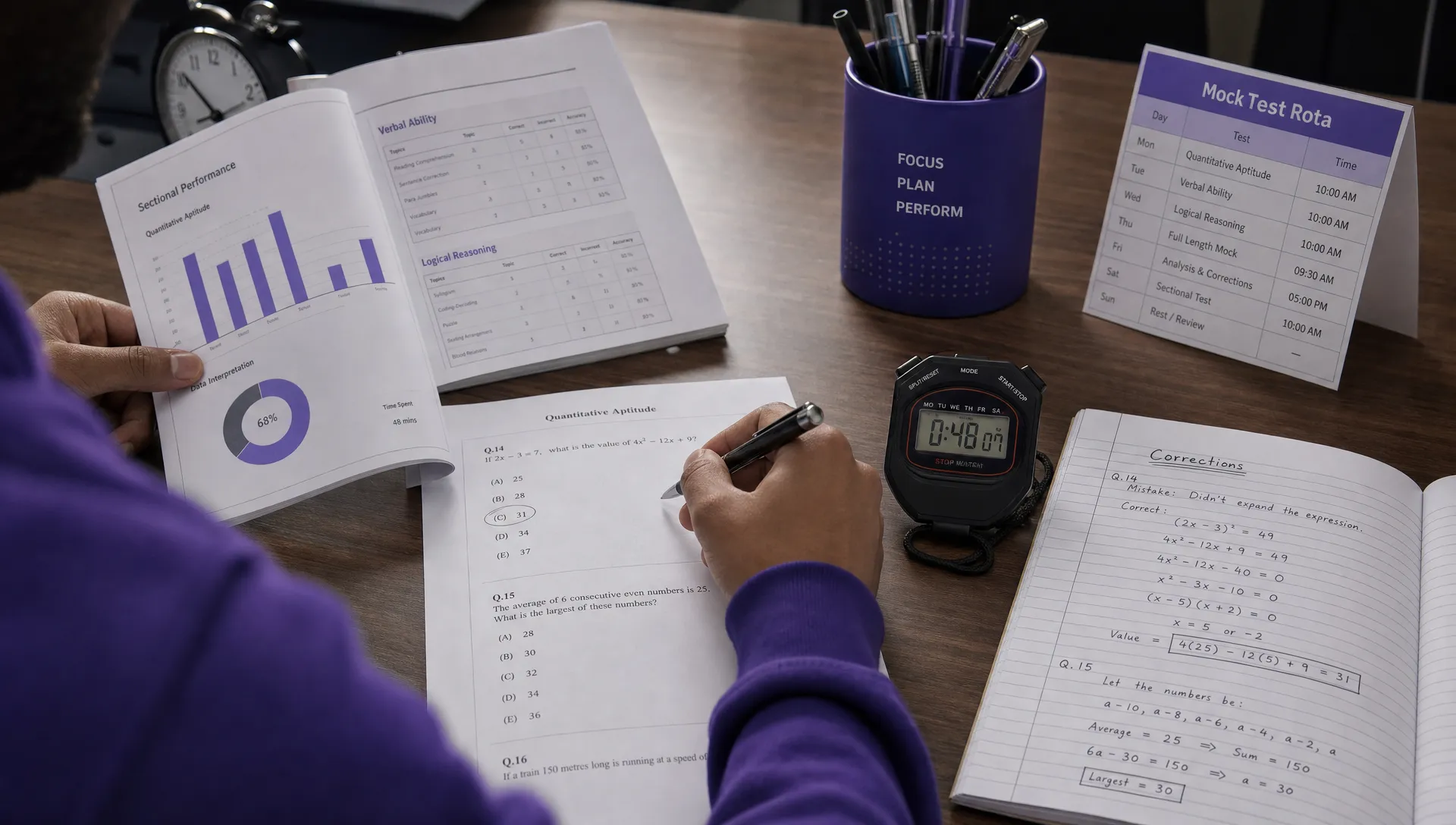 FAA 107 Test Study Plans for Shift Workers →
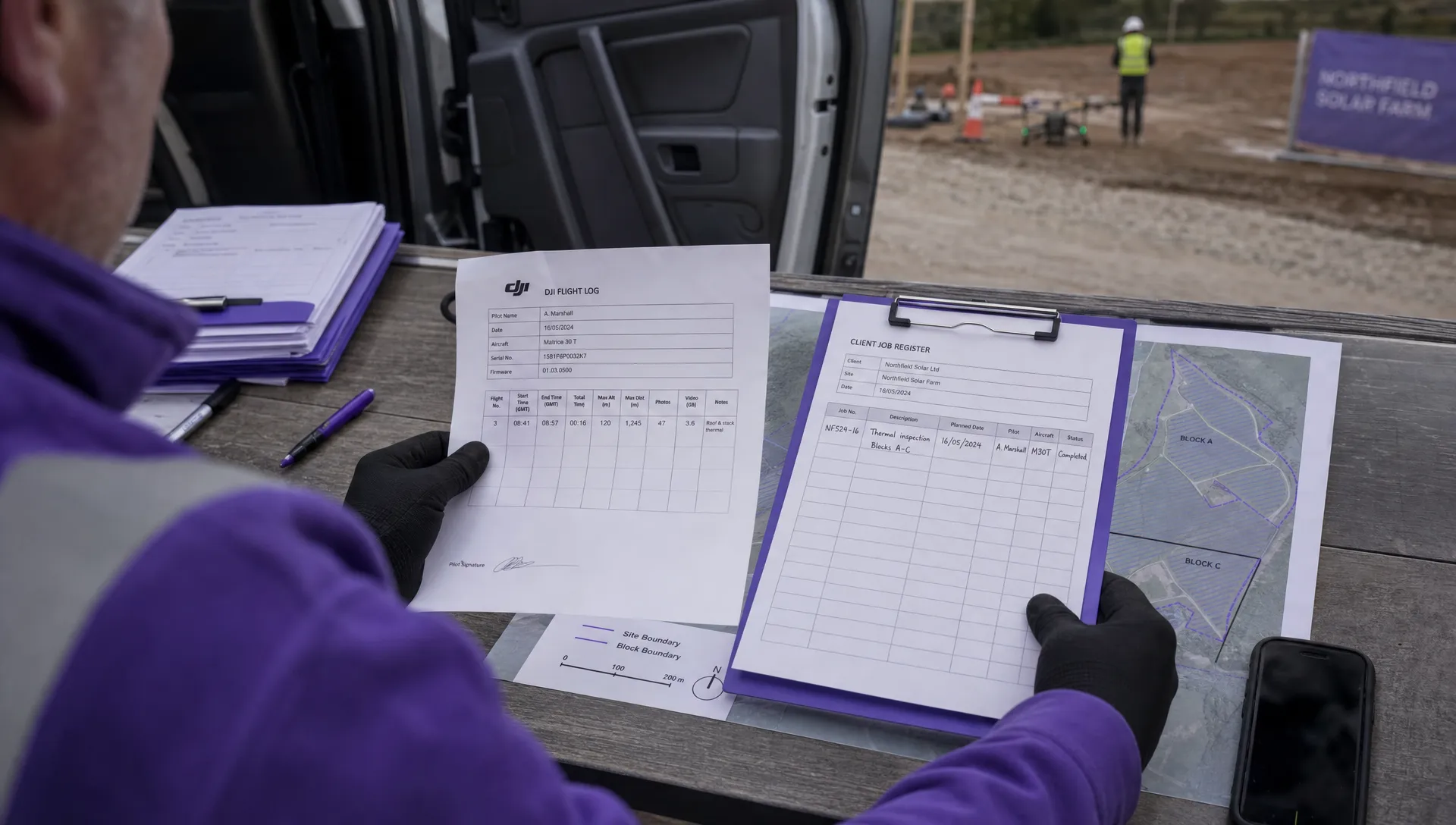 How to Match a DJI Flight Log to a Client Job →
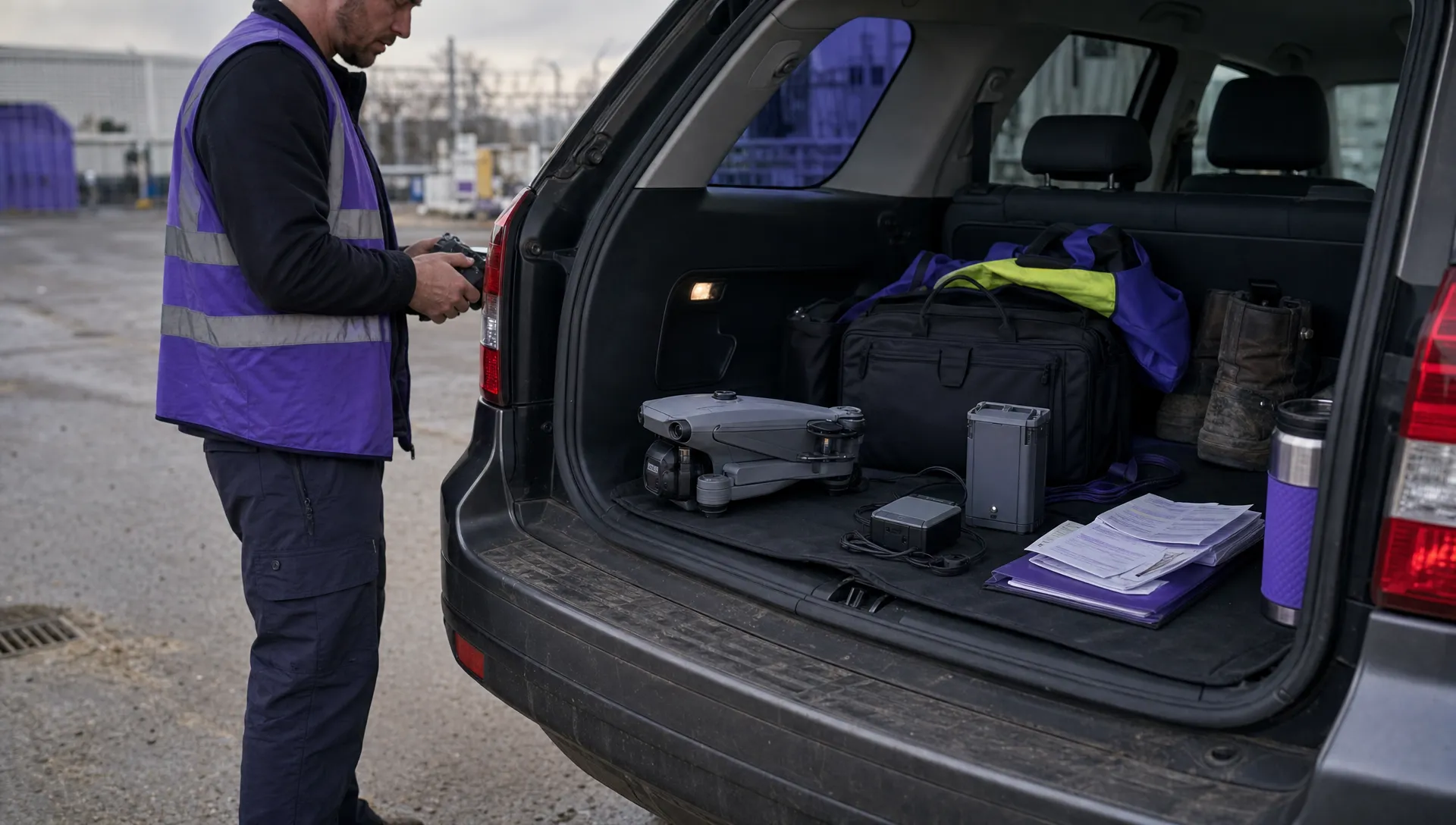 Drone Regulations Under 250 Grams for Mixed-Weight Fleets →
 Drone Safety Guidelines for Working Near Water →
 FAA Rules and Regulations for Drones on Shared Worksites →
 Drone Pilot 107 Refresher Training After a Career Break →
 How to Track Drone Regulations Worldwide as a Business →
 FAA Rules for Flying Drones at Night During Emergency Missions →
 How to Onboard an FAA 107 Pilot for Utility Inspections →
 FAA Drone Rules for Commercial Use on Construction Sites →