
FAA Drone Registration Rules When Transferring Company Assets
FAA drone registration rules distinguish an aircraft sale from a change in who operates it. For a typical company asset sale involving drones registered under Part 48, the seller cancels the existing registration and the buyer registers each aircraft before operating it. The seller’s registration certificate does not transfer with the equipment.
For survey firms, utilities and emergency services, the first task is therefore to establish whether legal ownership is changing. Moving a drone between depots is different from transferring it to a subsidiary, even when both organisations use the same branding.
Establish whether the legal owner is changing
Use the transaction documents, not the equipment’s location or asset tag, to identify the owner after completion.
| Transaction | Registration action to assess |
|---|---|
| Aircraft sold to another company | Seller cancellation and buyer registration |
| Aircraft transferred to a separately incorporated subsidiary | Treat as an ownership change, even within the same group |
| Aircraft moved between departments of the same legal entity | Usually no ownership change; check whether registered information needs updating |
| Shares sold while the aircraft-owning company remains the same | Do not automatically cancel; check the owner’s details and continuing eligibility |
| Aircraft loaned to another operator without changing ownership | Check the ownership and operating arrangements rather than assuming a new registration is needed |
A company name change also needs distinguishing from a transfer to a newly incorporated company. Where a merger or restructuring makes ownership unclear, resolve that point with the FAA before changing registrations or releasing aircraft for use.
FAA drone registration rules for business and recreational aircraft
The FAA’s drone registration guidance separates Part 107 registration from registration for exclusively recreational operations.
For Part 107 operations, each drone must be registered individually, including aircraft below 250 g. The small-drone recreational exemption is not a general exemption for lightweight company equipment. A 249 g drone used for client surveying does not avoid registration because of its weight.
Recreational registration works differently: one registration can cover multiple aircraft flown exclusively under the recreational exception. That arrangement should not be carried into a business fleet as though it were an individual commercial aircraft registration.
Part 107 registration costs $5 per aircraft and is valid for three years under the FAA’s published registration guidance. Budget for the buyer’s registrations rather than treating the seller’s remaining validity as a transferable benefit.
This article focuses on the Part 48 process used through FAA DroneZone. Aircraft weighing 55 lb or more require a different registration route. An aircraft already registered under Part 47 also needs separate attention, even if its weight would otherwise suit a small-drone operation.
Seller responsibilities: close the registration properly
For a seller, FAA drone registration rules make registration cancellation a separate task from removing the drone from the company’s asset register. Completing the invoice, handing over the controller or deleting the aircraft from a planning system does not cancel its FAA registration.
The FAA’s requirements for maintaining registration information address changes to registered information and cancellation following a sale or transfer. Follow those requirements alongside the current DroneZone instructions.
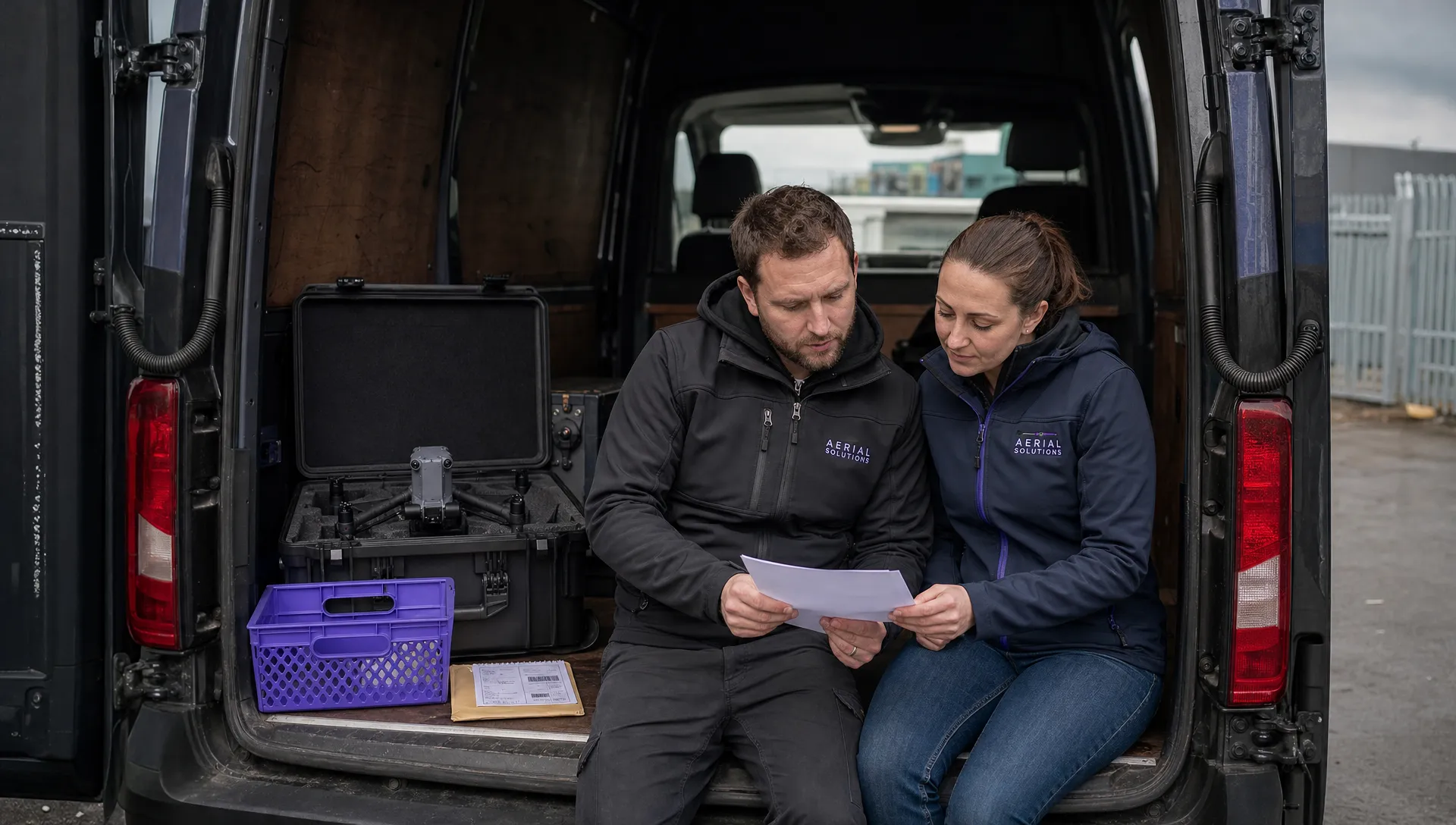
Before completion, match the physical aircraft to its registration record. Check the manufacturer, model and aircraft serial number rather than relying on a fleet nickname such as “Survey Drone 3”. Retain the transaction evidence and a record of the cancellation with the disposal paperwork.
Remove the seller’s FAA registration marking as part of the handover. Do not remove manufacturer identification or Remote ID labels when doing so. Those labels serve different purposes.
Agree a clear point at which the aircraft leaves the seller’s operational control. Once ownership changes, the buyer should not continue flying under the seller’s certificate while its own administrative work catches up. Build a stand-down period into the handover if necessary.
Buyer responsibilities: register before releasing the aircraft
A buyer applying FAA drone registration rules should treat each acquired aircraft as a separate registration task. A photograph of the seller’s certificate, an unexpired registration date or access to the seller’s account does not provide the buyer with its own registration.
Use FAA DroneZone for the applicable Part 48 registration process. Have an authorised representative provide the correct legal owner’s information. Do not use an outgoing employee’s personal details merely because that person previously managed the fleet.
Check the aircraft’s identifiers against the equipment itself and the manufacturer’s documentation. Enter the Remote ID information required for the aircraft’s configuration, where applicable. Do not assume that every serial number on the packaging, controller and aircraft is interchangeable.
After registration, apply the buyer’s registration marking to the aircraft’s exterior in accordance with the FAA’s marking instructions. Make the buyer’s certificate available to the person operating the aircraft as required by the FAA.
For example, if a utility buys three individually registered inspection drones, the buyer needs to deal with three aircraft registrations. The seller’s certificates are not a package that can be reassigned by changing a fleet spreadsheet.
Keep the bill of sale and other ownership documents separately. A registration certificate is not a replacement for clear transaction records.
Check Remote ID separately from registration
Meeting FAA drone registration rules does not, by itself, establish that an acquired aircraft is ready to fly. Remote ID is a separate compliance check, although the aircraft’s registration record and Remote ID details must be consistent where required.
The FAA’s Remote ID guidance explains the available compliance routes: a Standard Remote ID aircraft, an aircraft using a broadcast module or qualifying operation within an FAA-Recognized Identification Area. Each route has conditions; they are not interchangeable choices for every proposed mission.
During handover, establish which route the aircraft actually uses. An older aircraft may depend on an external broadcast module that the seller intends to retain. If that module is removed, the buyer cannot assume the aircraft has the same operating capability it had during the demonstration flight.
For a Standard Remote ID aircraft, identify the correct Remote ID serial number using the manufacturer’s instructions. For a module-equipped aircraft, identify the module and record its serial number where required in DroneZone.
Include a functional check before operational release. A successful registration application does not demonstrate that the aircraft is broadcasting correctly, and a visible broadcast does not demonstrate that the buyer has completed registration.
Build an aircraft-by-aircraft handover record
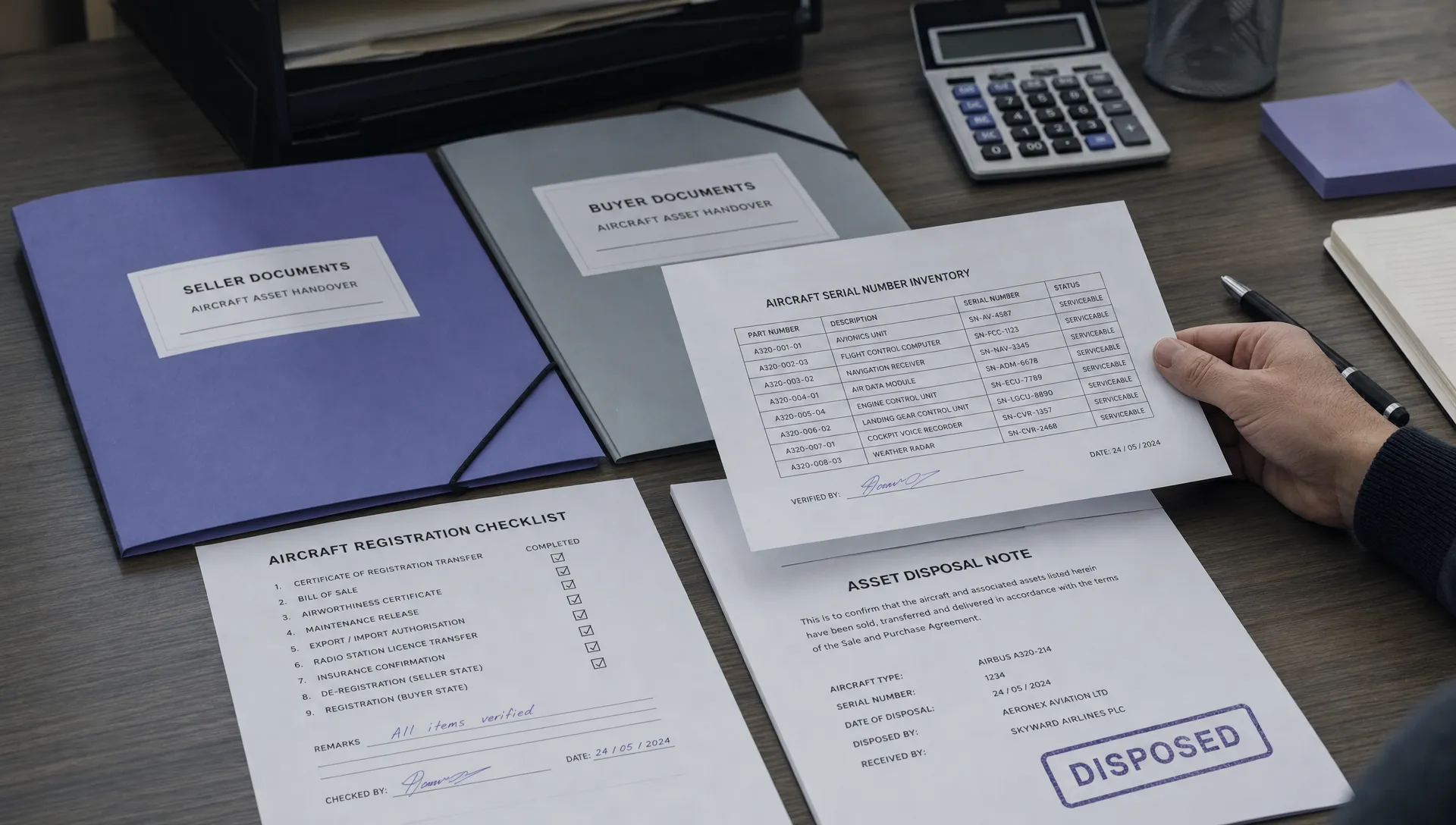
The practical way to apply FAA drone registration rules across an acquisition is to maintain one handover record per aircraft. A purchase agreement listing “six drones and accessories” is too broad to support a reliable operational release.
Include the following information in the handover record:
- The seller’s and buyer’s legal entity names, with the ownership-transfer date.
- Manufacturer, model and aircraft serial number, checked against the physical aircraft.
- The seller’s registration reference and evidence that cancellation has been addressed.
- The buyer’s registration reference, certificate and marking check.
- The Remote ID configuration, relevant serial number and any included broadcast module.
- The person responsible for approving the aircraft’s return to service.
Keep registration readiness separate from technical readiness. An aircraft can have correct registration paperwork but still need maintenance, a battery assessment or resolution of a known defect before use.
For a larger acquisition, a structured drone fleet management process helps place these checks within the wider equipment handover. Assign responsibility for each open item rather than recording a general statement that the fleet is “compliant”.
Do not let an asset-system import automatically mark every acquired aircraft as available. Operational release should follow the completed checks, not the date on which finance adds the purchase to the balance sheet.
Keep registration separate from pilot and airspace requirements
FAA drone registration rules concern the aircraft’s registration. They do not replace the operating rules governing the mission or the qualifications required of the pilot.
For operations under Part 107, check the FAA’s small unmanned aircraft systems regulations overview. The aircraft’s purchase does not give a new operator remote pilot privileges or permission to use controlled airspace.
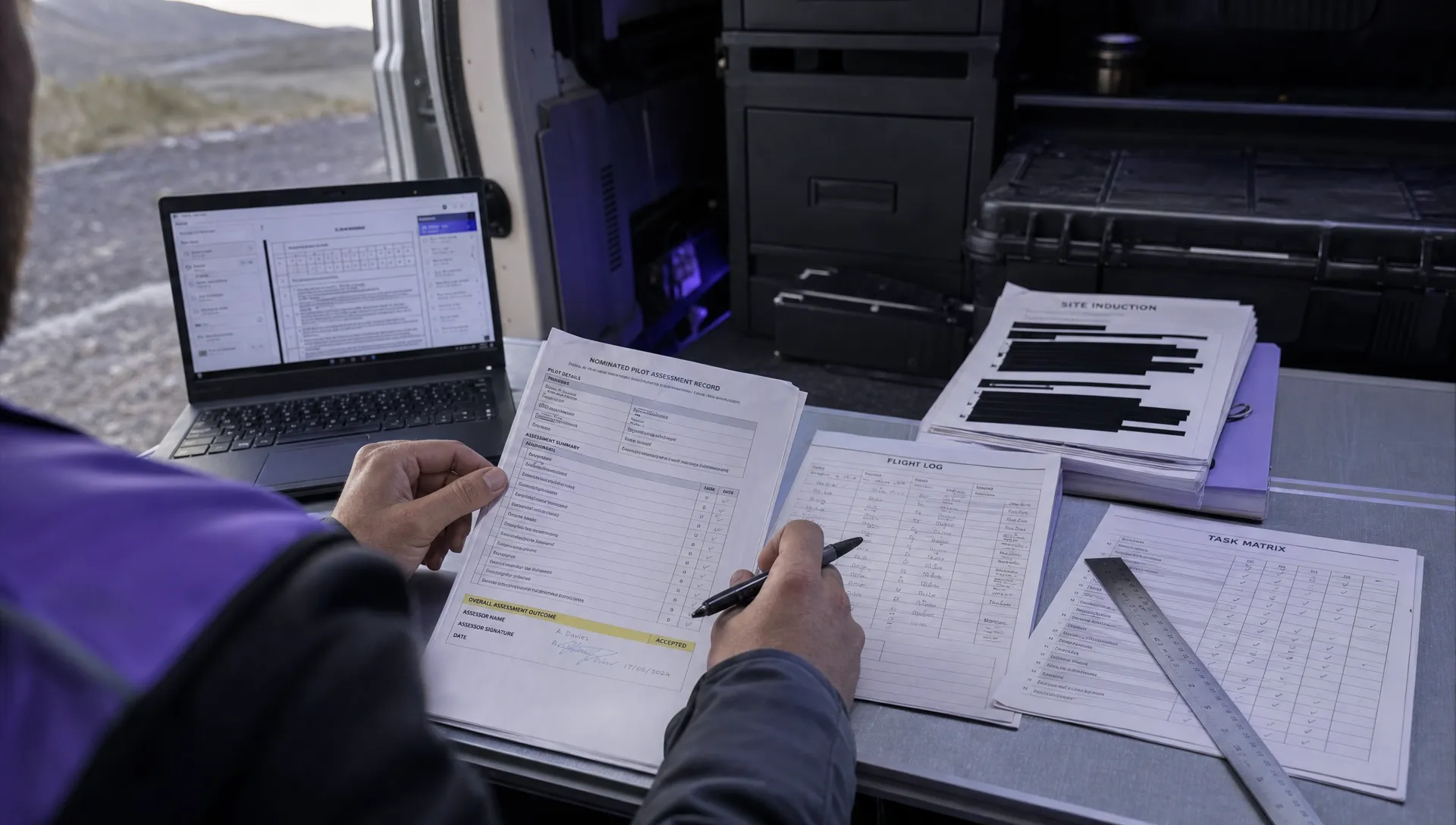
A commercial buyer should assess pilot certification and recurrent training requirements separately from the aircraft transfer. Dronedesk’s guide to applying for an FAA Part 107 certificate covers that separate workstream.
TRUST, the Recreational UAS Safety Test, is not a substitute for the qualifications required to conduct a Part 107 operation. A seller’s statement that the aircraft was previously used recreationally does not determine the rules for the buyer’s inspection or surveying work.
Similarly, registration does not establish landowner permission, site access or airspace authorisation. Review the intended mission before dispatching an acquired drone, particularly if the buyer will operate at different sites or under a different operating basis from the seller.
Handle overseas ownership and Part 47 aircraft separately
FAA drone registration rules need closer attention when a transaction involves an overseas buyer, a change in corporate ownership eligibility or an aircraft registered outside the United States. Do not assume that a US address or a US-based pilot makes every purchasing entity eligible for the same registration arrangement.
Check the FAA’s eligibility instructions before submitting an application. A share acquisition can leave the aircraft with the same legal owner while still creating questions about that entity’s continuing registration eligibility.
For aircraft registered under Part 47, use the FAA Aircraft Registry’s official instructions. Do not apply the DroneZone cancellation and new-marking process to an N-numbered aircraft without confirming the correct procedure.
Emergency services should also confirm the registration and operating basis of acquired aircraft rather than assuming that government ownership removes those checks. Public-sector ownership and the rules governing a particular operation are separate questions.
Where ownership documents or registration status are unclear, keep the aircraft unavailable for dispatch until the FAA has clarified the appropriate process. An agreed delivery date is not a reason to guess.
Frequently asked questions
Can a buyer use the seller’s remaining registration period? No. Under the Part 48 process discussed here, the seller’s registration certificate does not transfer with the aircraft. The buyer must complete its own registration before operating it.
Do FAA drone registration rules require a new registration when a drone moves between offices? Not simply because it changes location. Establish whether the legal owner remains the same and whether any registered information needs updating. A transfer to a separately incorporated group company is different from an internal departmental move.
Does a drone below 250 g need registration for company work? Yes, when operated under Part 107. The lightweight recreational exemption does not apply to an aircraft being used for business inspections, surveying or other Part 107 work.
Can we change the seller’s DroneZone login to our company email? Do not use an account or email change as a substitute for the ownership-transfer process. The registration must identify the correct owner, and the seller’s certificate is not transferable.
Should every aircraft registration be cancelled after a company acquisition? Not automatically. Buying aircraft assets differs from buying shares in the company that already owns them. Confirm the legal owner, registered details and eligibility before taking action.
Make registration a condition of operational release
Before an acquired aircraft returns to service, give one named person responsibility for confirming the buyer’s registration, exterior marking and Remote ID position. Keep any unresolved items visible and the aircraft unavailable until they are closed.
If the acquisition also prompts a review of your administration, compare Dronedesk’s published features with your handover requirements. Keep the FAA registration process distinct from your internal asset records, whichever management system you use.
 FAA Drone Registration Rules When Transferring Company Assets →
 Remote Pilot Competency Evidence for Utility Procurement Teams →
 Drone Flight Log Fields to Standardise in Excel Across Teams →
 How to Preserve Original Data With a DJI Flight Log Converter →
 Beyond Visual Line of Sight Drone Operations and Observer Roles →
 How to Troubleshoot a DJI Log Export That Will Not Open →
 Drone Pilot Regulations for Visiting Overseas Contractors →
 Drone Laws Near Airports for Repeat Inspection Contracts →
 FAA Restrictions on Drones During Stadium Events Explained →
 How to Update Drone Flight Checklists After a Near Miss →