
What a First Responder Drone Programme Needs Before Deployment
A first responder drone programme needs a defined job, a safe operating model and someone accountable for each launch decision. Buying an aircraft or installing a dock does not establish any of those things, even when the equipment performs well during a demonstration.
For emergency services, deployment readiness means turning an emergency call into useful information without creating an additional incident. That requires dispatch procedures, competent crews, dependable communications and clear limits on what the aircraft can safely do. It also requires arrangements for the footage and records produced during each operation.
Before procurement or operational launch, build an evidence pack showing how the service will work when conditions are less favourable: poor visibility, a communications outage, an unavailable pilot or an incident involving crewed aircraft. The following framework sets out what that pack should contain and how to test it.
Define the first responder drone operating model
A Drone as First Responder (DFR) service dispatches an aircraft to an incident to provide information, potentially before ground crews arrive. This differs from an on-scene drone team that launches after travelling to the location. Both can support emergency response, but they need different staffing, infrastructure and operating procedures.
Choose the model around a specific operational task rather than a preferred aircraft.
| Operating model | Suitable purpose | Dependency to resolve before launch |
|---|---|---|
| On-scene portable aircraft | Search support, incident assessment and inspection | Transport, safe launch space and crew availability |
| Tethered aircraft | Sustained observation of a defined area | Suitable power arrangements, cable management and airspace coordination |
| Dock-based remotely operated aircraft | Repeatable dispatch within a planned service area | Site resilience, communications and an approved operating concept |
A tether may support extended observation when the system is designed for continuous power. It does not remove weather limits, communications dependencies or the need to manage the surrounding airspace. Its movement is also constrained by the tether and launch position.
Write a short service specification identifying the incident types covered, intended operating hours, geographical area and information the incident commander should receive. Explicitly exclude tasks the initial service will not attempt.
Set dispatch authority and the handover process
Every first responder drone deployment needs an accountable launch decision, even where software automates parts of the workflow. Distinguish the request for aerial support from the decision that a particular flight can proceed safely.
The operating procedure should connect the control room, remote pilot and incident command through a clear sequence:
- Request: The dispatcher identifies an eligible incident and records the location, purpose and known hazards.
- Assessment: The pilot checks the mission against operating limits, aircraft readiness, weather, airspace information and available crew.
- Decision: The pilot accepts, declines or pauses the task, with the reason recorded.
- Handover: An authorised recipient receives the imagery and understands its location, age and limitations.
- Closure: The team records the outcome, secures relevant material and reports defects or safety concerns.
Specify who can request a change of task once airborne. A request to follow a moving subject or inspect another location should trigger a fresh assessment, not an informal extension of the original mission.
The handover should distinguish observation from interpretation. “A heat source is visible beside the northern outbuilding” is more defensible than identifying it as a missing person without corroboration. Ground responders should not have to infer the aircraft’s viewing direction or whether an image is live.
Establish the UK aviation approval workstream
For a UK first responder drone service, assign an aviation lead to confirm the requirements for the actual operating concept against current Civil Aviation Authority drone guidance. Record the official references checked, any correspondence and the scope of the permissions relied upon.
Describe the proposed operation before seeking advice: launch locations, service area, pilot position, aircraft, operating hours and how other aircraft and people will be protected. Assess on-scene flying separately from remote launches and operations where the pilot cannot maintain direct visual contact with the aircraft.
Do not treat an equipment demonstration, an overseas deployment or an aircraft’s technical capability as evidence that the proposed UK service is authorised. Avoid building the business case around an assumed emergency exemption.
Where the approval route needs specialist advice, the drone operations consultants directory lists vetted consultants who can support authorisation applications.
Your flight risk assessment should turn identified hazards into operating limits, responsibilities and stop conditions. Keep approval evidence and local procedures consistent with each other, and recheck them when the operating concept changes.
Specify equipment against the information needed
Select a first responder drone by working backwards from the information responders need. A wide overview of a flooded road, a thermal search of open ground and an inspection of a damaged roof create different requirements.
Test camera performance at realistic working distances rather than relying on headline resolution or zoom figures. Check whether an operator can locate a subject, communicate its position and recognise the limits of the image under representative conditions.
Thermal imaging can support searches, but it cannot see through walls. Vegetation, weather, viewing angle and the surrounding surface can affect interpretation. An absent heat signature does not establish that an area is clear, and imagery alone should not be treated as a medical assessment.
The equipment specification should also cover battery endurance with the intended payload, charging arrangements, transport protection, maintenance support and spare availability. Measure usable mission time after allowing for transit, assessment and a safe return, rather than budgeting against advertised maximum endurance.
Record the conditions in which the aircraft will not launch. Equipment limits belong in dispatch procedures as well as the pilot’s documentation, so the control room knows when to use another resource.
Prove launch sites and communications
Coverage should be demonstrated through repeatable tests. A map radius does not show whether buildings obstruct the view, mobile connectivity deteriorates at busy times or a dock remains usable during a power failure.
Test the complete first responder drone communications chain: aircraft control, video delivery, contact with dispatch and delivery to the incident commander. A reliable aircraft link is insufficient if the operational recipient cannot access the feed.
For each launch site, document access arrangements, security, power resilience, surrounding obstacles and the process for inspecting the area before use. Identify who responds when equipment needs physical attention outside normal working hours.
Define the response to lost video separately from lost command-and-control connectivity. The incident commander needs to know immediately when an aerial view is no longer current. The pilot needs an aircraft-specific response that has been practised under controlled conditions.
Agree how the operation will coordinate with crewed emergency aviation. Include who receives notification of an approaching aircraft, who makes the suspension decision and how that decision reaches everyone involved.
Staff the service for its actual operating hours
A first responder drone service advertised as continuously available needs a staffing plan that accounts for leave, sickness, training and concurrent incidents. Counting qualified pilots is not the same as demonstrating operational coverage.
Allocate responsibility for dispatch liaison, piloting, any observation tasks, imagery interpretation, technical support and information governance. One person should cover multiple roles only where the operating model and tested workload support it.
Training should include more than aircraft handling. Crews need practice in communicating uncertainty, protecting sensitive imagery and declining a task when the conditions fall outside agreed limits. Supervisors should support those decisions rather than treating every declined launch as a service failure.
Use exercises that expose weak handovers. Useful scenarios include an inaccurate incident location, an unexpected air ambulance arrival, a video outage and a second urgent call while the only crew is committed.
Keep evidence of competence relevant to the assigned role and equipment. A successful exercise should produce actions with owners and completion dates, not simply an attendance record. Repeat the affected exercise after a procedural change or unresolved failure.
Agree privacy, retention and public accountability
Before launch, the first responder drone programme should have an information-governance decision covering what it records, why it records it and who may receive it. Separate live operational viewing from recording, evidence preservation and later training use.
Define when recording starts and stops, how access is controlled and what happens to material that has no continuing operational purpose. Set retention periods through the organisation’s information-governance process rather than accepting a supplier’s default setting. Document exceptions for material that needs to be preserved.
Sensitive footage may include casualties, children, private gardens or people unrelated to the incident. Procedures should address accidental capture, onward sharing and the use of personal devices. A convenient live-stream link should not become uncontrolled access to an incident.
Public communication should explain the service area, intended uses, operating limits and complaints route. Consultation should include people affected by launch sites as well as those expected to benefit from the service.
Make complaints reviewable. Keep enough deployment information to establish why a flight occurred, who authorised it and how relevant imagery was handled, without retaining unnecessary footage indefinitely. Publish service-level results in a form that does not expose individuals or sensitive operational details.
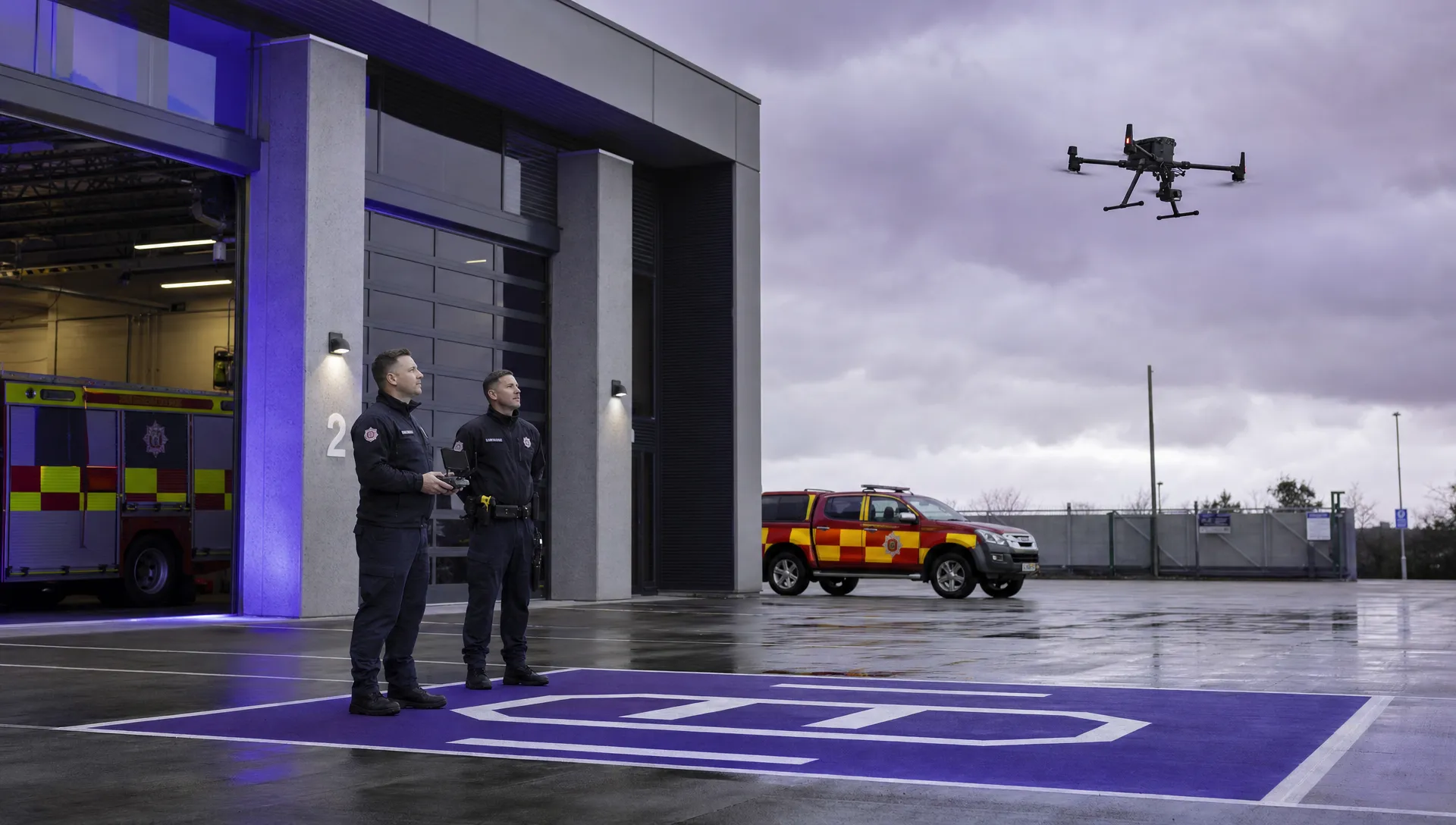
Cost the whole service, including unavailable capacity
The aircraft purchase price is only one part of the budget. Build a whole-service cost model that separates establishment costs, recurring costs and provision for replacement or failure.
| Cost area | Items to include |
|---|---|
| Establishment | Aircraft, payloads, docks or tether equipment, site works and system integration |
| People | Staffing, supervision, training, exercises and out-of-hours support |
| Ongoing operation | Connectivity, software, power, maintenance, batteries and insurance |
| Governance | Aviation advice, assurance reviews, information governance and complaints handling |
| Resilience and renewal | Spare equipment, repairs, replacement cycles and temporary loss of service |
Use realistic duty patterns. A continuously staffed service and an on-call team have different costs and availability, even if they use identical aircraft. Existing staff time is still a resource commitment, particularly when drone duties displace other work.
For the first responder drone business case, calculate cost per staffed service hour and cost per completed useful task. Define “useful” before the trial, such as imagery that answered a specified operational question. Flight count alone rewards activity rather than service value.
Include cancelled launches, technical downtime and missions that produced no usable information. These are necessary inputs to budgeting, not inconvenient exceptions to remove from the figures. Test how the business case changes if demand or availability is lower than expected.
Run a bounded trial with deployment gates
Trial the first responder drone service within a defined area, schedule and set of incident types. Expand only after the team can explain both successful missions and failures against agreed acceptance criteria.
Measure time to usable information, not merely time to take-off. Define the start event, such as receipt of an eligible request, and the end event, such as delivery of a geolocated image that the incident commander can interpret. Keep the same definition throughout the trial.
Track eligible calls, accepted tasks, declined launches, communications failures and operational outcomes. Do not claim response-time or staffing savings without a defensible comparison. Differences in incident type, distance and simultaneous demand can distort simple before-and-after averages.
Keep flight records alongside dispatch and incident records. Where relevant, assess the DJI flight log analysis tool as part of technical review, while keeping aircraft telemetry separate from conclusions about operational benefit.
Use explicit release gates rather than a general statement that the trial went well:
| Gate | Evidence required before operational release |
|---|---|
| Aviation | Applicable requirements confirmed and supporting evidence recorded |
| Safety | Operating limits, emergency procedures and stop decisions exercised |
| People | Competent staff available for the published service hours |
| Infrastructure | Launch sites and communications tested, including failure conditions |
| Information | Access, retention, sharing and complaints arrangements agreed |
| Service value | Measured outcomes justify the proposed scope and cost |
Give each gate a named owner. An unresolved failure should lead to a restricted service or delayed launch, not an undocumented workaround.
Frequently asked questions
Does a DFR service always arrive before ground crews? No. Distance, dispatch timing, weather, aircraft availability and the operating model affect arrival. Measure when useful information reaches the incident commander rather than promising that the aircraft will always arrive first.
Why choose a tethered aircraft? A tethered system may suit prolonged observation of a fixed incident when its power supply and installation support that use. Limited movement and cable management make it a different proposition from an aircraft dispatched across a service area.
Can one pilot run a first responder drone service? A small trial may have limited staffing, but service availability and workload must be demonstrated. Account for supervision, breaks, competing incidents, equipment support and any additional roles required by the operating concept.
Should ground response wait for the drone assessment? Do not build that assumption into the programme. Any use of aerial information to change mobilisation should be governed by the emergency service’s agreed procedures, with a clear fallback when imagery is unavailable or inconclusive.
Turn the readiness pack into a procurement checklist
Before selecting operations software, identify which records need a clear owner, controlled access and a reliable review process. Use the Dronedesk features page to assess its documented capabilities against that checklist, then test the fit with your intended workflow.
Keep procurement acceptance separate from operational release. A system can meet its specification while the wider service still lacks staffing, permission evidence or a tested fallback. Close those gaps before deployment.
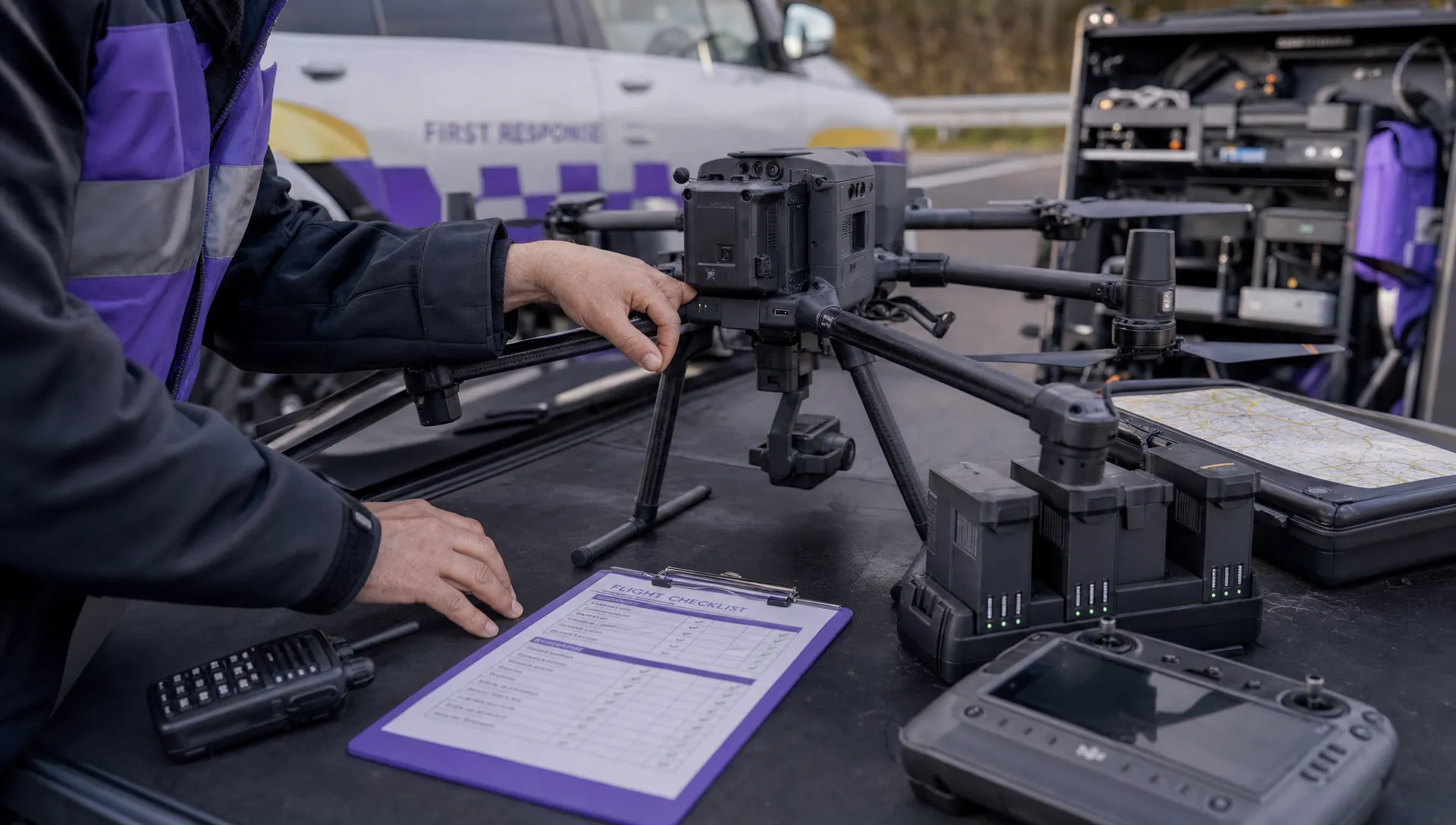 What a First Responder Drone Programme Needs Before Deployment →
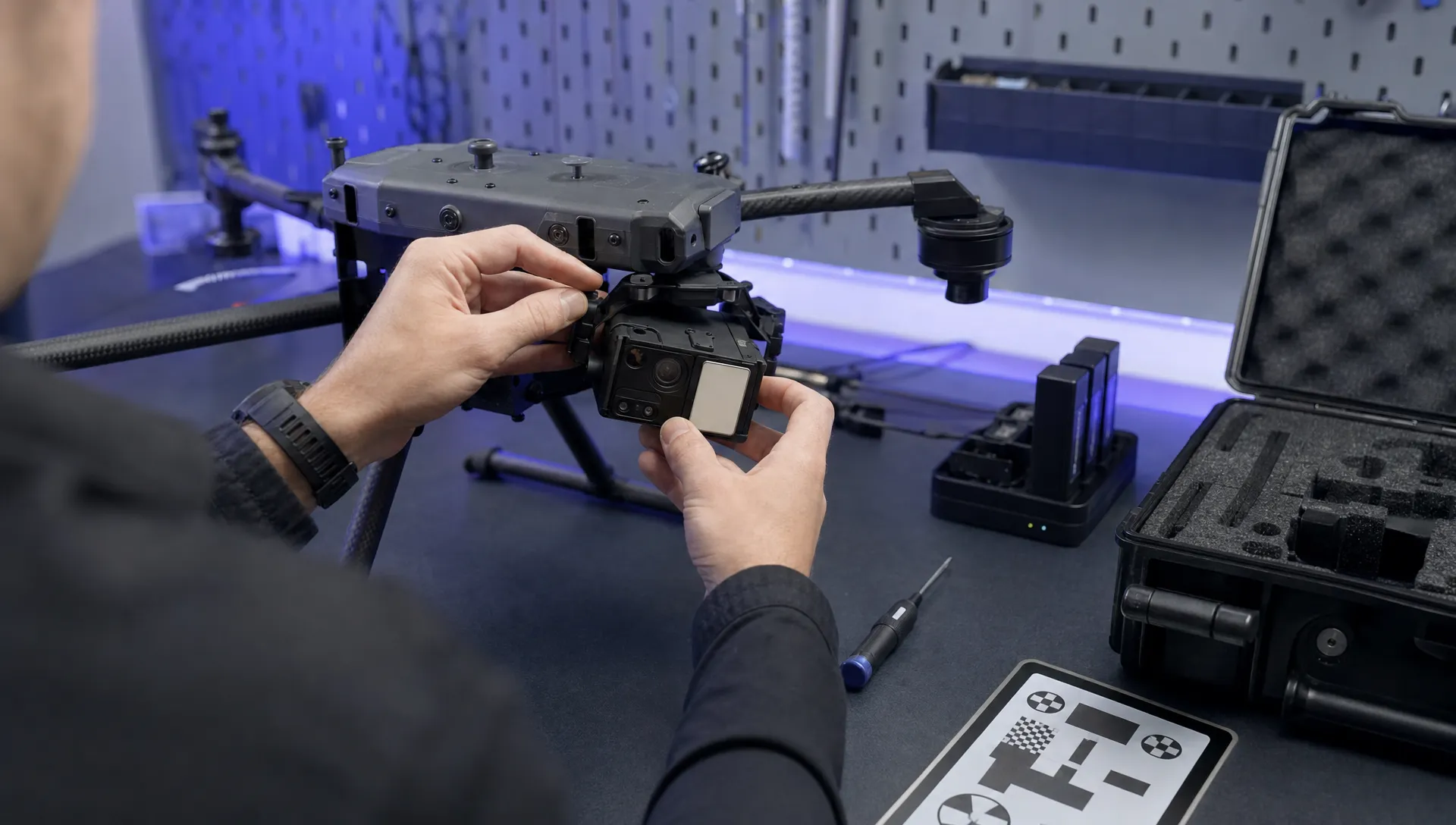 What Are UAV Systems? Aircraft, Payloads and Ground Equipment →
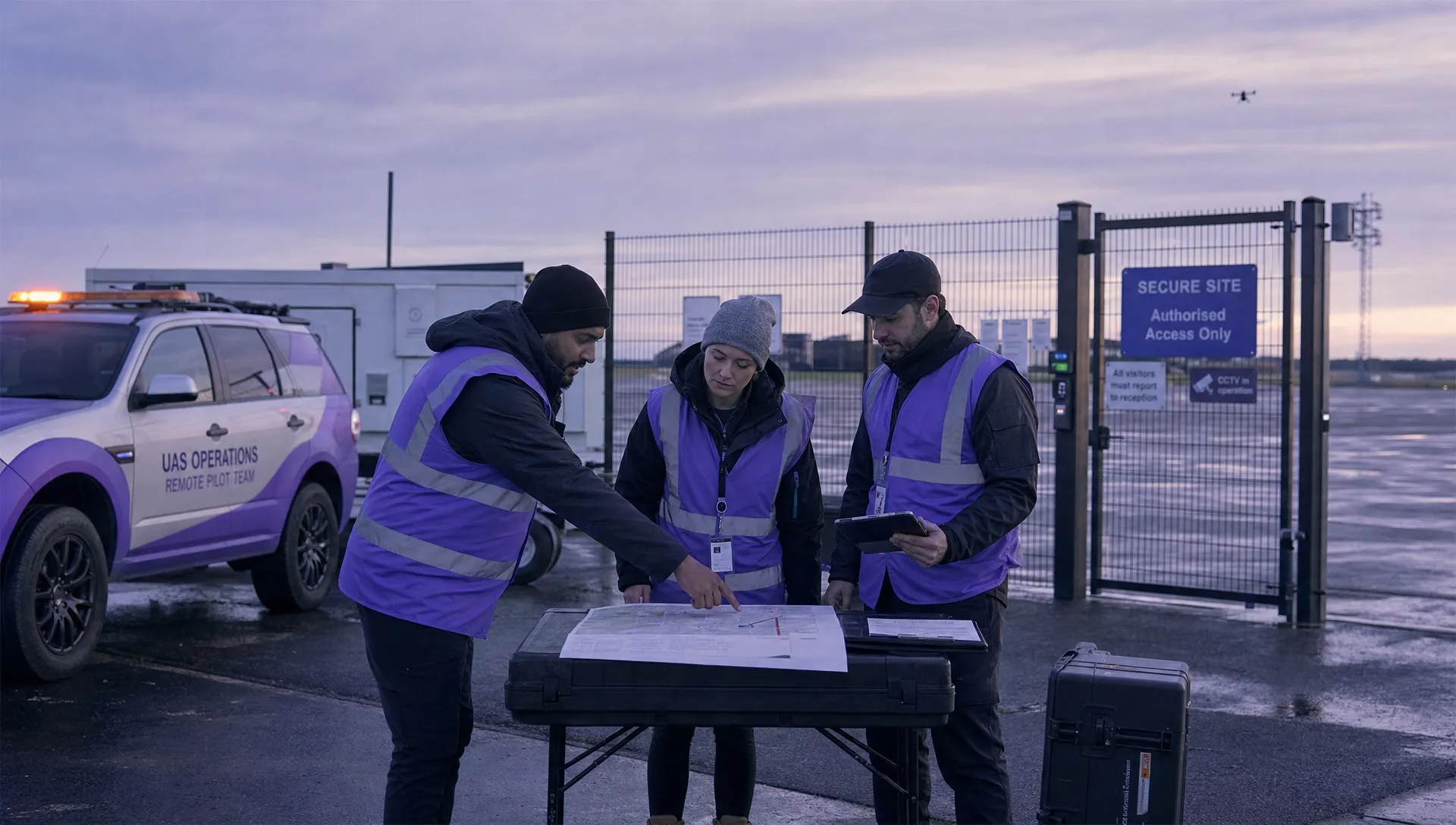 7 Best Flight Planning Apps for Commercial Drone Teams →
 How Police Drones Support Incident Command →
 FAA Drone Flight Regulations for Operations From Moving Vehicles →
 DJI Remote ID Compliance Checks When Renting Aircraft →
 What a Drone Site Selection Tool Can Miss About Ground Access →
 How to Brief Clients on Drone Restrictions Near Airports →
 How to Choose the Best Drone Logbook for Shared Aircraft →
 How to Find and Read the FAA BVLOS ARC Report →