
FAA Rules for Flying Drones at Night During Emergency Missions
The FAA rules for flying drones at night still apply when the mission is urgent. A missing-person search, storm-damage assessment or fire response does not automatically authorise a launch, remove airspace restrictions or permit flight beyond visual line of sight. Before taking off, the team must establish its operating authority, confirm that night-flight requirements are met and identify any additional FAA approvals the mission needs.
Publication hold: This draft requires a live check of the linked official FAA and eCFR sources before publication. Live regulatory verification was not available during preparation.
For emergency teams, the practical distinction is between responding to an emergency and having legal authority to conduct the proposed flight. Incident command can define the operational objective, but it cannot replace an FAA authorisation.
Establish which operating authority covers the mission
Emergency drone operations do not all follow the same regulatory route. Start by identifying whether the specific flight will operate under Part 107 or as a qualifying public aircraft operation.
| Operating route | What the team must establish | Night-mission implication |
|---|---|---|
| Part 107 civil operation | The flight meets Part 107 requirements and any applicable waiver or airspace-authorisation conditions | Standard night operations are possible without a night-specific waiver when the applicable requirements are met |
| Qualifying public aircraft operation | The operation qualifies for public aircraft status and falls within the applicable FAA Certificate of Waiver or Authorization (COA) | Follow the COA’s operating area, night provisions and other conditions rather than assuming Part 107 permissions apply |
A police or fire department may use different operating routes for different flights. Government ownership alone does not resolve the status of every mission. Similarly, a private survey company supporting a response does not automatically acquire public aircraft privileges.
The FAA’s overview of small UAS operations under Part 107 provides the civil operating framework. Record the chosen route in the mission briefing so that pilots, observers and incident commanders are working from the same assumptions.
What the FAA rules for flying drones at night require
Pilot qualification and anti-collision lighting
For a standard Part 107 night flight, 14 CFR § 107.29 sets the central requirements. The remote pilot in command must meet the applicable knowledge and training requirements, including the required night-operations content. The aircraft must have anti-collision lighting visible for at least three statute miles, with a flash rate sufficient to avoid a collision.
Do not treat possession of a remote pilot certificate as the entire qualification check. Confirm the pilot’s aeronautical knowledge currency and completion of the applicable updated training or testing requirements before assigning the mission.
Aircraft position lights are not automatically adequate anti-collision lighting. Check the actual light’s performance, its mounting position and whether the airframe or payload obstructs visibility.
The remote pilot may reduce the lighting’s intensity when operating conditions make that necessary in the interest of safety. That provision is not a general permission to disregard the lighting requirement for operational convenience.
Darkness changes visibility, not the basic operating limits
The FAA rules for flying drones at night do not make thermal imagery a substitute for visual line of sight. Under ordinary Part 107 operations, the aircraft must remain within the required unaided visual observation, other than corrective lenses.
A flashing light may show where an aircraft is without providing enough information to judge its attitude, altitude or direction of flight. If the crew cannot maintain the required awareness, shorten the route, reposition safely or obtain the necessary approval for a different operation.
A visual observer can help detect aircraft and hazards, but using an observer does not by itself authorise BVLOS flight or an observer relay network.
The other Part 107 operating requirements also remain relevant, including weather minima, altitude limits, yielding to other aircraft and restrictions on operations over people or moving vehicles. Smoke, fog and darkness can make a technically possible mission operationally unsuitable.
Check airspace approval separately from permission to fly at night
A night-capable pilot and compliant aircraft do not necessarily have permission to enter the proposed airspace. Part 107 operations in Class B, C or D airspace, or within the lateral boundaries of surface Class E airspace designated for an airport, require prior ATC authorisation.
The FAA’s Low Altitude Authorization and Notification Capability (LAANC) supports airspace authorisation at participating facilities. Other requests may require a different FAA process. Confirm that the actual authorisation covers the location, altitude, time and conditions of the proposed mission.
The FAA rules for flying drones at night do not turn an incident commander’s approval into airspace clearance. Nor does a routine airspace authorisation override a temporary flight restriction (TFR).
Check current restrictions and relevant notices before launch, then establish how the team will monitor changes during a prolonged response. Wildfire, security and disaster-response restrictions can affect an otherwise familiar operating area.
Coordinate with the incident’s aviation function where one exists. Helicopters may arrive with little warning, including outside an airport’s controlled airspace. Agree how drone crews will receive traffic information and when they must hold, descend or land. The drone must yield to other aircraft; coordination does not transfer that responsibility elsewhere.
Use emergency FAA procedures when the mission needs additional approval
The FAA’s Special Governmental Interest (SGI) process provides a route for expedited consideration of certain emergency operations. It is relevant when an eligible operator needs an approval or amendment that its existing authority does not provide.
An urgent mission that already fits within the operator’s permissions may not need an SGI request. Conversely, a mission outside those permissions does not become lawful merely because a request has been submitted.
Under the FAA rules for flying drones at night, emergency approval should address the actual regulatory gap. That could involve airspace access, a proposed operating limitation or conditions outside an existing authorisation. Describe what the mission requires rather than asking for a vague emergency exemption.
Prepare enough detail for the FAA to assess the request: the response purpose, operating area, proposed altitudes, timing, aircraft, pilot qualifications and coordination arrangements. Explain nearby crewed-aircraft activity and the measures proposed to manage it.
The FAA determines eligibility and approval conditions. Do not launch an operation that requires additional authority until that authority has been granted. Keep the approval accessible to the operating crew, including any geographical limits, expiry time or communications requirements.
An in-flight emergency is a different legal situation
14 CFR § 107.21 allows a remote pilot in command to deviate from a Part 107 rule to the extent necessary to respond to an in-flight emergency requiring immediate action. The pilot must provide a written report if the FAA requests one.
This is not advance permission to plan a non-compliant search or launch into restricted airspace because the response is urgent. It addresses an emergency arising during flight, not the general importance of the mission.
The FAA rules for flying drones at night therefore require a distinction between an urgent task on the ground and an immediate airborne emergency. Section 107.21 is also not a blanket exemption from requirements imposed under other regulations.
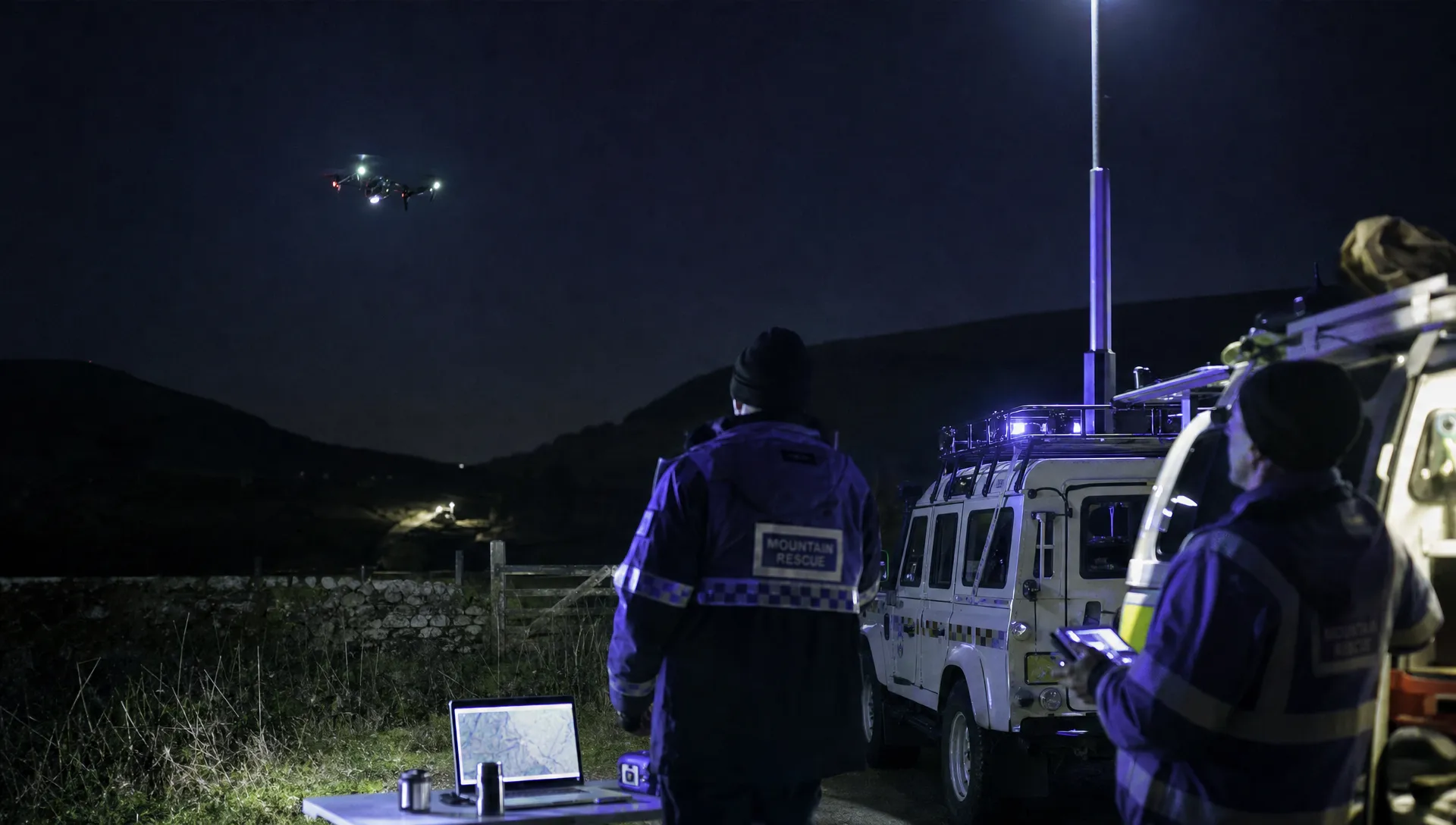
Build a launch decision that incident command can understand
A useful night-response briefing answers specific questions rather than ending with “the drone team is ready”. Keep the decision short enough to communicate under pressure, but precise enough to expose missing permissions.
- Confirm authority: Identify Part 107 or the applicable public aircraft route, then check the pilot, aircraft and mission against its conditions.
- Confirm airspace: Verify required authorisations, current restrictions and any additional emergency approval before entering the operating area.
- Confirm the aircraft: Check anti-collision lighting, battery condition, payload security and required registration and Remote ID compliance, unless an applicable exception or authorisation provides otherwise.
- Confirm the operating area: Establish take-off and landing locations, visual observation limits, obstacles, nearby people, roads and emergency vehicle movements.
- Confirm coordination and abort criteria: Agree communications, crewed-aircraft procedures, lost-link actions and the conditions that require the mission to stop.
The FAA rules for flying drones at night establish the regulatory baseline, but the mission assessment must address the site. Floodwater may hide landing hazards, emergency lighting may affect dark adaptation and power lines may be difficult to distinguish against the background.
Use a mission-specific drone flight risk assessment to connect each hazard to a practical control and a named person responsible for it. Avoid copying a daylight assessment without revisiting visibility, recovery arrangements and crew workload.
Treat people and traffic as separate approval questions
An emergency scene can contain responders, casualties, residents and passing drivers. Their presence does not automatically make flight over them permissible.
In particular, being briefed about the incident does not necessarily make someone directly participating in the drone operation. Check the applicable rules for operations over people and moving vehicles rather than assuming everyone within the cordon is covered.
Where the mission cannot meet those requirements, change the route, establish an appropriate exclusion area or seek the necessary approval. A thermal camera’s useful view of the scene does not require the aircraft to fly directly above every person being observed.
Preserve the decisions as well as the flight data
A defensible mission record should explain what the team was authorised to do, what it actually did and why the operation changed. Retain the relevant airspace approval, any emergency authorisation, pilot qualification evidence and the mission briefing alongside the operational record.
The FAA rules for flying drones at night should be reflected in those records through concrete checks, not simply a box labelled “night compliant”. Record the lighting check, operating limits, coordination arrangements and any decision to suspend the flight.
Preserve original aircraft logs where available. For DJI-specific review, the DJI flight log analysis tool is a relevant resource. Aircraft data can help reconstruct a route or sequence of events, but it cannot prove that a missing authorisation existed.
These are recommended documentation practices, not a claim that Part 107 imposes a universal flight-log format. Keep any specific reporting or record-retention obligations attached to the operation’s approval separate from internal procedures.
Frequently asked questions
Do emergency services need a waiver just to fly at night? Not necessarily. A Part 107 operation can take place at night without a night-specific waiver when the applicable requirements are met. A public aircraft operation must follow its own applicable authority and conditions. Other aspects of the mission may still require approval.
Can a thermal camera replace visual line of sight during a search? No. Thermal imagery supports the search task, but it does not by itself satisfy or remove the visual-line-of-sight requirement. A flight outside the normal requirement needs appropriate authority.
Can the incident commander authorise flight inside a TFR? Incident coordination and regulatory permission are separate. Check the restriction’s actual terms and the applicable FAA approval process. Do not assume incident-command approval alone permits entry.
Does an emergency remove Remote ID requirements? An emergency mission is not a general exemption. Establish the aircraft’s applicable Remote ID obligations and whether a specific exception or authorisation applies before launch.
What is the main night-mission mistake to avoid? Treating urgency as permission. The FAA rules for flying drones at night still require the crew to separate pilot qualification, aircraft equipment, airspace access and mission-specific operating authority.
Make the authorisation decision part of mission readiness
Before the next call-out, identify who checks airspace, who requests urgent FAA approval and where the crew will find the relevant documents. Resolve those responsibilities before the aircraft is needed.
When reviewing your administrative setup, compare the Dronedesk features with your team’s documented requirements. Keep the final launch decision with the remote pilot in command, supported by verified permissions and a briefing that everyone involved understands.
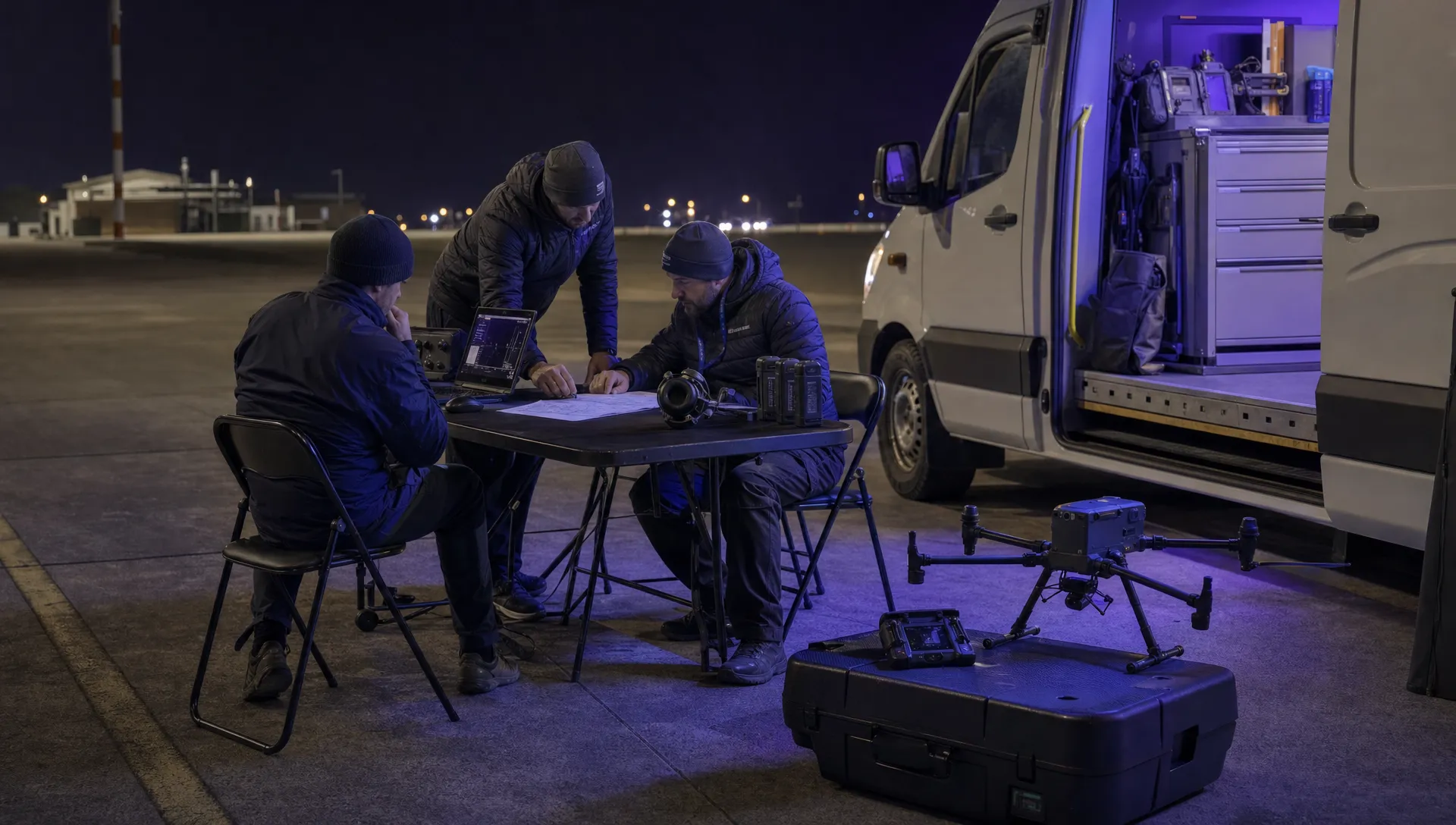 FAA Rules for Flying Drones at Night During Emergency Missions →
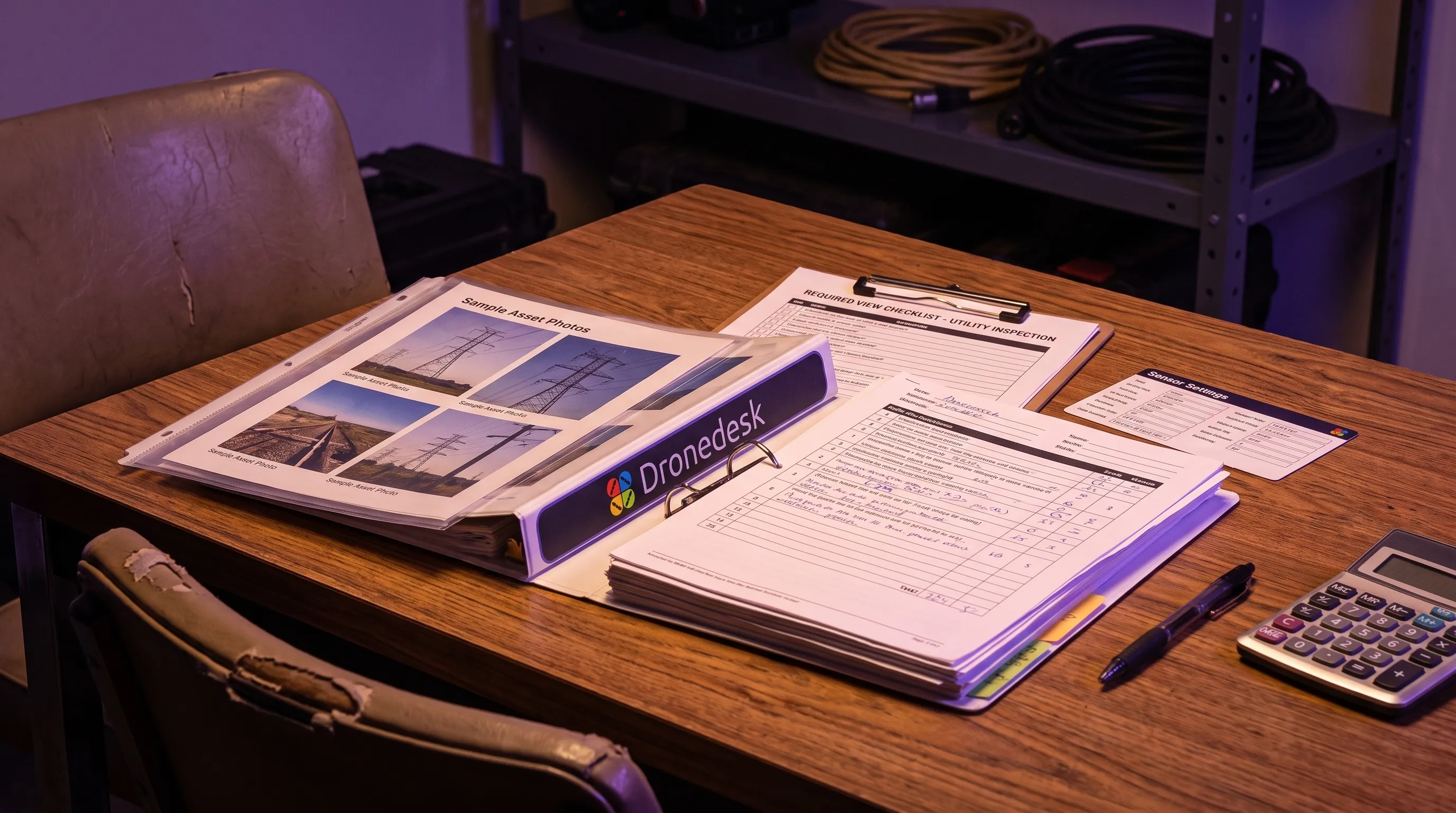 How to Onboard an FAA 107 Pilot for Utility Inspections →
 FAA Drone Rules for Commercial Use on Construction Sites →
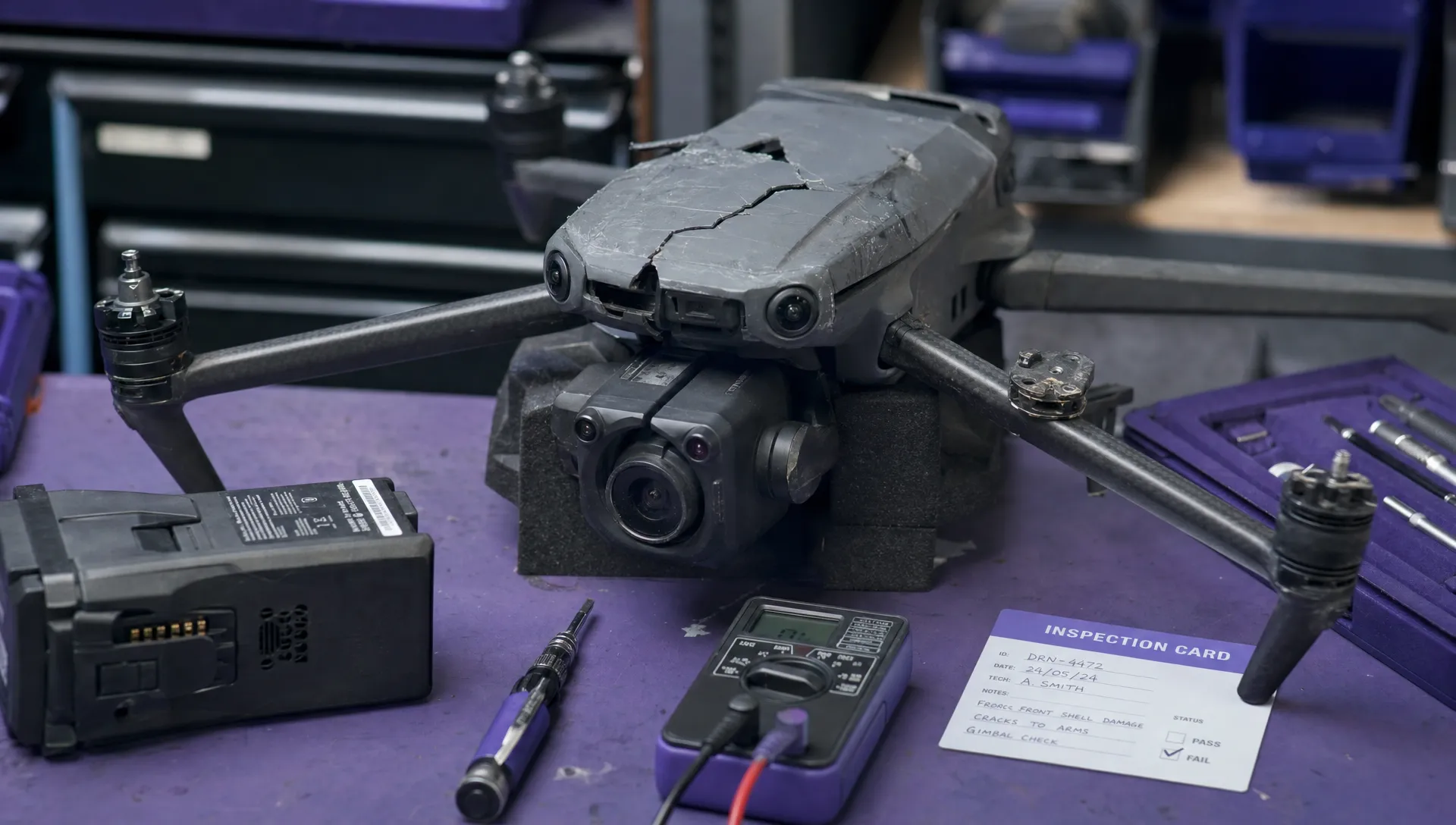 When Should You Retire a Commercial Drone? →
 Drone Fleet Management Software - The Platforms That Failed, and the Ones Still Flying →
 FAA Drone Pilot License: A Manager’s Compliance Checklist →
 Part 107 Classes: How to Choose Training That Fits Your Role →
 Drones for Commercial Use: How to Match Aircraft to Risk →
 Weather App for Drone Flying: Checks Beyond Wind Speed →
 How to Assess a Drone Flying Conditions App Before a Mission →