
How to Brief Clients on Drone Restrictions Near Airports
Briefing a client on drone restrictions near airports means explaining what you can promise now, what still needs checking and what could change before take-off. A booking confirmation or a landowner’s agreement should not be presented as evidence that the proposed flight has been cleared.
For a survey company, utility operator or emergency-service team, the briefing should connect those checks to the work: which assets need inspecting, when the data is needed and what happens if flying is not possible. This UK-focused guide provides a communication workflow, not live airspace clearance. Verify current requirements through official sources and the relevant airport before making regulatory statements to a client.
Start with the deliverable, not a promised flight
Ask what the client actually needs before discussing aircraft access. An inspection of a particular roof elevation may allow more flexibility than a mapping survey requiring coverage of an entire site.
Establish the required coverage, acceptable data quality and latest useful delivery date. Ask whether the client can accommodate a different survey window or a reduced scope. Alternative methods, such as ground photography or a mast-mounted camera, should only be offered where they can meet the specification.
Explain the distinction between assessing feasibility and committing to delivery. You can agree to investigate a site without guaranteeing a flight there.
A suitable opening is: “We can assess this location and propose a workable method. We will confirm the flight scope and timing once the airspace checks and any necessary permissions are resolved.” That gives procurement something concrete without overstating certainty.
Explain drone restrictions near airports without quoting a fixed radius
Avoid opening with a remembered distance rule. It encourages clients to treat the airport as a point on a map and the proposed operation as a simple inside-or-outside calculation.
Instead, show the actual location and explain that the assessment concerns the planned flight area, intended height and current restrictions. Where official information identifies an airport flight restriction zone (FRZ), use its published boundary rather than drawing an approximate circle yourself.
Before quoting any rule, check the CAA’s current drone guidance and the airport’s published instructions. Keep the source with the project brief so another team member can check the basis of your advice.
A client-friendly explanation is: “We need to assess the area the aircraft would use, not just the address where our vehicle will park. We will check the published information and establish which contacts or permissions apply to this proposal.”
Check the whole operating area and record the evidence
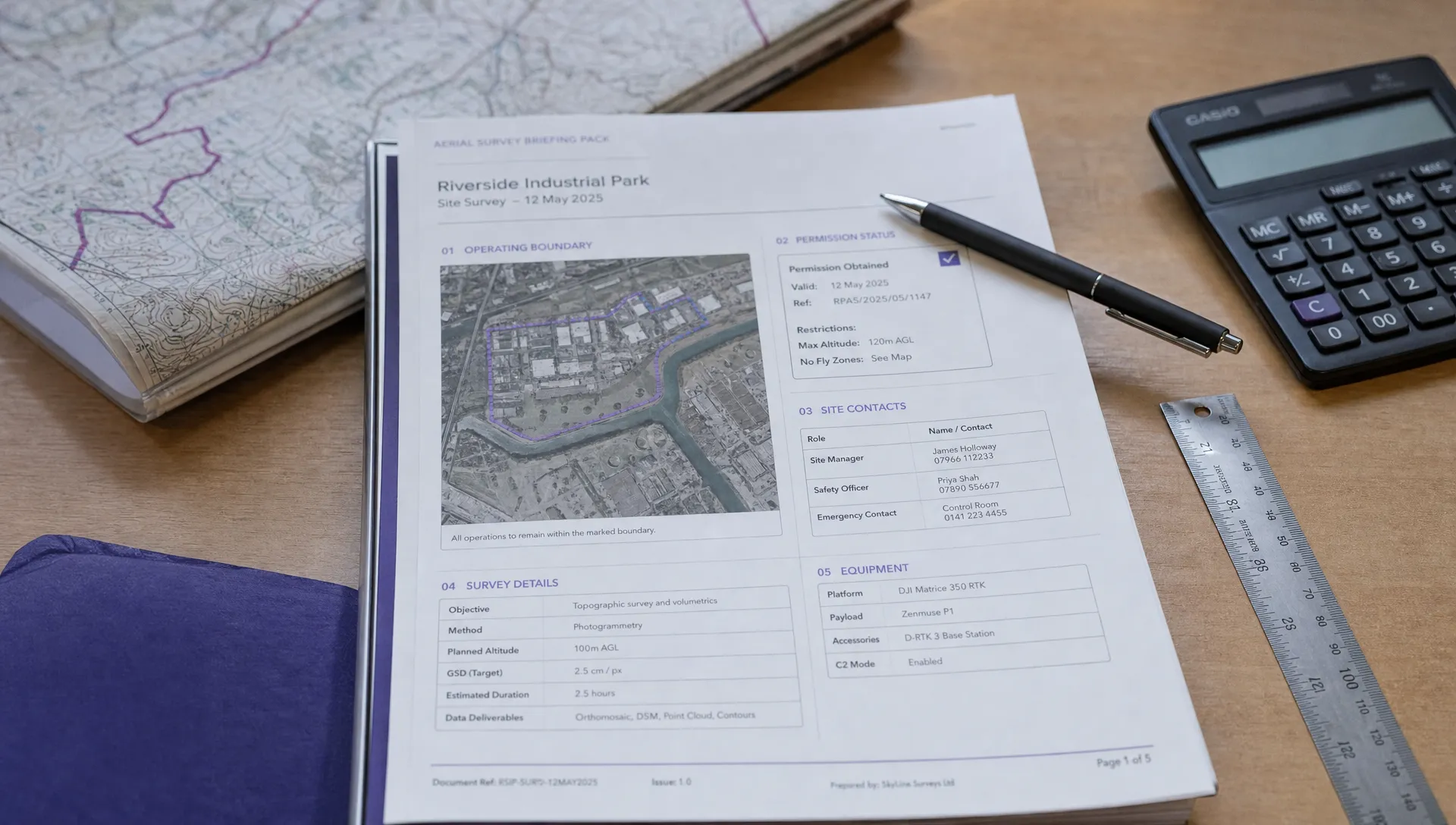
Request a marked site boundary rather than relying on a postcode. A large industrial estate, reservoir or utility corridor may extend well beyond the client’s suggested launch point.
For drone restrictions near airports, the briefing should distinguish the location supplied by the client from the area the operator has actually assessed. Include the proposed operating area, launch and recovery locations and intended operating height, with the height reference clearly stated.
Use current official information for the assessment. The UK aeronautical information service provided by NATS is a source for aeronautical publications and notices. Check relevant NOTAMs and temporary restrictions rather than treating an earlier map screenshot as the final answer.
Tell the client when the information was checked and when it will be checked again. If a boundary or notice is unclear, record the uncertainty and seek clarification before describing the operation as feasible.
The client does not need every technical layer in the initial email. They do need an accurate summary, a marked area and a clear statement of anything unresolved.
Separate airport coordination from other permissions
Do not collect every decision under a vague label such as “CAA approval”. Name the organisation or person responsible for each outstanding item.
A clear briefing on drone restrictions near airports distinguishes airport coordination, any separate aviation-authority authorisation identified during planning and permission to use the site. Track these independently rather than assuming one response settles everything.
| Item to establish | Question for the project brief | Evidence to retain |
|---|---|---|
| Airport process | Which airport contact or published procedure applies to this proposal? | Current instructions and correspondence |
| Aviation authorisation | Does the proposed operation need separate CAA authorisation? | Applicable authorisation and conditions, where required |
| Site access | Who can agree launch, recovery and working-area access? | Written access agreement |
| Client acceptance | Does the client accept the achievable scope and any limitations? | Accepted brief or revised specification |
For the airport-specific process, establish the requested application information, expected response time and any charges before putting assumptions into a quote. Do not invent a standard lead time across airports.
Describe an unanswered request as pending. A submitted form, acknowledgement email or helpful telephone conversation should not be converted into a broader client-facing claim than the evidence supports.
Confirm the aircraft and operator arrangements separately
Keep equipment and competence checks visible without overwhelming the client with documents. Identify the aircraft proposed for the job and verify the applicable operator registration, remote pilot competence and operational requirements against current CAA guidance.
Drone restrictions near airports should not be explained through aircraft weight alone. If a client suggests using a 249g drone, assess that proposal properly rather than treating the weight as sufficient evidence of access or suitability.
Likewise, describe a manufacturer’s app status as a technical input, not the sole basis for saying the operation is cleared. Your briefing needs to reflect the current operating requirements and any conditions established through the permission process.
Keep this part of the conversation relevant to the deliverable. A smaller aircraft may have different imaging capabilities or weather limitations. Changing equipment can therefore change the achievable inspection detail, survey coverage or working window, even before the airport-related assessment is complete.
Make the quote conditional in specific terms
“Subject to permissions” is too vague if the client is committing staff, access equipment or a site shutdown. Explain what remains open and the commercial consequence of each unresolved item.
Distinguish the assessment work from the flight commitment. State which planning work is included, when a flight date becomes confirmed and how rescheduling or cancellation will be handled under your agreed terms. Do not imply that an airport application guarantees a favourable response.
Set a decision point that fits the client’s dependencies. For example, agree when you will update the facilities manager before they arrange roof access or take equipment out of service.
Describe a fallback only when it is credible. If an alternative method cannot produce the required measurements, say so. Offering unsuitable data to preserve a booking is less useful than identifying the limitation before the client spends money on site preparations.
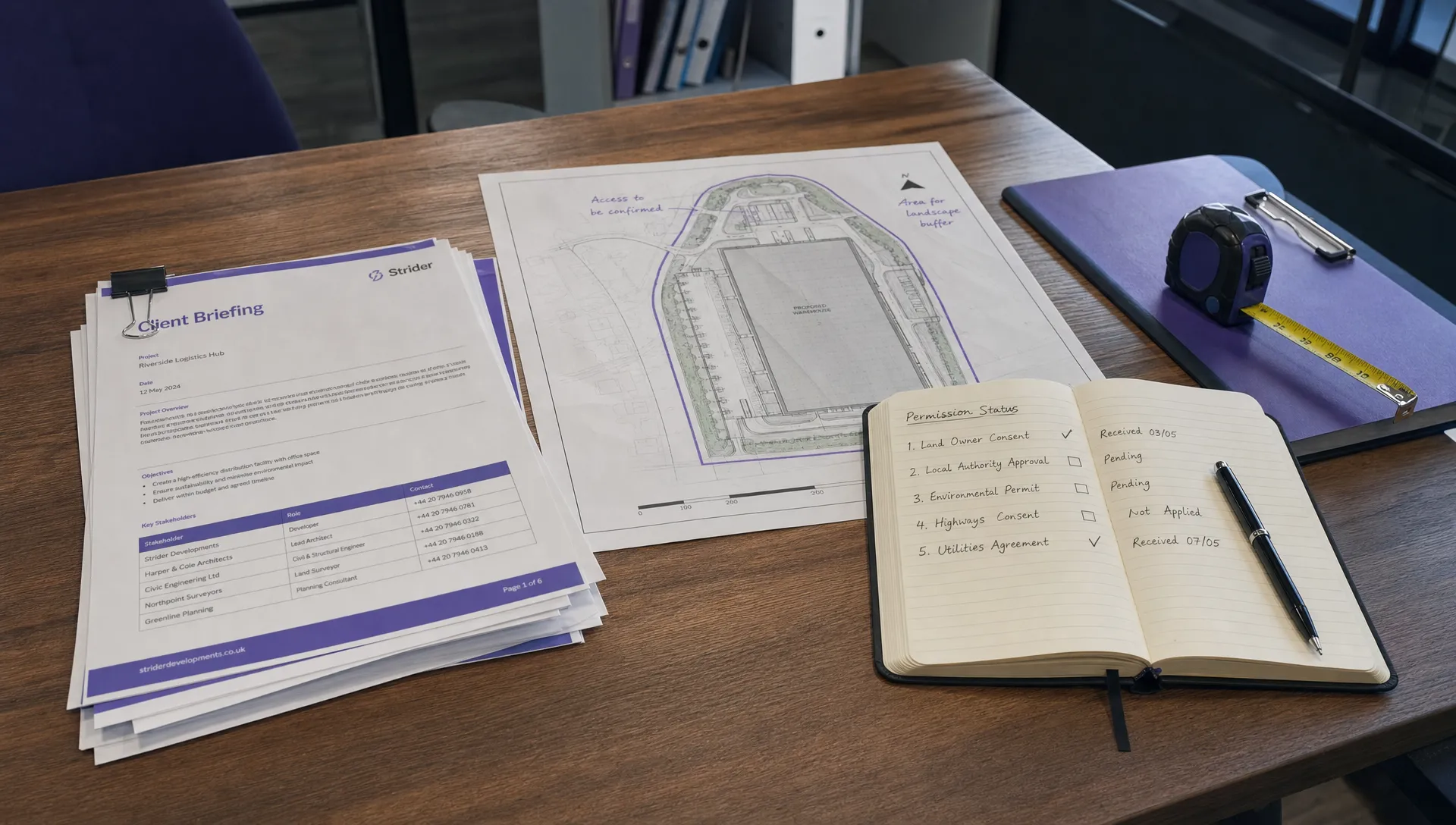
Use a client-ready briefing template
The following wording can be adapted once the operator has checked the location. Replace every bracketed field and remove statements you cannot support.
Proposed work: We propose to capture [deliverable] within the operating area shown on the attached plan, during [requested window].
Current status: Our assessment of drone restrictions near airports is [in progress / awaiting a named response / complete for the proposed scope]. The information was checked on [date and time] using [sources].
Outstanding decisions: We are waiting for [decision or clarification] from [organisation or role]. This means the flight date is currently [provisional / confirmed subject to stated conditions].
Operating limitations: The proposed work is subject to [verified conditions]. These may affect [coverage, timing or method]. Any requested change to the agreed area or height will be reassessed before acceptance.
Client action: Please provide [access agreement, site contact or revised specification] by [date].
Next update: We will update you by [time], including if no decision has arrived. If the flight cannot proceed, the agreed next step is [reschedule, alternative method or cancellation arrangement].
Attach a readable site plan and summarise the relevant conditions. Sending the client a long approval document without explaining its effect on their project leaves room for misunderstanding.
Agree how changes and safety decisions will be communicated
Tell the client who can accept a scope change and who makes the operational decision to proceed, pause or stop. A last-minute request to inspect another asset needs reassessment, even if it appears close to the original site.
The day-of-flight briefing should cover changed conditions and the response to crewed aircraft. Translate the operator’s procedures into plain language: the team may pause, reposition or end the operation, and the client must not pressure the pilot to continue for the sake of a deadline.
When explaining drone restrictions near airports, distinguish a planning assessment from a promise that conditions will remain unchanged. Recheck the relevant information at the appropriate points in your process and communicate changes before the client acts on an outdated brief.
Connect these decisions to the project’s drone flight risk assessment. The client-facing summary should match the operation the team has assessed, rather than describe a broader or more ambitious version.
For emergency-service work, use the organisation’s established procedures and airport liaison arrangements. Urgency should prompt the right coordination, not an unsupported assurance to the commissioning team.
Handle unclear restrictions and reported sightings carefully
If the published information and an airport response appear inconsistent, do not ask the client to choose the interpretation that suits the schedule. Take the specific discrepancy back to the relevant source and record the clarification.
If someone reports a drone near the airport, communicate observable facts rather than assumptions about its operator or permission status. Useful details include the time, location, direction of travel and what was actually seen. Do not launch another drone to investigate.
Where there is an immediate danger to aircraft or people, call 999. For other concerns, use the airport’s published reporting contact or the appropriate police reporting route. Keep staff away from any activity that could interfere with airport operations.
Update the client on the effect on their job without speculating about enforcement action. “We have paused while the report is assessed” is more accurate than announcing that an unidentified aircraft is illegal.
Frequently asked questions
How close to an airport can we book a drone survey? Do not confirm feasibility using distance alone. Assess the actual operating area against current official information, establish the airport-specific process and check the requirements for the proposed operation before committing to a flight.
Can we use a 249g drone to avoid the problem? Weight alone is not a sound basis for promising access. Check the location-specific requirements and whether the aircraft can meet the survey specification. Brief the client on those findings rather than offering a blanket answer based on the aircraft’s advertised weight.
Does the landowner’s permission settle airport-related checks? Keep site access and aviation-related decisions separate in the project brief. A landowner’s email documents what that person has agreed to; do not present it as evidence of decisions by an airport or aviation authority.
Can we guarantee the flight once a response arrives? Explain the scope and conditions of the response, then retain the day-of-flight decision. The briefing on drone restrictions near airports should make clear which matters are resolved and which checks still need repeating before the operation proceeds.
What should we tell the client if there is no response? State that the request remains pending, identify the next follow-up point and apply the agreed rescheduling or cancellation terms. Silence is not a reliable basis for making a stronger commitment.
Make the briefing part of the booking process
Send the first briefing before the client commits to dependent site work. Give it a version number, identify unresolved decisions and agree the next update time. Revise it whenever the scope, operating area or confirmed conditions change.
For your next airport-adjacent job, use the template above alongside your site assessment and quote. If you are reviewing software for the wider workflow, compare Dronedesk’s published features with your team’s planning and administration requirements.
 How to Brief Clients on Drone Restrictions Near Airports →
 How to Choose the Best Drone Logbook for Shared Aircraft →
 How to Find and Read the FAA BVLOS ARC Report →
 FAA Drone Registration Rules When Transferring Company Assets →
 Remote Pilot Competency Evidence for Utility Procurement Teams →
 Drone Flight Log Fields to Standardise in Excel Across Teams →
 How to Preserve Original Data With a DJI Flight Log Converter →
 Beyond Visual Line of Sight Drone Operations and Observer Roles →
 How to Troubleshoot a DJI Log Export That Will Not Open →
 Drone Pilot Regulations for Visiting Overseas Contractors →