
How to Find and Read the FAA BVLOS ARC Report
The FAA BVLOS ARC report is a useful starting point for understanding recommendations on beyond visual line of sight drone operations in the United States. The difficulty is separating what the committee proposed in 2022 from what applies to an operation today.
This guide shows you where to find the official document, how to read it efficiently and how to turn relevant passages into questions for your operations team. It focuses on the report itself, not on establishing whether a particular flight is authorised.
Find the official report first
Start with the FAA-hosted UAS BVLOS ARC Final Report, dated 10 March 2022. If the direct download has moved, use the FAA’s rulemaking committee pages to locate the committee’s documents.
A targeted search can also help:
site:faa.gov "BVLOS" "ARC" "March 10, 2022"
Before saving a copy, check the document rather than relying on the search-result title. Conference presentations and industry summaries may discuss the report without reproducing its recommendations in full.
| Check | What to look for |
|---|---|
| Hosting website | An official FAA source, rather than an unattributed re-upload |
| Document identity | The UAS Beyond Visual Line of Sight Aviation Rulemaking Committee’s final report |
| Date | 10 March 2022 |
| Document type | A committee report containing recommendations, not an operational approval |
When downloading the FAA BVLOS ARC report, retain its original filename and save the source link alongside it. That makes it easier for colleagues to identify the same document later.
If you use a locally saved PDF, record the download date separately. A recent download date does not make the report’s contents recent: the document still records the committee’s work at the time it was issued.
Understand what the committee was producing
BVLOS means beyond visual line of sight. ARC means Aviation Rulemaking Committee. In this context, the committee developed recommendations for the FAA to consider when addressing BVLOS operations.
That distinction controls how you should interpret the document. A recommendation explains an approach the committee wanted the FAA to consider. It does not, by itself, establish an operating requirement or grant permission to fly.
The report addresses connected subjects including operational risk, aircraft capabilities, personnel qualifications and supporting services. Reading only a passage about one subject can hide assumptions made elsewhere.
For example, a proposed approach to managing encounters with other aircraft may depend on particular operating conditions or technical capabilities. Those dependencies matter as much as the recommendation itself.
How to read the FAA BVLOS ARC report efficiently
Use the report as a reference document rather than reading every page with equal attention. Start broadly, identify the material relevant to your work and then inspect the assumptions behind it.
The following reading order is a practical method, not a reproduction of the report’s contents page.
1. Read the executive summary for the overall approach
Begin with the executive summary to understand the committee’s overall proposals. Note the problems it was trying to address and the broad approach it recommended.
On this first pass, avoid turning individual recommendations into operating procedures. Instead, write down the subjects that affect your organisation, such as remote pilot responsibilities, aircraft assurance or managing encounters with other airspace users.
Keep the committee’s wording separate from your interpretation. If you copy a sentence, mark it as a quotation and record its location. If you summarise it, label it as your own paraphrase.
2. Identify the operating assumptions
Next, look for the conditions attached to the recommendations that interest you. Search within the PDF for terms relevant to your proposed operation, then read the surrounding paragraphs.
For a utility inspection team, useful search terms might include “infrastructure”, “altitude”, “airspace” and “risk”. A survey company might begin with “population”, “aircraft” or “operator”. Treat these as starting points, not as a complete index.
A focused reading of the FAA BVLOS ARC report should establish which operating assumptions sit behind each relevant recommendation. Record those assumptions explicitly rather than assuming they match your own mission.
Pay particular attention to limits, exceptions and references to other recommendations. A paragraph that appears straightforward in isolation may rely on a different part of the document.
3. Read technical recommendations with their dependencies
When reviewing material about aircraft capabilities or collision avoidance, ask what must be true for the proposed approach to work.
Does the passage assume a particular capability aboard the aircraft? Does it describe an operator responsibility, a supporting service or a combination of measures? Does it distinguish between types of operating environment?
Search terms such as “detect and avoid”, “right-of-way”, “communications” and “surveillance” can help locate relevant discussions. Search results are only entry points: read the complete recommendation and its explanation before drawing a conclusion.
For personnel-related material, distinguish the responsibilities being discussed. The remote pilot, the operator organisation and a supporting service provider are not interchangeable roles.
4. Look for qualifications and differing views
Do not stop after finding a recommendation that supports your preferred operating model. Look for reservations, alternative positions and supporting explanations elsewhere in the document.
You can search for words such as “dissent”, “concern” or “non-concurrence”, then inspect any matching passages. Also follow references to appendices or other supporting material.
The FAA BVLOS ARC report is more useful when read as a record of recommendations and their reasoning than as a collection of favourable quotations. Where a proposal attracted disagreement, understanding the objection helps you identify questions that still need an answer.
For team reviews, retain both the relevant passage and its qualifications. A slide containing only the preferred sentence is a poor substitute for a traceable reading note.
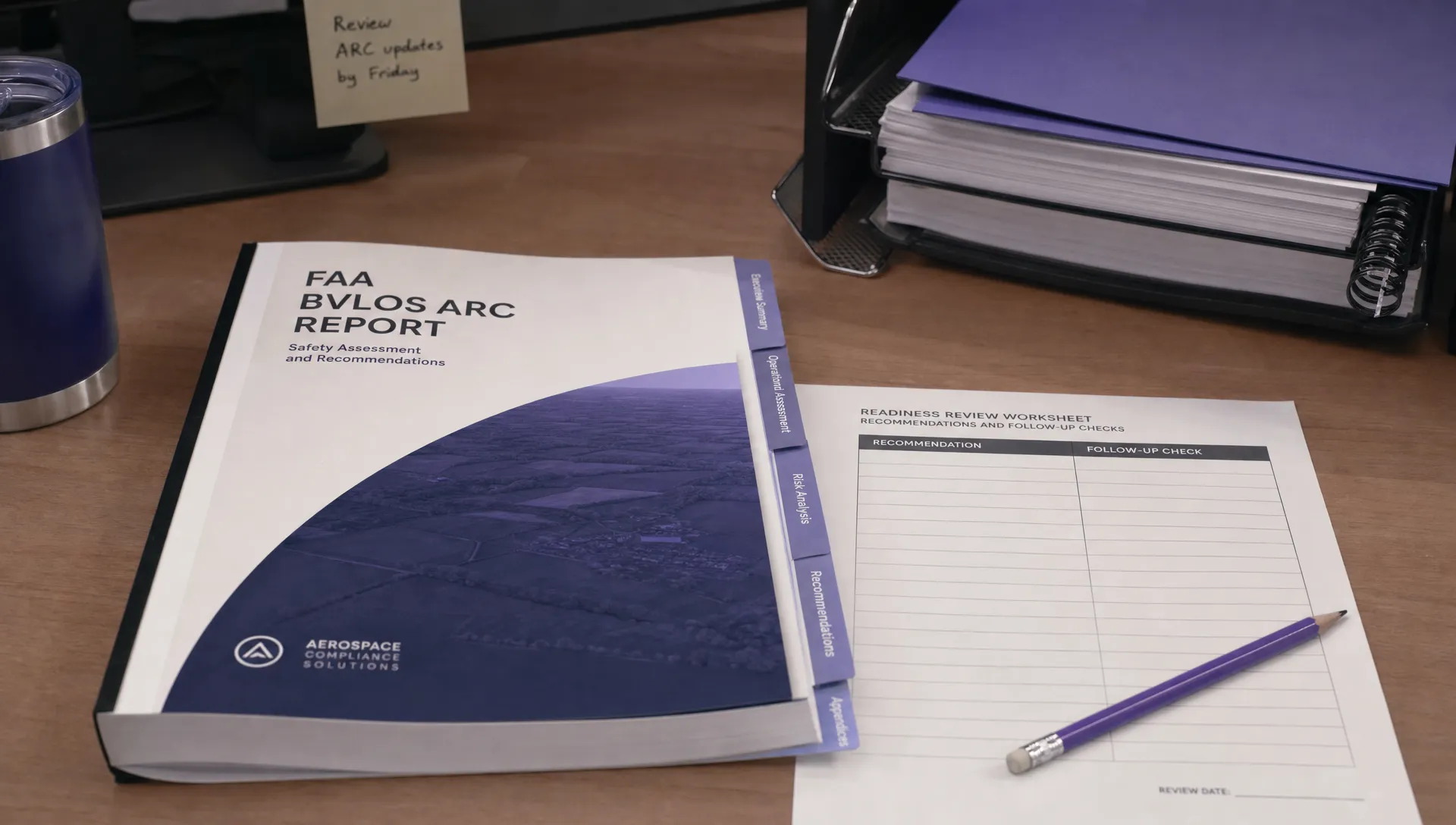
Build a reading worksheet, not a compliance checklist
A short worksheet makes the report easier to discuss across operations, engineering and management teams. Its purpose is to preserve the evidence behind your interpretation, not to declare that an operation complies with current requirements.
For every passage you retain, record the section heading and page reference. Where PDF page numbers differ from the printed page labels, note both.
The following is an illustrative review structure, not quoted report language:
| Topic | What to record from the report | Follow-up question |
|---|---|---|
| Operating environment | Conditions attached to the recommendation | Do those conditions match our proposed mission? |
| Airborne collision risk | Proposed responsibilities and supporting capabilities | Which assumptions require separate technical evidence? |
| Personnel | Roles and competence discussed | Which responsibilities would sit with our team? |
| Aircraft or supporting services | Capabilities assumed by the proposal | What documentation would demonstrate those capabilities? |
A useful worksheet entry distinguishes the original passage from your operational conclusion. For example, “the committee recommended this approach” is different from “our aircraft can support this approach”. The second statement needs its own evidence.
Keep the worksheet separate from your live operating procedures. When findings inform your planning, use them as inputs to a documented drone flight risk assessment, with the applicable requirements checked independently.
Example: reviewing an electricity-line inspection concept
Suppose a utility team wants to assess a proposed inspection route near electricity infrastructure. Its first task is to describe the concept accurately: route geometry, nearby activity, aircraft capability and how the team would respond to an abnormal situation.
The FAA BVLOS ARC report can then help the team identify relevant recommendations and their assumptions. It cannot establish that the route is acceptable merely because the report discusses infrastructure-related operations.
The team’s reading note should therefore separate the report’s proposal from the characteristics of its own operation. Any mismatch becomes a question for further assessment, not a detail to overlook.
The same method works for survey companies and emergency services. Begin with the actual mission, then test whether a passage is relevant rather than treating every discussion of BVLOS as equally applicable.
Check later official material separately
The report is a historical document. To understand what happened after its publication, conduct a separate check of official rulemaking and regulatory sources.
Use the Federal Register’s FAA pages to locate published notices and rulemaking documents. Regulations.gov provides access to rulemaking dockets and submitted material. The Electronic Code of Federal Regulations provides the current published regulatory text for Title 14.
When comparing a later document with the FAA BVLOS ARC report, check its document type and publication date before comparing the wording. A stakeholder comment, a proposed rule and a published regulatory provision serve different purposes.
Do not assume that a later document adopted a recommendation unchanged. Read its scope, stated applicability and any effective-date or transition provisions relevant to your question. Likewise, a familiar phrase appearing in both documents does not establish that their meaning is identical.
This is also the point to separate report research from an approval application. Dronedesk’s guide to how a BVLOS waiver works and who needs one covers that separate subject; use current official FAA material to verify requirements for your particular operation.
Frequently asked questions
What does FAA BVLOS ARC stand for? It stands for the Federal Aviation Administration’s Beyond Visual Line of Sight Aviation Rulemaking Committee. The committee’s final report records recommendations concerning BVLOS drone operations.
Does the report give me permission to fly BVLOS? No. It is a committee report, not an approval for your aircraft, organisation or mission. Establishing whether you may conduct a particular operation requires a separate check of applicable requirements and authorisations.
Should I read the whole report? Start with the executive summary, then read the recommendations relevant to your operation together with their explanations and qualifications. Review the wider document when a passage depends on material elsewhere.
Can I use a summary instead of the official PDF? A summary can help you locate a topic, but use the official report when recording a recommendation or making a decision based on its wording. Preserve the page reference so another reviewer can check your interpretation.
Put the report to practical use
Save the official PDF and build a short, referenced worksheet for your proposed operation. Keep committee recommendations separate from current requirements and from claims about your own aircraft or team.
If that review raises questions about a complex authorisation application, the drone operations consultants directory lists vetted consultants who can help assess the application and its supporting evidence.
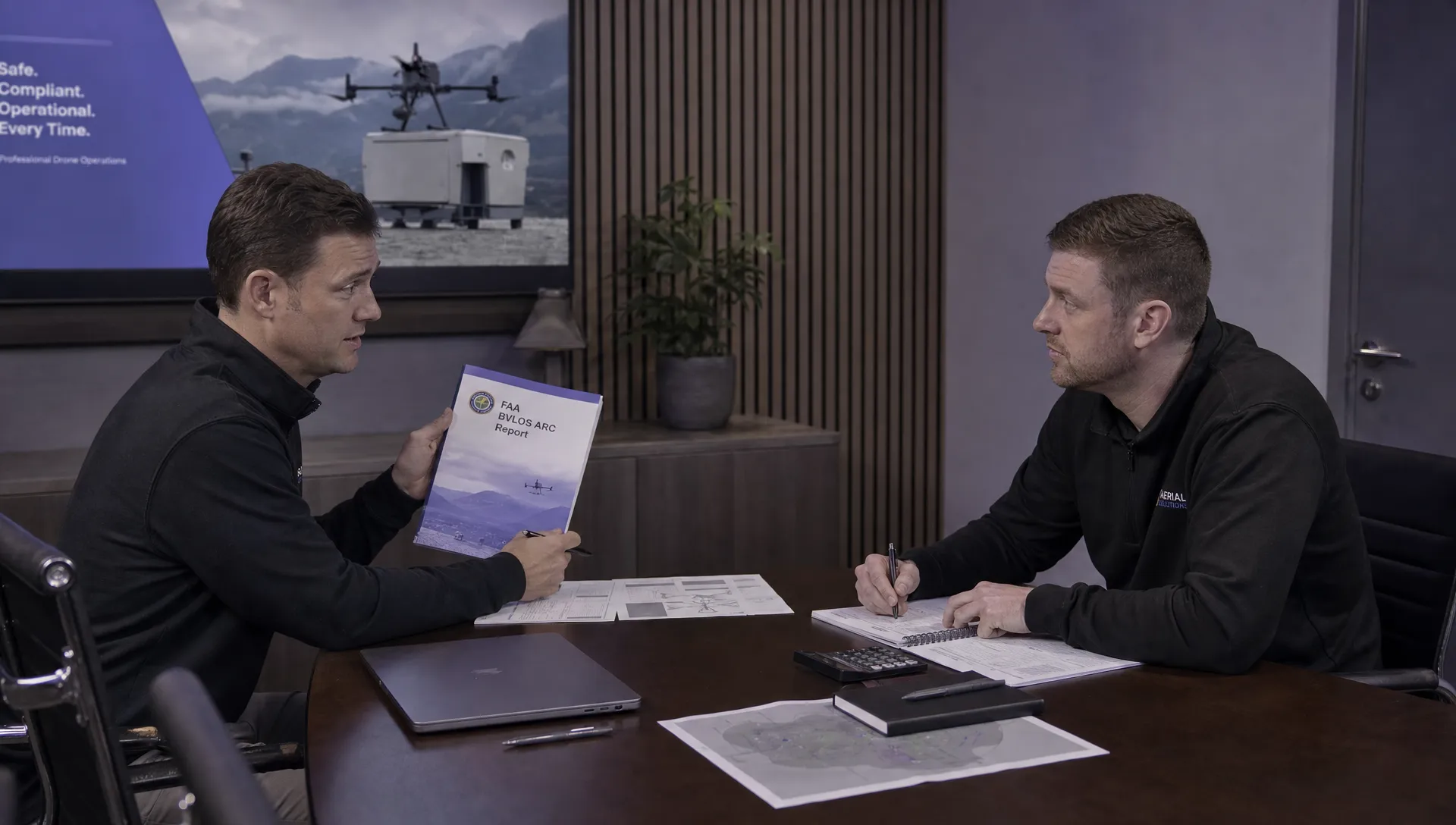 How to Find and Read the FAA BVLOS ARC Report →
 FAA Drone Registration Rules When Transferring Company Assets →
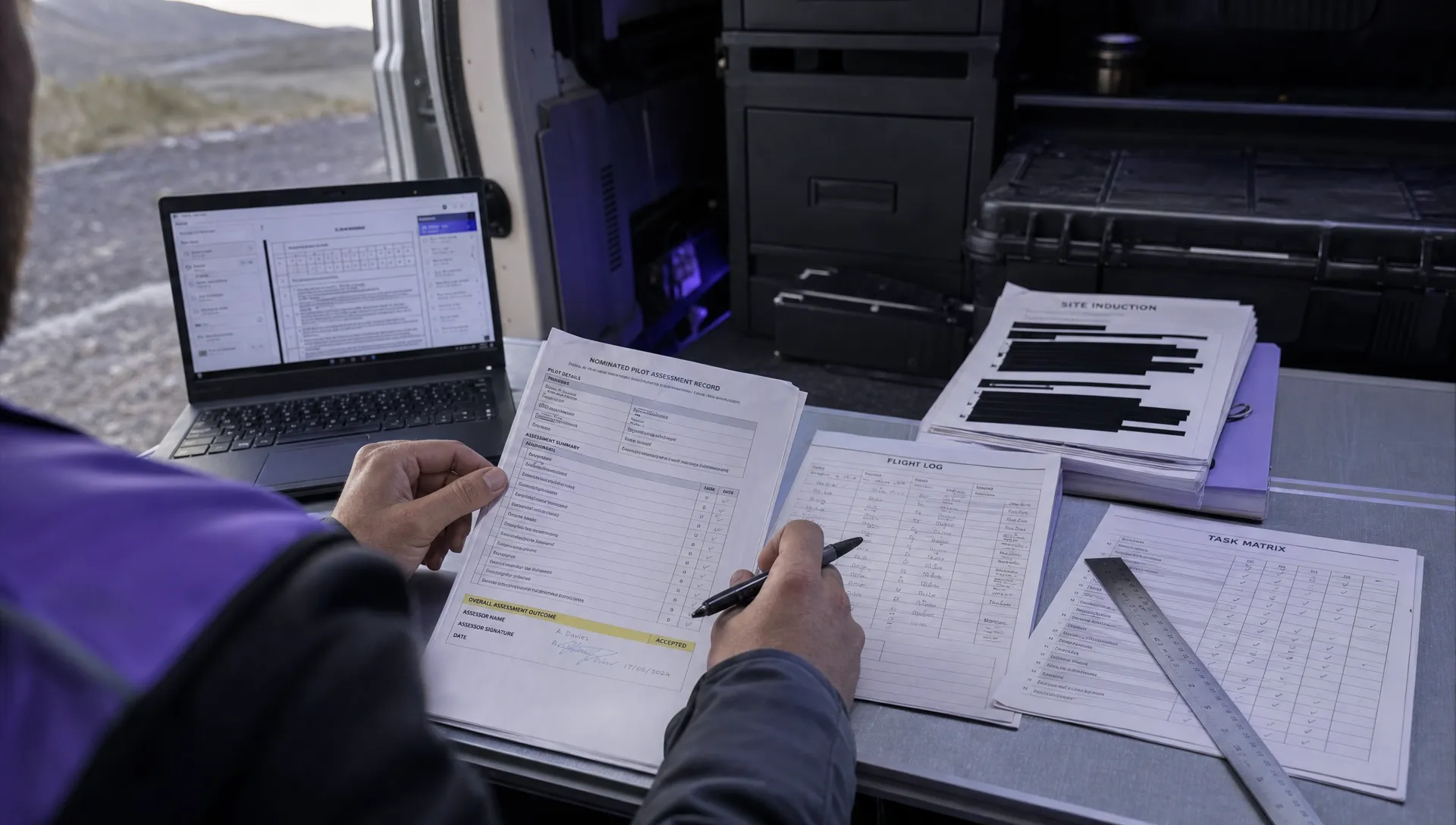 Remote Pilot Competency Evidence for Utility Procurement Teams →
 Drone Flight Log Fields to Standardise in Excel Across Teams →
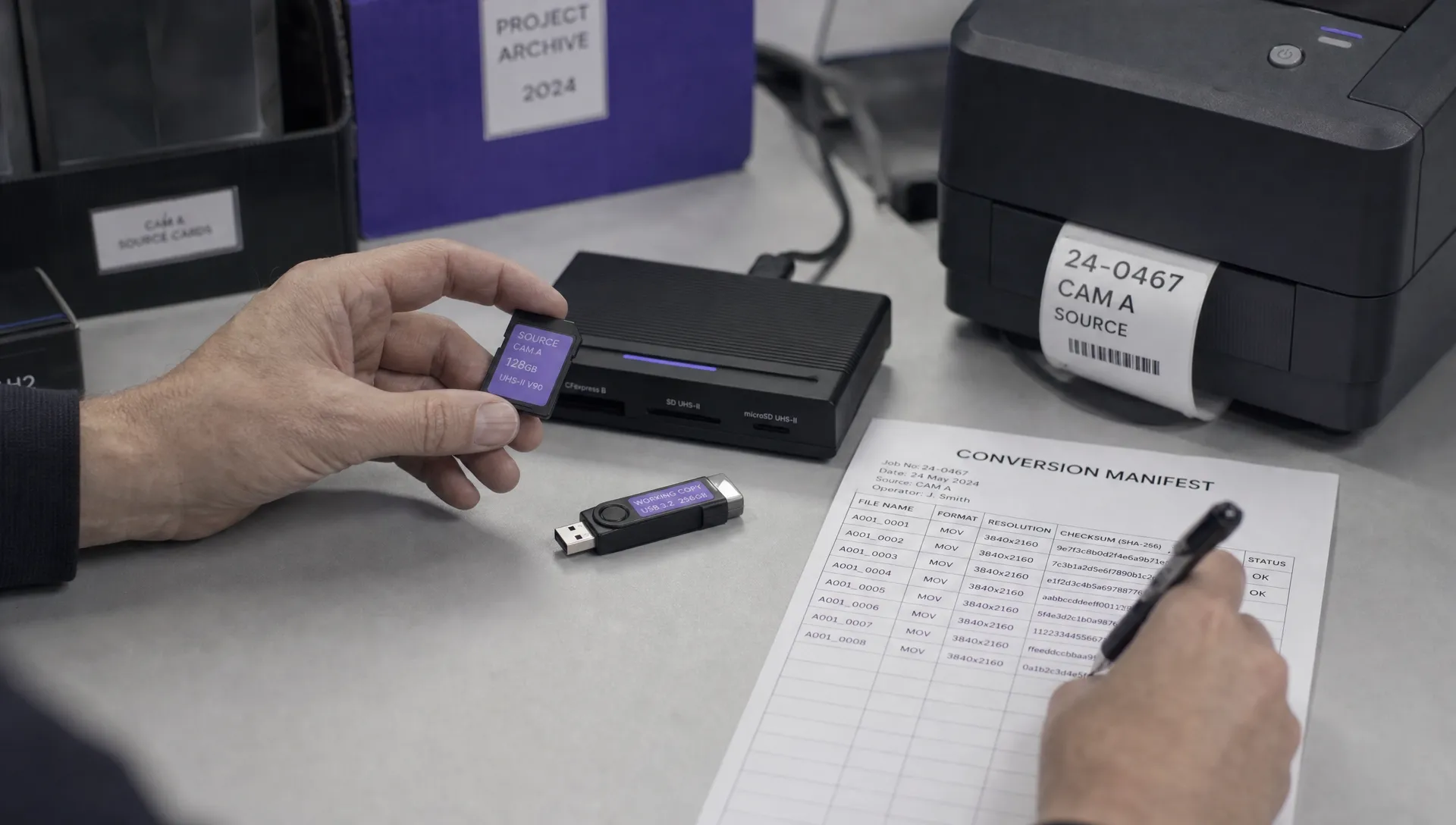 How to Preserve Original Data With a DJI Flight Log Converter →
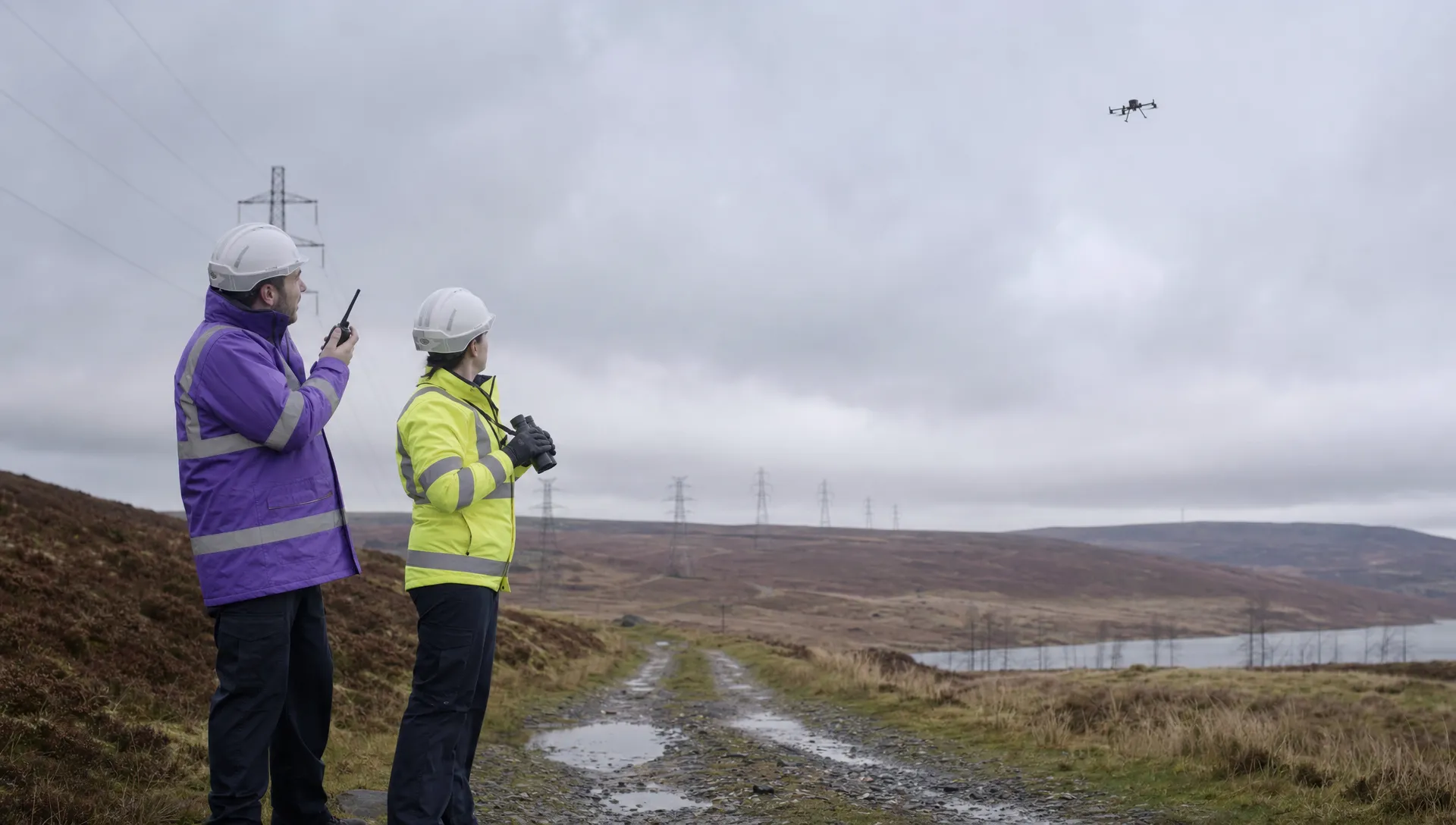 Beyond Visual Line of Sight Drone Operations and Observer Roles →
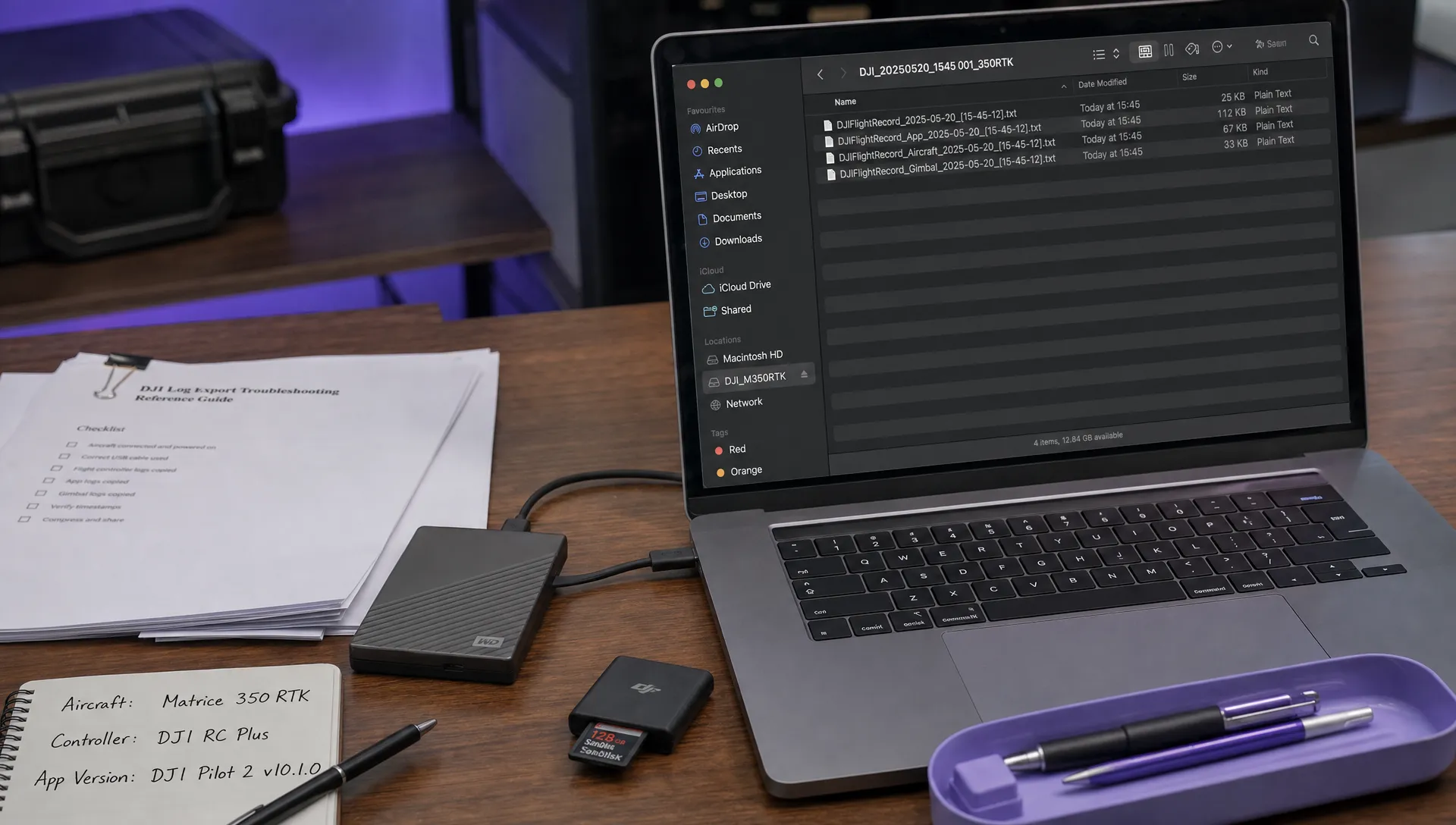 How to Troubleshoot a DJI Log Export That Will Not Open →
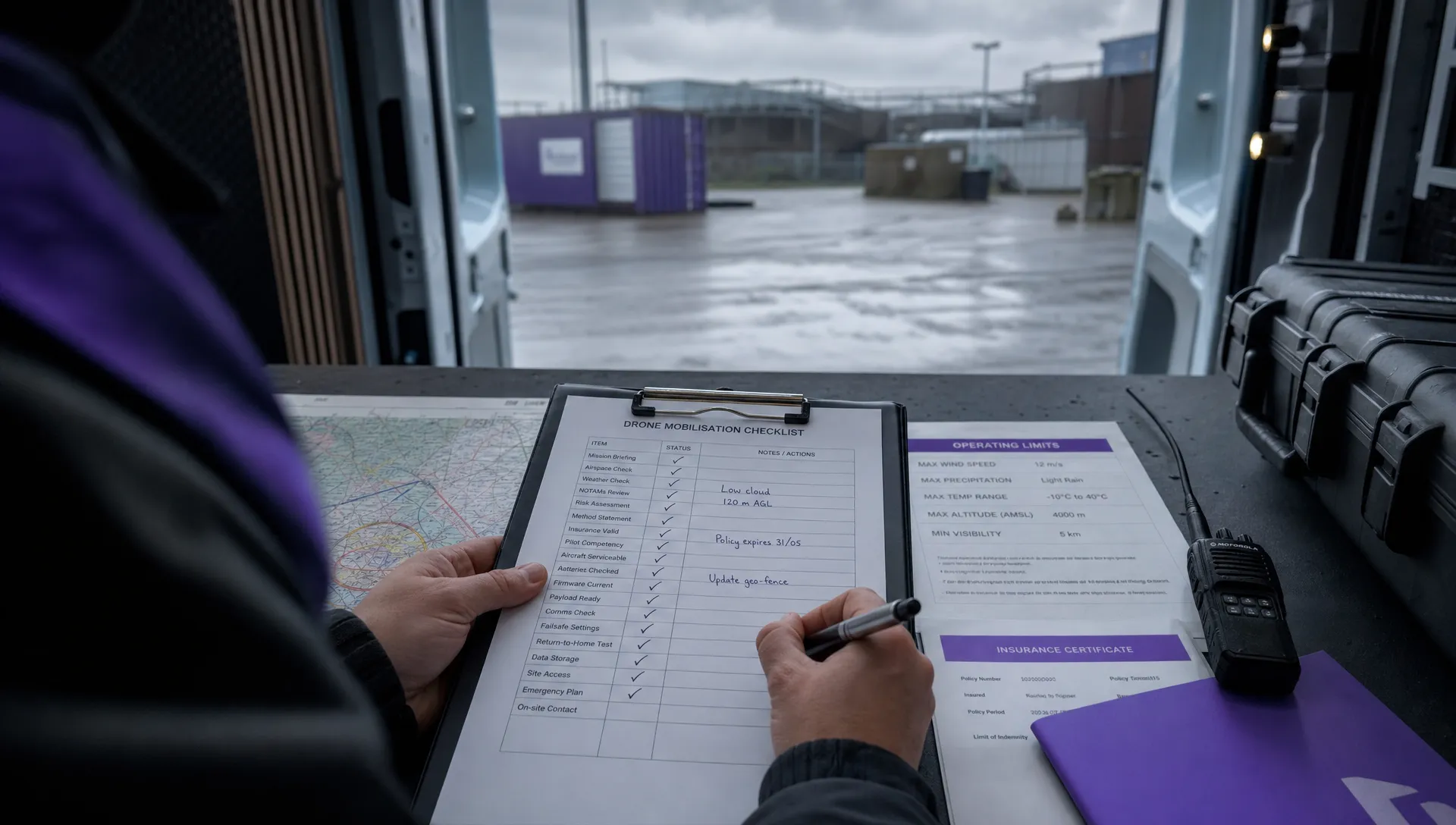 Drone Pilot Regulations for Visiting Overseas Contractors →
 Drone Laws Near Airports for Repeat Inspection Contracts →
 FAA Restrictions on Drones During Stadium Events Explained →