
How to Track Drone Regulations Worldwide as a Business
Tracking drone regulations worldwide is a business process, not a one-off search before take-off. For a survey company, utility contractor or emergency services team, the useful question is not simply whether drones are allowed in a country. It is whether a particular aircraft, pilot and mission can proceed at a particular location, with the evidence to support that decision.
A reliable process connects official information to operational decisions. It identifies who checks for changes, which projects are affected and what must happen before a team mobilises.
This guide explains how to build that process. It does not provide a country-by-country statement of current legal permissions or replace confirmation from the relevant authority.
Start with official sources, not country summaries
Country guides can help you discover an issue, but they should not be the final evidence for approving a commercial mission. Build your source directory around the authorities responsible for each destination.
For the United States, the FAA’s Part 107 information is an official starting point for researching small UAS operations. For European destinations, use EASA’s explanation of the European drone regulatory system to orient your research, then identify the national authority relevant to the destination. For the United Kingdom, start with the CAA’s drone information portal.
Record the precise page or document supporting each finding, rather than saving only an authority’s homepage. Where a summary leaves a question unanswered, locate the underlying official material or request clarification.
A curated drone industry news feed can flag developments worth investigating. Treat news as a discovery channel, not as approval evidence.
When monitoring drone regulations worldwide, separate the source that alerts you to a change from the source that confirms what your business must do.
Keep aviation, entry and site permission separate
An aviation review alone does not answer every question associated with an overseas deployment. Create separate research tracks for the aircraft’s operation, its entry into the destination and the intended work site.
Your destination record should ask:
- Aviation: What operator, pilot, aircraft and mission requirements apply to the proposed activity?
- Airspace: Which official services provide location-specific restrictions, notices and permission procedures?
- Equipment entry: What do the relevant customs or border authorities say about bringing in and taking out the equipment?
- Site access: Who can confirm permission to access the site and use the proposed take-off and landing areas?
- Other requirements: Do the relevant authorities or client conditions introduce additional questions about radio equipment, imagery, personal data or sensitive infrastructure?
These are research questions, not a claim that every destination imposes the same requirements. Keep unresolved answers visible. Permission to access a client’s site should never be recorded as evidence that every other approval question has been settled.
Build a working register for drone regulations worldwide
A folder of bookmarks becomes difficult to manage once several teams operate across multiple destinations. Use a structured register that connects each finding to a defined operation.
Start with a mission profile: destination, site, purpose, aircraft configuration, pilot, operating method and proposed dates. Include factors such as aircraft mass, visual or beyond visual line of sight operation, night work and proximity to people where relevant to your research.
A practical register can use the following fields:
| Field | What to record |
|---|---|
| Destination and mission | Country, relevant local area, site and intended activity |
| Requirement or question | The specific issue being investigated |
| Official evidence | Authority, document title, URL and relevant passage |
| Document status | Whether the material is a proposal, guidance, published rule or individual approval |
| Dates | Publication, effective date where stated and date checked |
| Applicability | Which aircraft, pilots, projects or operating methods are affected |
| Business action | Required task, responsible person and completion target |
| Approval evidence | Relevant correspondence, permissions or credentials and their conditions |
| Review status | Next check, unresolved questions and mission decision |
Keep interpretation separate from the source text. Someone reviewing the record should be able to distinguish what the authority published from your team’s conclusion.
Use the register to track drone regulations worldwide at mission level, rather than marking an entire country as simply “allowed” or “banned”. A finding about one operating method may not answer a different mission’s questions.
Assign an owner and a review rhythm
Give the register a named owner and a deputy. The owner maintains sources and evaluates changes; project managers explain the intended work; the designated approver decides whether the evidence supports proceeding.
Small businesses can combine these roles, but a second-person review is valuable for unfamiliar destinations or materially different operations. It helps catch assumptions that the original researcher no longer notices.
Use a review schedule matched to exposure. As an internal starting point, you might review destination updates weekly during active project preparation and monthly for markets where you have no scheduled work. Add checks before quotations, mobilisation and flight, plus immediate reviews when a relevant announcement or mission change appears.
These intervals are suggested business controls, not regulatory deadlines or a guarantee that information remains current. Site-specific notices and rapidly changing conditions need their own checks.
The aim of tracking drone regulations worldwide is not to maximise the number of pages someone reads. It is to ensure that relevant changes reach the people making operational commitments.
Turn each update into an operational decision
An announcement should create a review task, not merely another saved link. Record what changed, when it takes effect, what remains uncertain and which planned missions could be affected.
Distinguish a consultation or proposal from material that establishes an applicable requirement. Publication date alone is not enough: look for effective dates, transitional arrangements and the scope stated in the official text.
For example, a notice about an aircraft identification requirement should trigger questions about the fleet configurations intended for the destination. A change concerning pilot evidence should trigger a review of the personnel assigned to affected jobs. These are examples of impact assessment, not statements about a particular jurisdiction’s current rules.
Document the resulting action and its owner. If the published material is ambiguous, preserve the question and seek clarification rather than silently interpreting it in the most convenient way.
A change record makes drone regulations worldwide manageable by translating source material into concrete tasks: verify a configuration, update a procedure, obtain evidence or pause a commitment.
Check the mission at quotation, mobilisation and launch
A single compliance check at the start of a project can miss changes in both the rules and the proposed work. Build three decision points into your drone operations management workflow, with a different purpose at each stage.
Quotation: establish feasibility before making promises
Before quoting, define what the customer actually wants. “Inspect this asset” is too vague for a useful review. Establish the location, operating area, aircraft, expected flight method and timing.
Identify approval questions and dependencies early enough to influence the proposal. Separate confirmed facts from assumptions, especially when the client expects work at night, near an airport or across a large operating area.
Where feasibility remains unresolved, make that dependency explicit in the commercial proposal. Avoid committing to a deployment date based only on a third-party country summary or another operator’s experience.
This is where tracking drone regulations worldwide directly supports business decisions: the review informs whether to quote, what preparation to budget for and which commitments require conditions.
Mobilisation: match evidence to the actual deployment
Before sending staff or equipment, reconcile the register with the final mission plan. Check that the aircraft configuration, assigned personnel, location and operating method still match the evidence reviewed.
Review equipment-entry questions independently of flight permission. Obtain answers from the relevant official sources and check transport arrangements with the carrier where appropriate. An aviation finding does not settle customs or baggage questions.
Prepare an accessible evidence pack containing the relevant source records, approval correspondence, site arrangements and internal decision. Make conditions easy to find rather than burying them in a long document archive.
If the mission has changed, revisit the affected findings and risk assessments. A different aircraft, larger survey boundary or replacement pilot can make the original review incomplete. Record the revised decision before dispatch, not after the team arrives.

Launch: confirm that the decision still holds
The final check concerns the actual location, date, conditions and planned activity. Consult the relevant official airspace information and notices, review approval conditions and confirm that no material mission changes have occurred.
Use clear internal statuses. “Research incomplete” should mean the team cannot treat the mission as approved. “Blocked” should identify the unresolved dependency. “Approved for this mission” should name the operation and decision-maker, rather than implying unrestricted permission.
Make the evidence accessible to the field team. They need to understand the operating conditions and escalation route, not just see a green status in a project record.
Your system for drone regulations worldwide should allow a field decision to be stopped or reconsidered when the situation no longer matches the reviewed plan. Commercial urgency should not silently override that control.
Test the system with a cross-border project
Consider a hypothetical utility inspection across three destinations. The customer wants comparable outputs, but the proposed missions differ: one is a short daylight site survey, another involves an extended linear asset and the third may require night work.
Create separate mission profiles rather than copying one country’s conclusions into the other records. Research each destination through its own official sources and assess the intended operating method independently.
Suppose the team finds an official announcement during preparation. The register should show which mission might be affected, who is checking its applicability and whether mobilisation needs to pause. It should not simply label all three destinations “updated”.
If one dependency remains unresolved, you can assess whether to separate the delivery schedule, revise the scope or seek clarification. That is a more useful business decision than treating the entire project as either approved or impossible.
The value of tracking drone regulations worldwide is visible here: a change has a traceable path from source to assessment, then to scheduling and operational decisions. No individual has to remember which email contained the relevant warning.
Measure whether the process works
Measure the quality of the review process, not just how many checks were completed. Useful indicators include the age of source checks for scheduled missions, unresolved questions before mobilisation and the time between discovering an update and assigning an action.
Periodically sample an approved mission record. Can a colleague reconstruct what was proposed, which official evidence was used and why the decision was made? Can they distinguish approval conditions from your internal assumptions?
Keep previous versions when a finding changes. Record what was replaced and why, so an older decision is understandable without presenting superseded information as current.
For a growing team, drone regulations worldwide become easier to manage when the records are reviewable and ownership is clear. A sophisticated register with no accountable owner is less useful than a simple one that reliably controls project decisions.
Frequently asked questions
Can I fly a 249g drone anywhere? Do not treat a 249g label as country-specific clearance. Research the intended destination, location and activity, then establish which requirements apply to that aircraft and mission. Weight is a research input, not a substitute for checking official sources.
How do we identify countries where drones are not allowed? Investigate the particular question you need answered: equipment entry, possession or the proposed operation. A blanket third-party description may conceal those distinctions. If you cannot establish a supported answer, leave the destination unresolved rather than treating missing information as permission.
Can staff travel internationally with company drones? Assess equipment entry and transport separately from permission to fly. Confirm the relevant customs information, carrier arrangements and destination operating requirements before booking a deployment. Record the answers against the equipment and itinerary actually being used.
How do we find changes to drone law in 2026? Compare dated official publications with your existing findings and check their stated status and effective dates. When researching drone regulations worldwide, an article published in 2026 is not evidence that every requirement it describes changed that year. Verify each relevant change at source.
Should software make the final compliance decision? Use tools to organise evidence and tasks, but retain an accountable human approval process. Check whether any claimed regulatory coverage includes your destinations and operation types, and understand how its information is sourced and maintained.
Put the process into practice
Start with one destination where you have upcoming work. Define the mission, assemble its official source record and ask a second person to test whether the evidence supports your planned deployment. Resolve gaps before extending the approach to other markets.
If you are assessing Dronedesk for your operational workflow, use its published feature list to check the fit against your requirements. Do not assume that any operations platform automatically supplies current worldwide legal advice or replaces destination-specific verification.
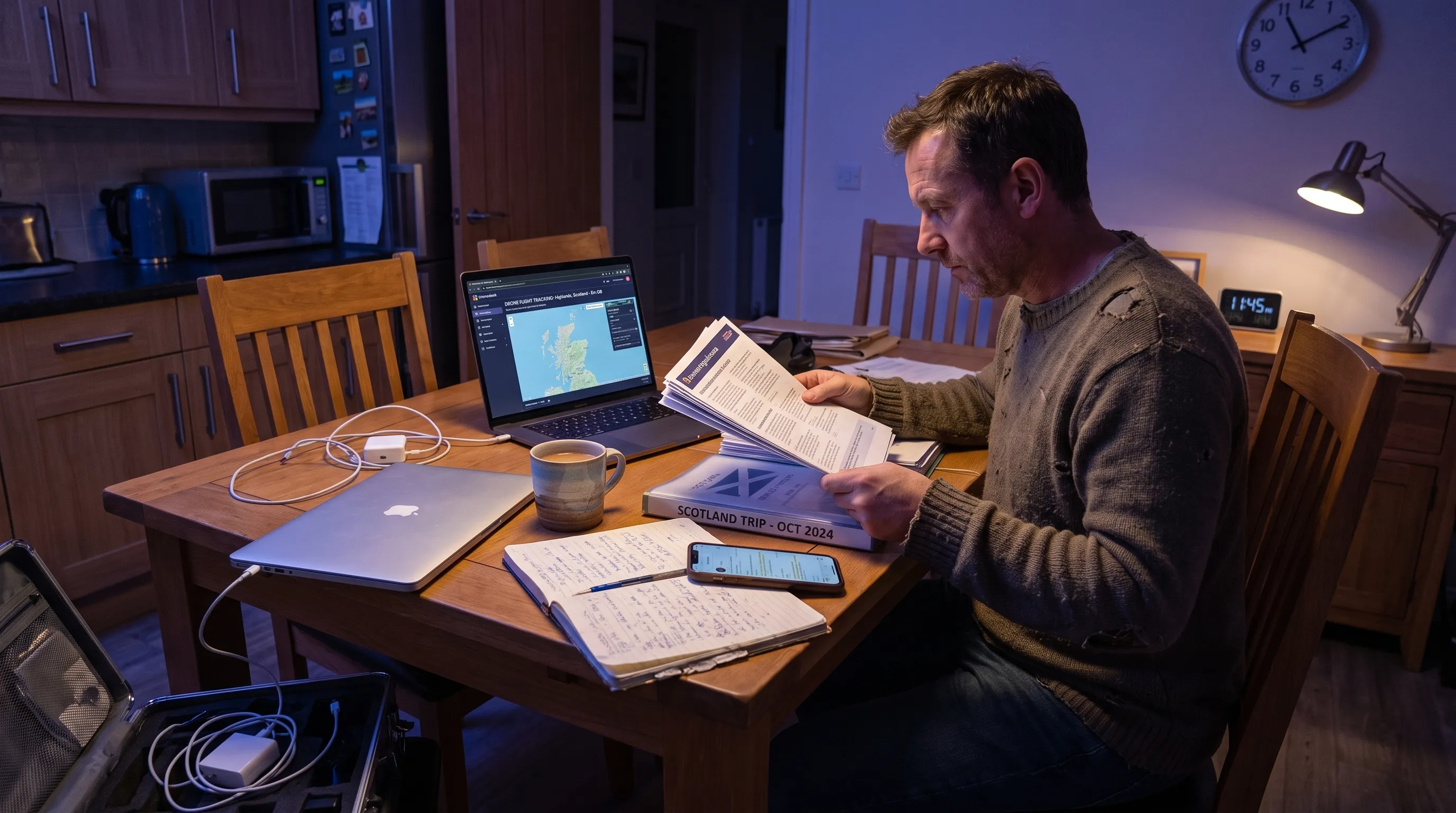 How to Track Drone Regulations Worldwide as a Business →
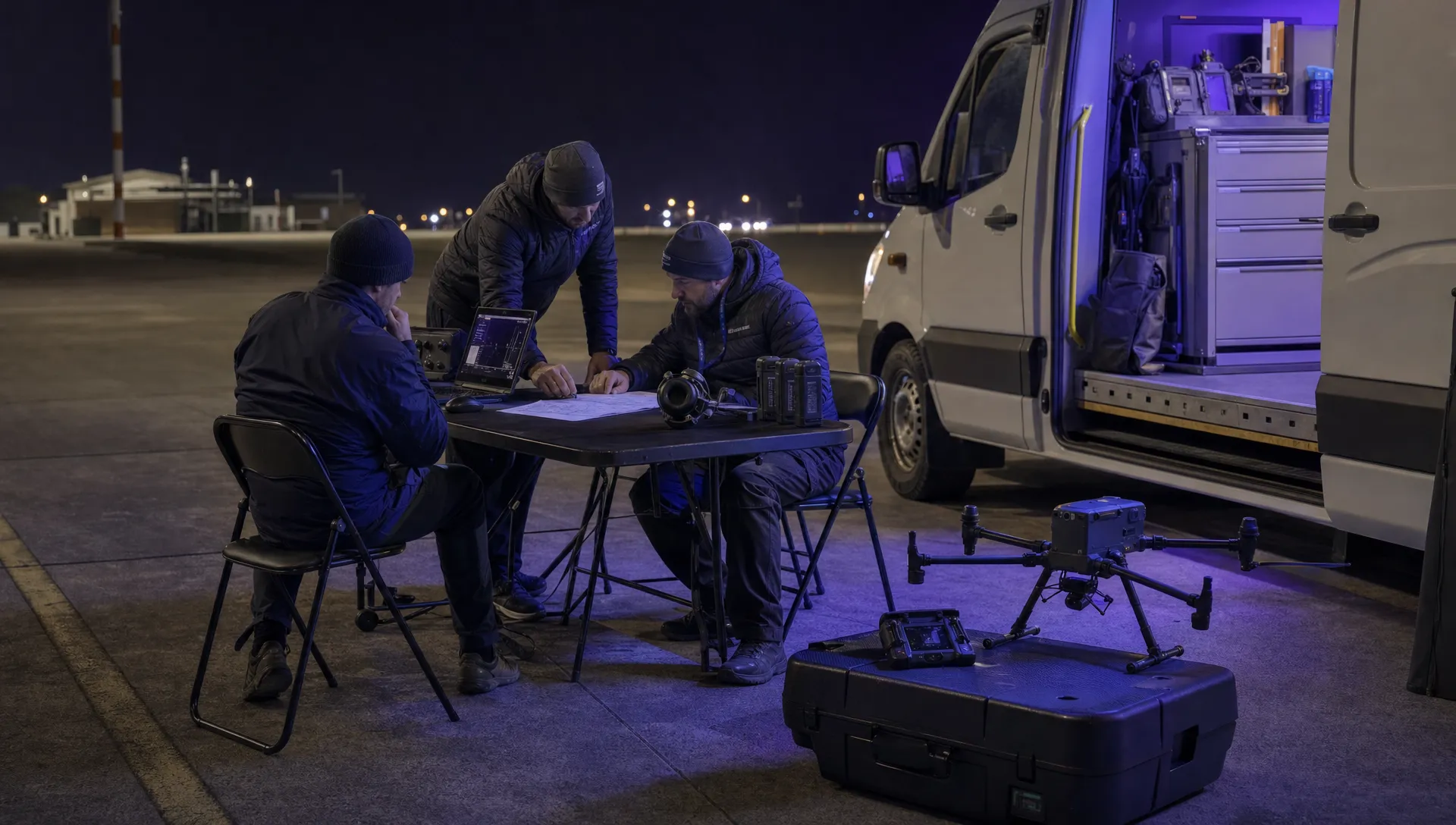 FAA Rules for Flying Drones at Night During Emergency Missions →
 How to Onboard an FAA 107 Pilot for Utility Inspections →
 FAA Drone Rules for Commercial Use on Construction Sites →
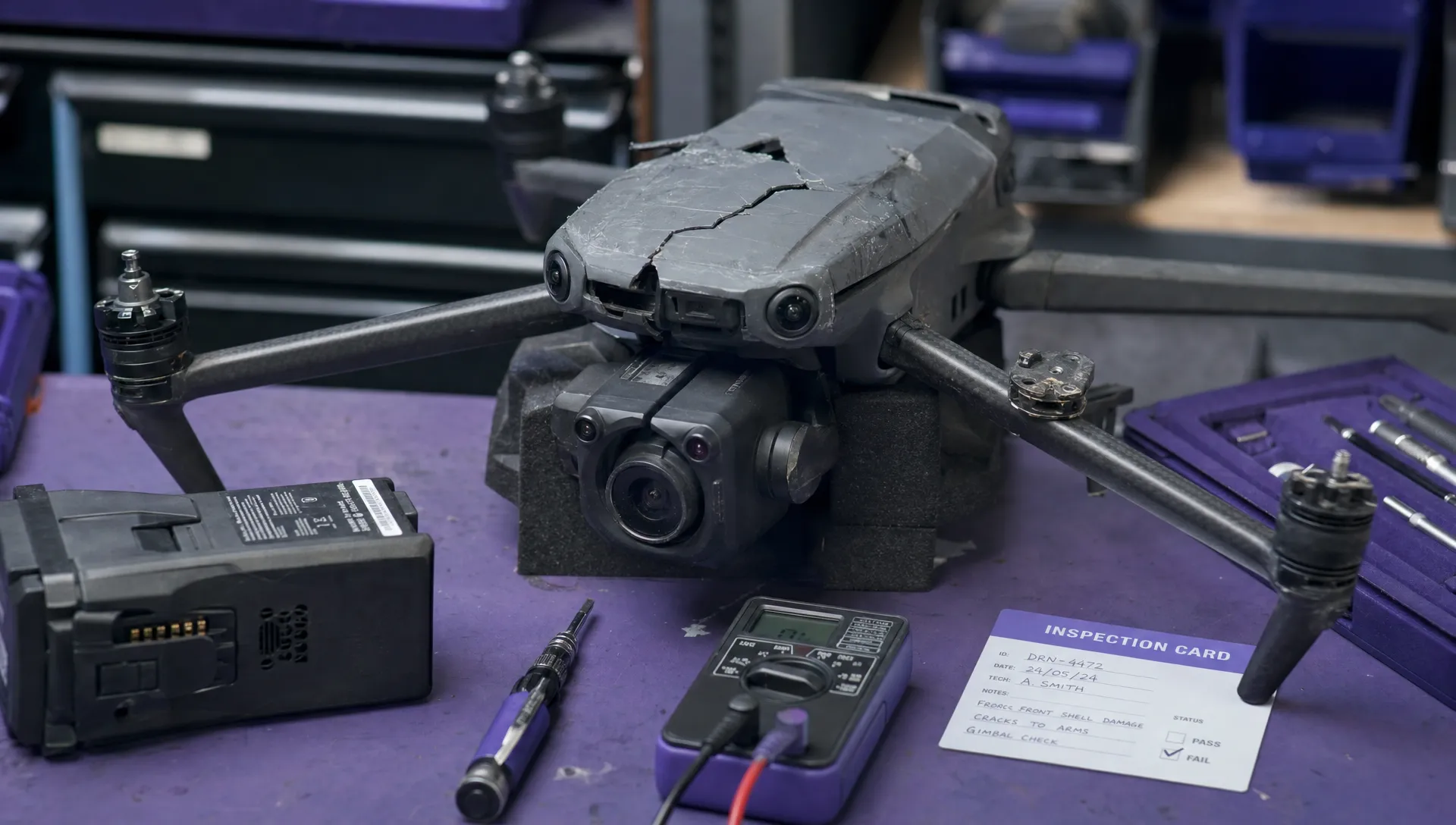 When Should You Retire a Commercial Drone? →
 Drone Fleet Management Software - The Platforms That Failed, and the Ones Still Flying →
 FAA Drone Pilot License: A Manager’s Compliance Checklist →
 Part 107 Classes: How to Choose Training That Fits Your Role →
 Drones for Commercial Use: How to Match Aircraft to Risk →
 Weather App for Drone Flying: Checks Beyond Wind Speed →