
Drone Laws Near Airports for Repeat Inspection Contracts
For repeat inspection contracts, drone laws near airports need to shape the quotation and scheduling process, not appear as a last-minute check before take-off. A recurring booking does not establish whether the next flight can proceed. Each visit needs a clear link between the proposed inspection, the applicable restrictions and any permissions identified during planning.
This UK-focused guide explains the contract controls to put around that process. It does not reproduce regulatory distances, height limits or application deadlines, which should be checked against current official sources for the location concerned.
Establish the legal position before promising dates
Start with the CAA’s drone guidance and the official Drone and Model Aircraft Code. Use them to establish the requirements relevant to the proposed flight, then follow the applicable aerodrome’s published process where airport coordination is needed.
Do not quote solely from the client’s postcode or a remembered airport exclusion distance. Obtain the inspection boundary, proposed flight area and intended operating method first. An inspection of the airport-facing elevation may need a different assessment from work on the opposite side of the same building.
Keep airport flight restriction zones, controlled airspace and temporary restrictions as separate planning questions. A single field labelled “airport clearance” can conceal unanswered questions about the actual operation.
Turn drone laws near airports into a site permission matrix
For recurring work, create a site permission matrix before agreeing the service schedule. Its purpose is to show what has been established, what remains unresolved and who owns each action.
| Planning field | What to record | Contract implication |
|---|---|---|
| Inspection scope | Assets, elevations and required outputs | Defines what the quoted visit covers |
| Proposed flight area | Mapped boundary and intended height reference | Establishes the operating area being assessed |
| Official restriction check | Source, date checked and relevant findings | Identifies outstanding planning work |
| Permission route | Relevant contact or application process | Informs scheduling assumptions |
| Permission evidence | Reference, conditions and validity where applicable | Supports the visit release decision |
| Operating constraints | Restrictions on timing, equipment or method | May affect productivity and coverage |
| Unresolved items | Missing information and responsible person | Prevents premature confirmation |
Record aviation-related permissions separately from site access arrangements. A facilities manager confirming that the team can enter a compound answers a different question from whether the proposed flight meets the applicable aviation requirements.
Also distinguish your operating basis from location-specific permissions. Ask separately whether the inspection method is supported and whether the proposed location introduces additional requirements. Do not use a document answering one question as an automatic answer to the other.
For the broader flight-planning background, Dronedesk’s guide to planning around airport drone rules complements this contract-focused approach.
Price the coordination work explicitly
When drone laws near airports introduce additional planning questions, the commercial mistake is to hide all coordination inside a fixed flying-day rate. That makes the operator responsible for uncertainty without explaining it to the client.
Separate initial site establishment from recurring attendance. Initial work might include defining the operating area, identifying contacts and preparing the first site-specific planning pack. Recurring work includes checking whether those arrangements still support the next proposed visit.
Explain which assumptions underpin the price. These could include an unchanged inspection boundary, the same operating method and a client-provided site contact. State how changes to those assumptions will be handled.
Avoid promising that an application will succeed or that a third party will respond within a particular period unless you have a reliable basis for doing so. Your quotation should distinguish your own preparation time from decisions outside your control.
A useful scope statement is:
The recurring fee covers preparation and attendance for the agreed inspection scope. Flight dates remain provisional until the applicable checks and required permissions are complete. Changes to the operating area or inspection method will be assessed before a revised commitment is made.
Have contract wording reviewed for your business and customer arrangements. A planning framework is not a substitute for legal advice on cancellation charges or liability.
Reuse site information without assuming approval carries forward
A repeat contract becomes more efficient when stable information is retained. Asset identifiers, access instructions and agreed deliverable formats should not need to be reconstructed at every visit.
However, drone laws near airports should be addressed through a fresh release decision, not by copying an old “approved” status into the next job. Treat previous permissions as evidence to examine, rather than a conclusion about the next flight.
Where a document appears to cover multiple visits, check its actual wording. Record the applicable dates, operating area, conditions and any notification or coordination arrangements it describes. If the scope is unclear, obtain clarification before relying on it.
Maintain two distinct records: the reusable site baseline and the visit-specific release record. The baseline describes the established operation. The release record explains why the planned attendance is acceptable under the information and conditions checked for that visit.
Give both records an owner. Otherwise, an expired document or unanswered coordination request can remain hidden between the account manager, planner and remote pilot.
This separation also makes handovers easier when a different pilot attends the next inspection. They can see what was inherited and what was checked again.
Define which changes reopen the assessment
Repeat inspections rarely remain identical throughout a contract. A client adds another roof, scaffolding appears beside the building or the team proposes a different aircraft to improve coverage.
Your process for drone laws near airports should therefore include a change-control trigger. The question is whether the proposed visit still matches the operation previously assessed, not simply whether the site address remains unchanged.
Ask the planner to reassess changes to the flight boundary, intended height, aircraft, operating method or timing. Changes affecting visibility, access, communications or the ability to stop the operation also deserve review.
Update the relevant risk assessment rather than attaching an old version without checking it. A familiar location can still have a materially different working environment.
The client needs a corresponding obligation to report site changes. Make this practical: ask for notice of new cranes, scaffolding, temporary structures and access restrictions before the attendance is confirmed.
For utility companies and emergency-service teams, agree an urgent-work escalation process in advance. A short-notice request should trigger a defined assessment and contact procedure, not an assumption that normal planning questions can be skipped.
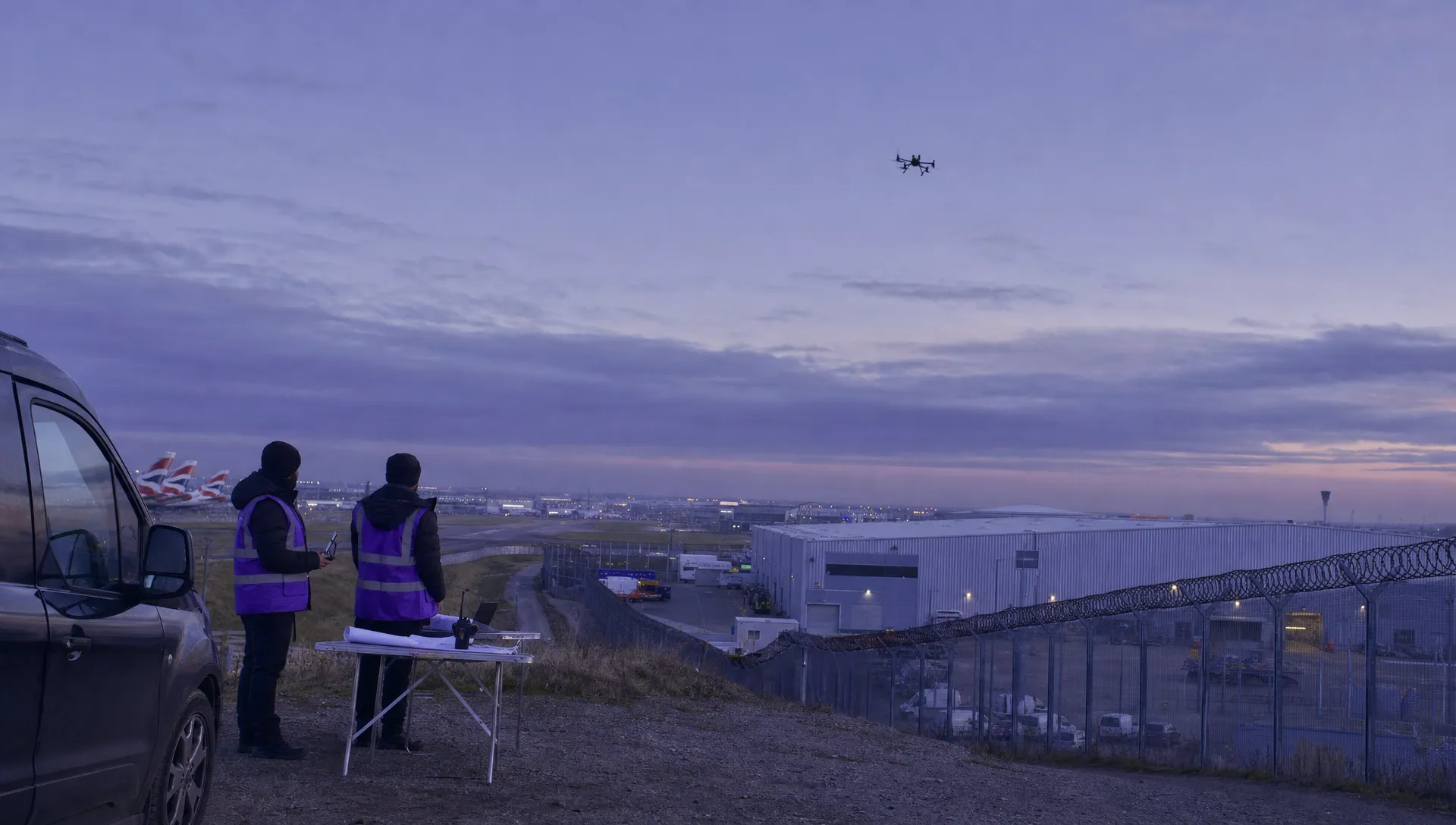
Release each visit against a short checklist
A visit release checklist should answer whether the proposed job can proceed, with supporting evidence available to the person making that decision. It should not be a long form that duplicates the entire site file.
Use a small set of operational checks:
- Confirm that the inspection scope and proposed flight area match the current job.
- Review current official airspace information and the relevant aerodrome’s instructions.
- Confirm that required permissions are evidenced and cover the proposed operation.
- Check the conditions, contacts and any coordination actions identified during planning.
- Review weather, site changes and the current risk assessment.
- Record the release decision, decision-maker and any outstanding limitations.
Set internal deadlines for resolving missing information. These are your business controls, not assumed regulatory notice periods. If a required response has not arrived by the agreed decision point, move the visit to a provisional or deferred status rather than sending a team on an unsupported assumption.
Give the remote pilot access to the relevant documents and contact details. A permission reference stored only in an account manager’s inbox is difficult to use when a question arises on site.
Agree what happens when flying cannot proceed
A repeat inspection contract needs a practical fallback, especially where the client has booked access equipment, escorts or a maintenance shutdown around your attendance.
Distinguish between a visit that is not yet confirmed, a confirmed attendance that is cancelled before mobilisation and an operation stopped after the team arrives. Each creates different costs and different opportunities to reschedule.
For drone laws near airports, this distinction helps prevent a commercial disagreement from becoming pressure to fly. The pilot’s decision should not depend on whether the customer believes a recurring booking guarantees airborne work.
Agree whether a deferred visit can move within a service window. Also decide whether useful non-flight work can be completed, such as asset verification or a site walkover. Do not present alternative work as an equivalent inspection unless it meets the agreed specification.
Record what happens if only part of the asset can be inspected. Partial coverage should produce an explicit limitation in the deliverable, with any return visit agreed separately.
The commercial objective is a clear response to disruption, rather than a promise that disruption will never occur.
Keep evidence that connects the permission to the inspection
The contract record should let someone reconstruct what was planned, what was permitted and what was actually completed. That matters when an inspection is reviewed months later by a different client representative or operations manager.
Retain the relevant permission evidence, site plan version, risk assessment and visit release record alongside the inspection reference. Preserve important correspondence where it explains conditions or resolves an ambiguity.
Flight logs can help document the operation, but they do not establish that the necessary permission existed. Likewise, an approval email does not show that the flight remained within its conditions. Keep the planning evidence and operational records linked without treating either as a substitute for the other.
For teams reviewing DJI flight data, Dronedesk’s DJI flight log analysis tool provides a dedicated place to examine those logs.
A useful review of drone laws near airports asks whether the evidence supports the specific visit, rather than whether the folder contains a document called “approval”. Record deferred flights and incomplete inspections too, including the reason and agreed next action.
Frequently asked questions
Can one permission cover every visit in a repeat inspection contract? Do not assume that it does. Examine the document’s scope, dates and conditions, then resolve any uncertainty with the relevant issuing contact. A recurring commercial agreement does not establish the scope of an aviation permission.
Where should a UK operator check airport-related drone restrictions? Start with current CAA guidance and the official Drone and Model Aircraft Code, then use the applicable aerodrome’s published instructions. Check the proposed operating area rather than relying only on the client’s address.
Does a drone’s ability to take off prove that the flight is permitted? Treat the aircraft’s technical status as separate from the permission assessment. A successful take-off or completed manufacturer unlocking process is not the evidence your contract file should rely on to establish the legal position.
How should a client schedule inspections affected by drone laws near airports? Use provisional service windows until the relevant checks and permissions are complete. Agree confirmation deadlines, postponement arrangements and responsibility for reporting site changes before the first attendance.
Put the controls into your recurring workflow
Before accepting the next airport-adjacent inspection contract, test whether another planner could identify the applicable permission, its scope and the release status of the next visit without searching through personal inboxes.
If you are reviewing the software supporting that process, compare Dronedesk’s published features with your team’s requirements. Use the site matrix, change-control process and visit release record above as practical assessment criteria.
 Drone Laws Near Airports for Repeat Inspection Contracts →
 FAA Restrictions on Drones During Stadium Events Explained →
 How to Update Drone Flight Checklists After a Near Miss →
 FAA Drone Regulations for Commercial Use in Paid Training →
 What a Drone Line of Sight Waiver Means for Project Scope →
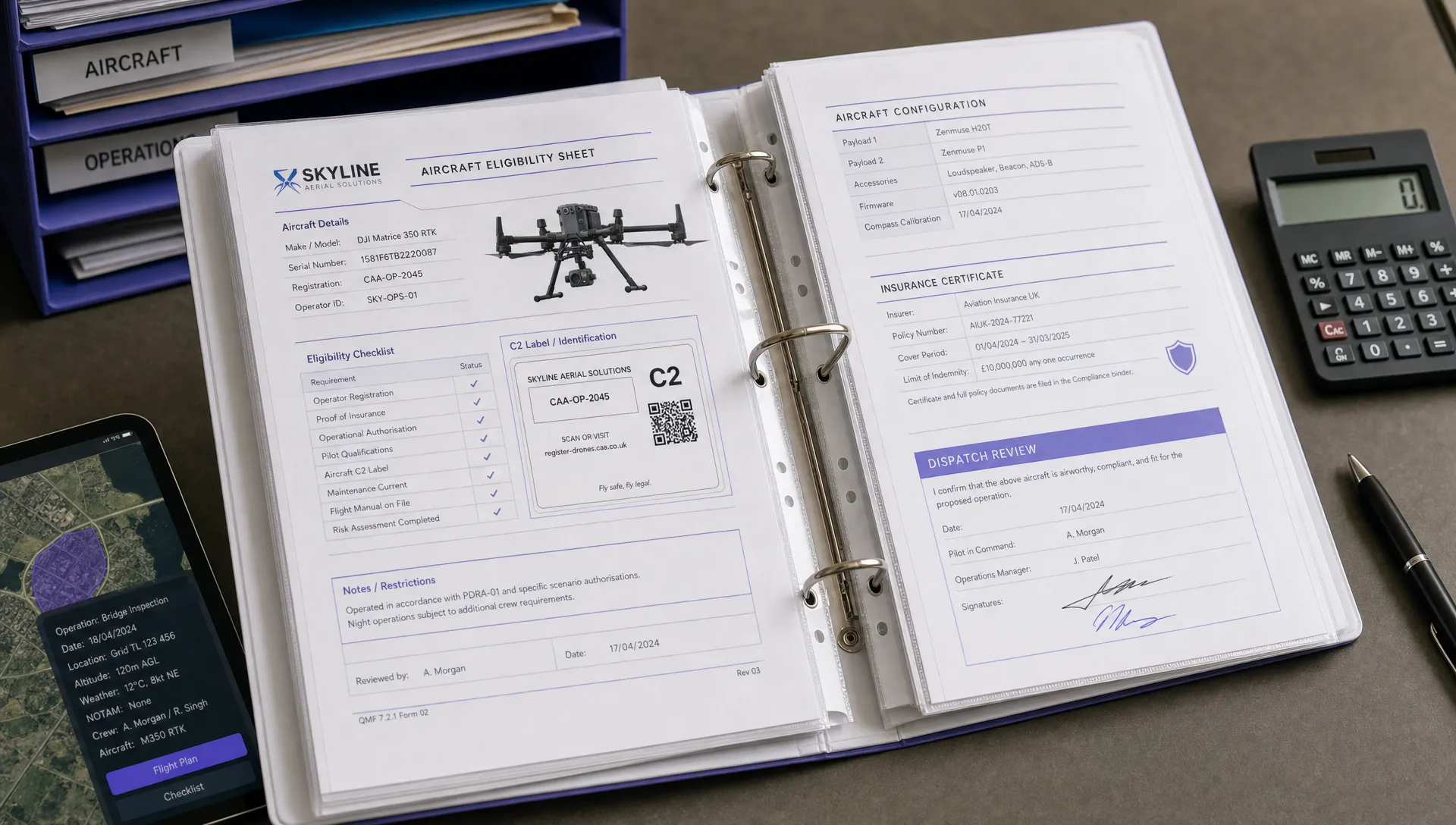 Drone Regulations for Commercial Use With Mixed Aircraft Fleets →
 FAA 107 Test Study Plans for Shift Workers →
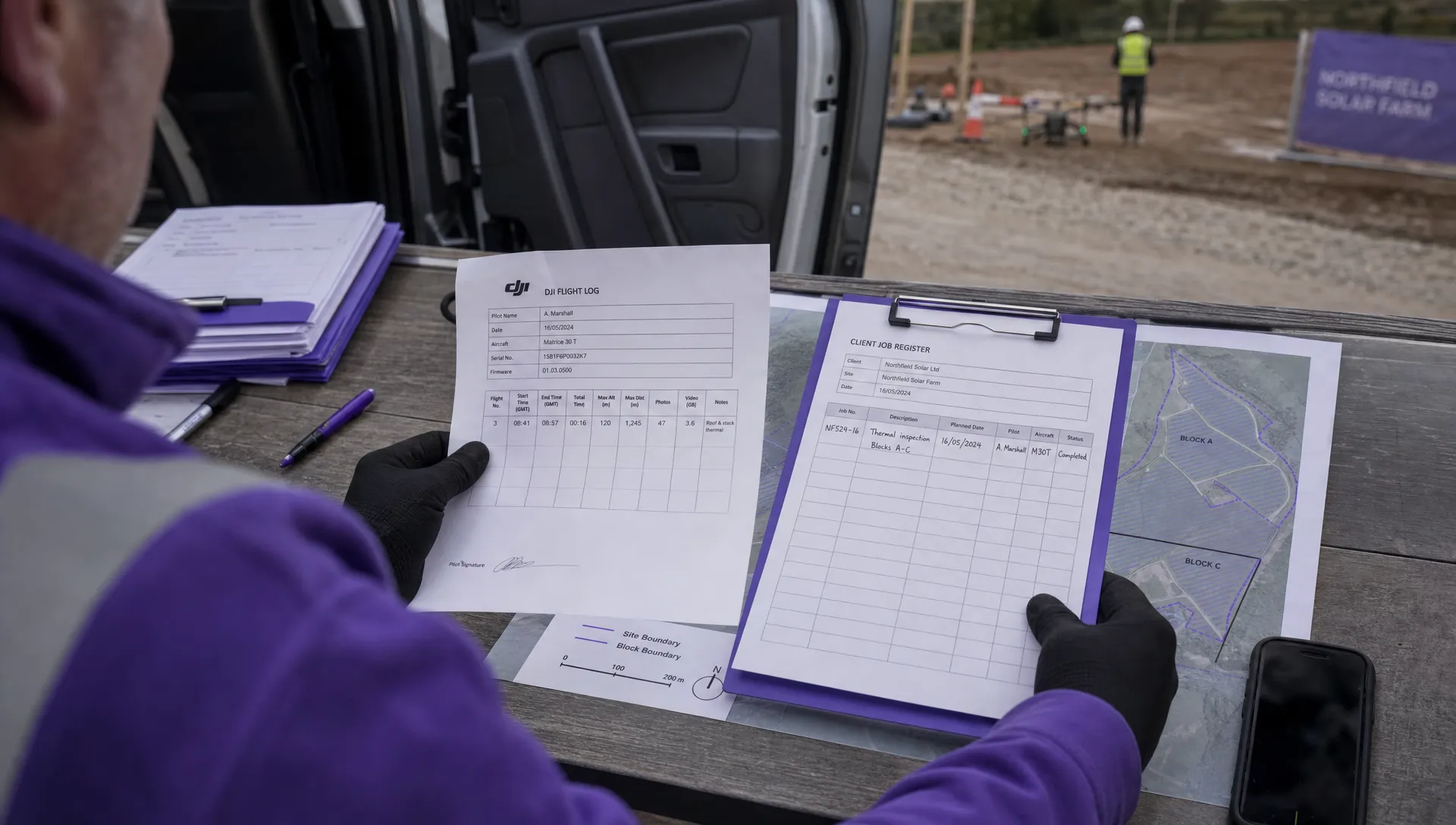 How to Match a DJI Flight Log to a Client Job →
 Drone Regulations Under 250 Grams for Mixed-Weight Fleets →
 Drone Safety Guidelines for Working Near Water →