
Drone Pilot Regulations for Visiting Overseas Contractors
For a UK organisation hiring an overseas drone team, drone pilot regulations belong in the pre-mobilisation review, before travel is booked or a flight date is promised. A contractor’s home-country credentials are evidence to examine, not a substitute for checking the proposed UK operation.
The practical task is to connect the visiting pilot, the organisation responsible for the operation, the aircraft and the worksite. A survey company commissioning aerial mapping needs that connection just as much as a utility arranging inspections or an emergency service bringing in specialist support.
This guide explains what to verify rather than reproducing current legal thresholds or deciding whether a particular foreign credential is recognised. Confirm applicable requirements through the linked official authorities before approving the work.
Check drone pilot regulations against the actual UK job
Start with a written description of the intended operation. “Drone inspection at our site” is too vague to support a meaningful compliance review.
Record the site coordinates, intended dates, aircraft configuration, proposed flight area and whether the pilot expects to maintain visual contact throughout. Include nearby roads, occupied buildings, public access and other aircraft activity. Explain what the contractor must capture, because the required data may influence flight height, proximity and equipment choice.
Use that description to request job-specific answers through the CAA’s official drone guidance.
| Subject to verify | Evidence to request from the contractor |
|---|---|
| Operator registration and identification | Applicable registration details, supporting guidance and any required aircraft identification |
| Remote-pilot competence | Credentials relevant to the proposed operation and evidence of their acceptability for UK work |
| Aircraft weight and class | Identification of the actual aircraft, payload and configuration being deployed |
| Operating category and permissions | Explanation of the proposed regulatory basis and any supporting approval documents |
| Remote identification | Confirmation of whether requirements apply to that aircraft and operation |
| Flight limitations | Documented height, separation, visibility and operating conditions applicable to the job |
For visiting teams, drone pilot regulations should be checked against this specific combination of people, equipment and activity. A previous UK assignment is useful background, but it does not answer whether the next assignment has the same conditions.
Identify the operator separately from the pilot
Ask the supplier to identify the legal operator under the applicable CAA framework and name the remote pilot for each planned flight. Do not infer either role from a logo on a quotation.
An overseas business might send its own pilot and aircraft, supply a pilot to work within another organisation’s arrangements or subcontract part of the assignment. Those arrangements need different questions about responsibility and evidence.
The contract and operating documents should agree on who controls the work, maintains the aircraft, assigns suitably qualified personnel and decides whether a flight proceeds. Name the person authorised to stop the operation when site conditions change.
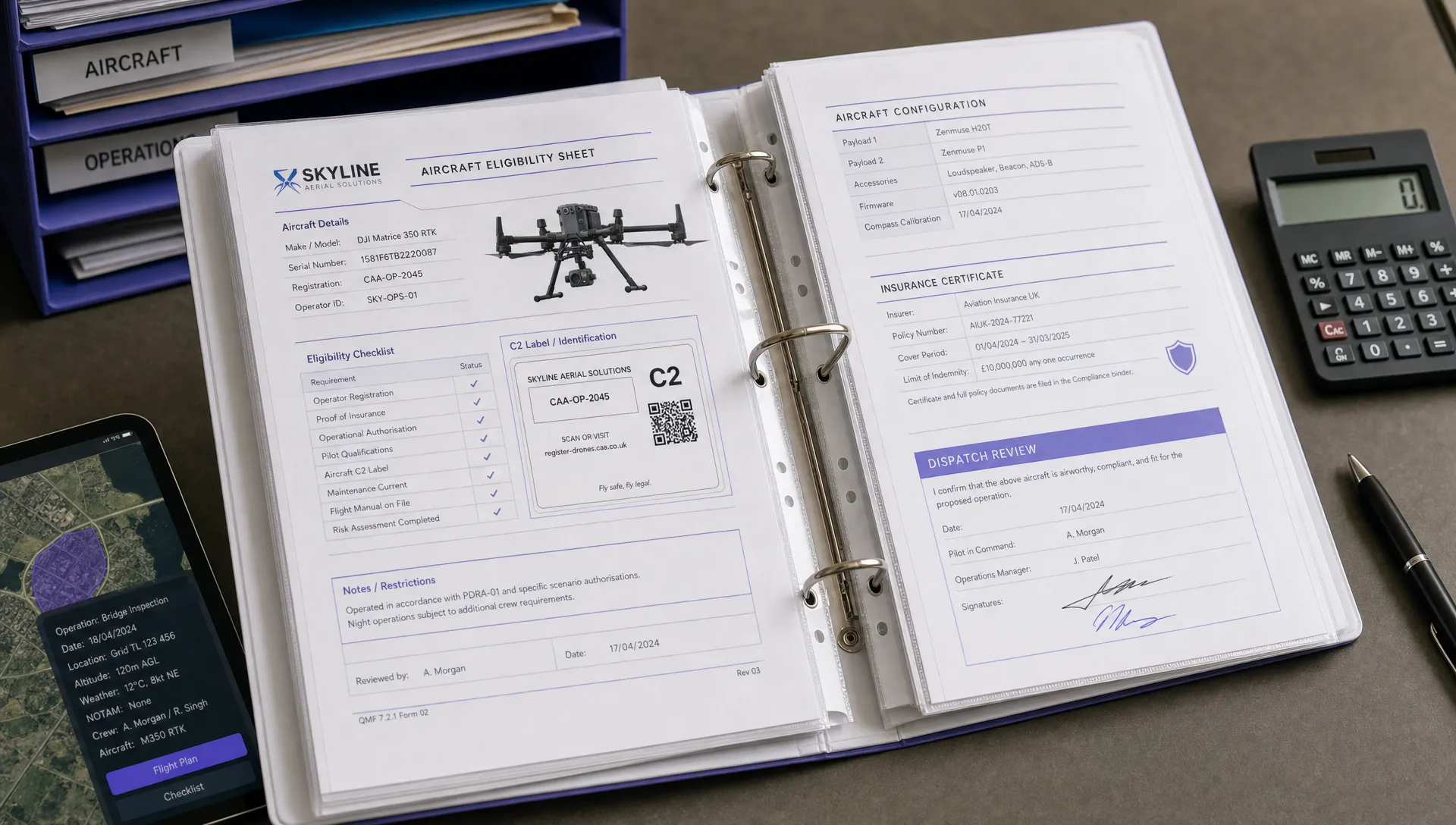
A useful contractor record connects each named pilot to the aircraft they will use and the documents supporting that assignment. Record validity dates and any limitations alongside the documents, rather than expecting a site supervisor to interpret a folder of certificates on arrival.
The host should also nominate a site contact who can explain access arrangements, public activity and hazards. Familiarity with the premises is valuable, but it should not be confused with authority to approve an aviation operation.
Review overseas credentials without assuming equivalence
A foreign certificate can establish what training or assessment someone has completed. Your review still needs to establish its relevance to the planned UK work.
Ask the contractor to point to current CAA guidance supporting the proposed use of their credentials. Where the position is unclear, seek written clarification before mobilisation rather than accepting a verbal assurance that the certificates are “equivalent”.
A reliable review of drone pilot regulations records the authority consulted, the date checked and the conclusion for the named pilot. Keep copies or references so that another reviewer can understand the decision.
Separate aviation checks from immigration, contractual and customs questions. Ask the appropriate advisers about permission to undertake paid work, temporary equipment importation and transport arrangements for batteries. An aviation document does not answer those separate questions.
If the contract includes work outside the UK, create a separate country review. Consult EASA’s explanation of the European drone regulatory system for relevant European assignments and the FAA’s Part 107 guidance for relevant US work. Check the destination rather than carrying an earlier conclusion across borders.
Resolve flight limits and location permissions before travel
Have the contractor annotate the proposed operating area with the applicable height and separation limits, take-off and landing locations, public access points and contingency areas. Require the supporting basis for those limits, not simply a line saying “CAA compliant”.
For drone pilot regulations to be useful on site, the operating documents must translate them into boundaries the team can recognise and follow.
Ask who will check airspace restrictions, temporary restrictions and notices before deployment, then again close to the flight. Agree how any required permission will be obtained and who will retain it. A map screenshot without a date or explanation is weak evidence for a later review.
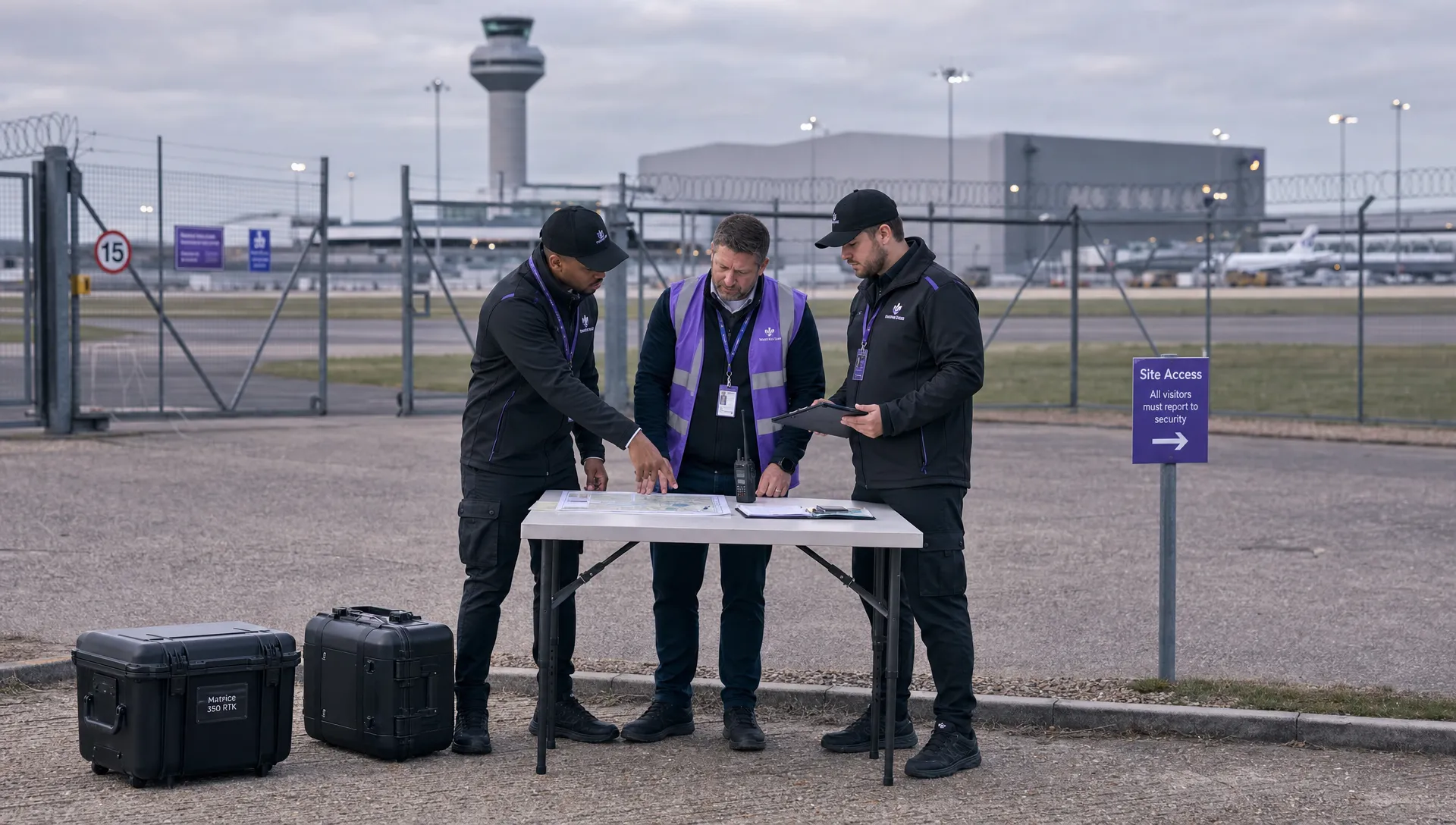
For sites near aerodromes, include the coordination process in the job plan. Dronedesk’s guide to planning flights around airport drone rules provides additional planning context, alongside current official information.
Keep site access and aviation checks as separate entries. Record landowner or site-controller arrangements without treating them as the answer to airspace questions. Likewise, ask how the contractor will keep uninvolved people outside the planned operating area where the approved plan calls for that control.
A fenced compound still needs a review of roads, footpaths and neighbouring activity beyond its boundary.
Check insurance, privacy and the commercial scope
Request the insurance schedule and relevant wording, not just a certificate showing a headline cover amount. Ask the contractor and insurer to confirm that the named business, UK territory, proposed activities and deployed personnel are covered.
Compare the policy period with the work dates. Check exclusions, subcontracting arrangements and any conditions linked to aircraft use or operating permissions. Record your contractual insurance requirements separately from the question of which legal requirements apply.
Drone pilot regulations are only one part of accepting an overseas contractor. Camera use and data handling need their own review with the organisation’s privacy or legal adviser.
Agree what will be captured, how unnecessary recording will be avoided, who receives the files and where they will be stored. For surveys or utility inspections, consider whether images could include neighbouring properties, identifiable people or sensitive infrastructure details.
Put retention, access and deletion arrangements in writing. Also establish who will respond to complaints or requests concerning the footage. These decisions are easier to make before collection than after files have been distributed across several organisations.
Turn the evidence pack into a mobilisation decision
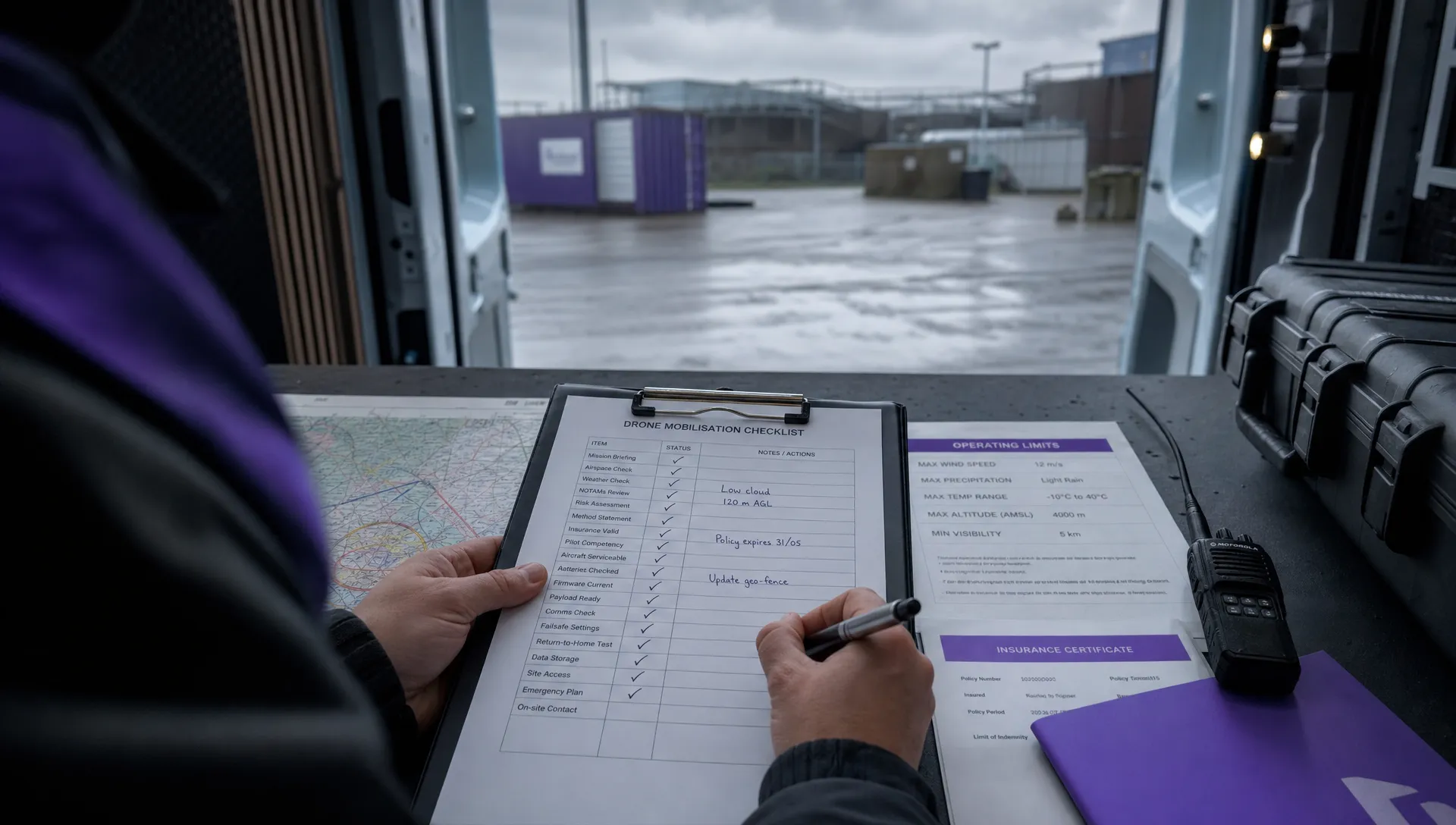
A document collection is not the same as a completed review. Assign an owner to each unresolved item and make the acceptance criteria visible to the person authorising deployment.
A compact decision record should cover:
- The named operator, pilots and aircraft accepted for the assignment.
- The official guidance or correspondence supporting the regulatory assessment.
- Permissions, insurance and site arrangements that have been checked.
- Outstanding conditions, with an owner and deadline for each.
- Changes that require the assessment to be reopened.
Use clear statuses such as “ready”, “conditional” and “not ready”. If a condition remains outstanding, state whether travel, equipment delivery or flight activity must wait. Avoid a vague “approved subject to compliance” entry that leaves the decision unresolved.
The drone pilot regulations review should also connect with the site risk assessment. Dronedesk’s article on building a practical drone flight risk assessment can help structure that part of the preparation.
Consider a visiting survey team that substitutes a different aircraft two days before arrival. The replacement may change the evidence you need to review. Recheck the aircraft configuration, supporting documents, insurance position and operating plan rather than accepting the substitution as an administrative detail.
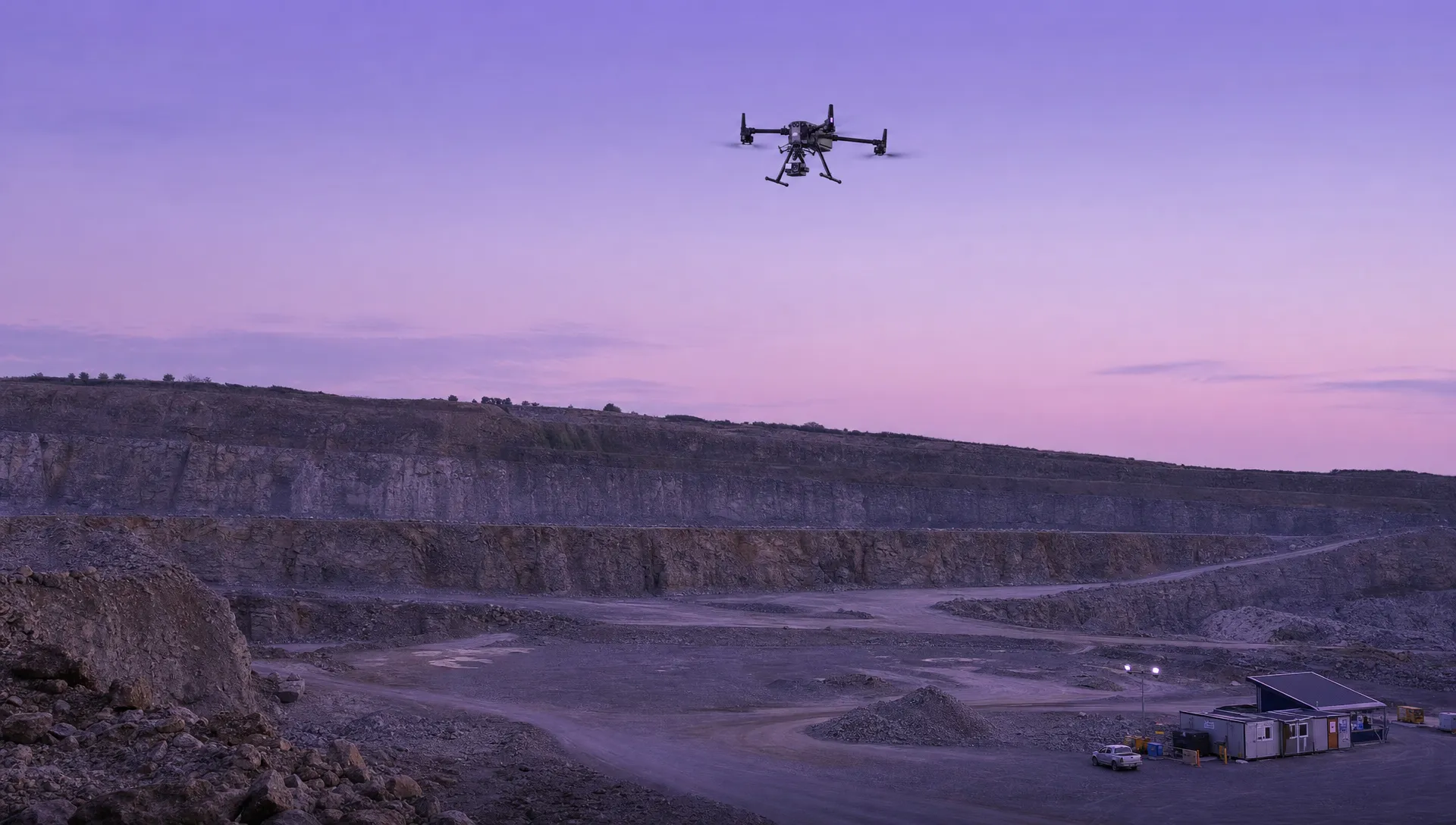
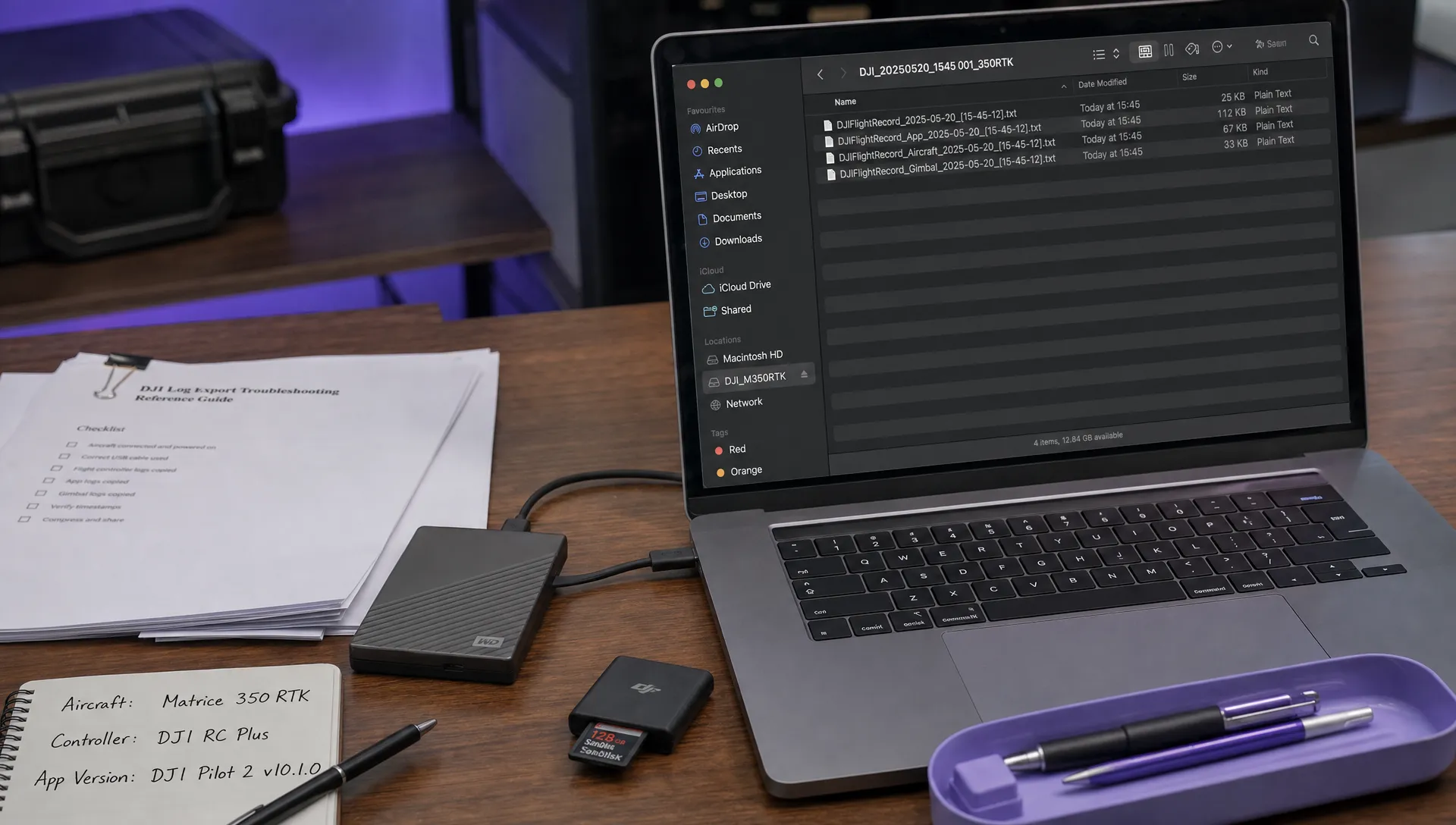
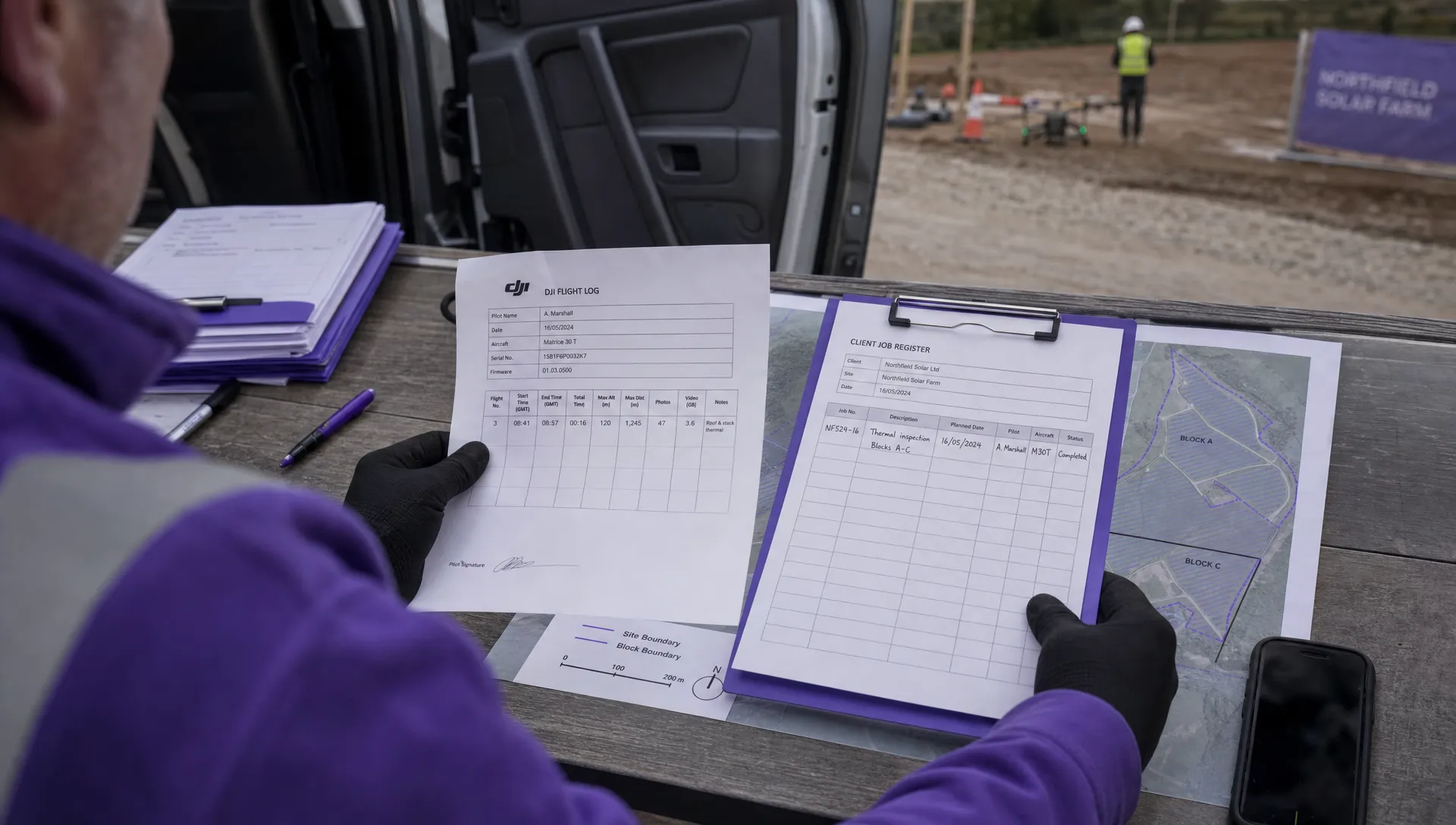
Agree the post-job handover too. If DJI flight logs form part of the evidence pack, include the DJI flight log analysis tool in your review process. Logs should be considered alongside the job documents, not treated as proof that every pre-flight requirement was met.
Escalate complex authorisations and material changes
When a contractor proposes a complex authorisation route, ask for a plain-language explanation of how the proposed work fits the supporting documents. The reviewer needs to understand the scope, conditions and limitations that affect this assignment.
If the proposal involves SORA, use the CAA’s UK SORA material as an official reference. For specialist application support, the drone operations consultants directory lists vetted consultants who can advise on complex authorisations.
Do not ask a procurement reviewer to resolve an uncertain regulatory interpretation alone. Escalate it to the relevant authority or a suitably qualified adviser and retain the answer.
Reopen the drone pilot regulations assessment when the operator, pilot, aircraft, location or intended activity changes. Define that process in the contract so the visiting team knows which substitutions need review before arrival.
Frequently asked questions
Can we accept an overseas drone licence as evidence that a pilot can work in the UK? Accept it as evidence to examine, not as the completed assessment. Ask for the current CAA basis supporting its use for the named pilot and proposed operation. Resolve uncertainty before deployment.
Should we repeat the review for a 249 g drone? Keep it within the contractor acceptance process. Record the aircraft, payload and intended activity, then verify the applicable requirements. Weight alone does not answer your questions about site access, privacy, insurance or the proposed operating area.
Does a commercial contract tell us which operating requirements apply? The contract should describe the work clearly enough to support that assessment. Require the contractor to identify the applicable framework and supporting evidence rather than using the word “commercial” as the whole explanation.
Who should check the rules when the client and contractor are based in different countries? Allocate responsibility in writing. The contractor should supply the operational evidence, while the host should make its acceptance criteria and site information available. Name the person responsible for resolving unanswered questions.
When should drone pilot regulations be checked again? Set review points at tender, before mobilisation and before flight. Repeat the relevant checks after material changes, expired documents or new information about the site. Record when each check was completed.
Make contractor acceptance repeatable
Before the next overseas team arrives, test whether a colleague could establish who is flying, under whose responsibility, with which aircraft and on what documented basis. Any unanswered question should become an assigned action, not a site-day assumption.
If you are reviewing your operational administration, compare this acceptance checklist with the Dronedesk features page. Assess the published features against your own requirements, while keeping regulatory verification and the final flight decision with the responsible people.
 How to Troubleshoot a DJI Log Export That Will Not Open →
 Drone Pilot Regulations for Visiting Overseas Contractors →
 Drone Laws Near Airports for Repeat Inspection Contracts →
 FAA Restrictions on Drones During Stadium Events Explained →
 How to Update Drone Flight Checklists After a Near Miss →
 FAA Drone Regulations for Commercial Use in Paid Training →
 What a Drone Line of Sight Waiver Means for Project Scope →
 Drone Regulations for Commercial Use With Mixed Aircraft Fleets →
 FAA 107 Test Study Plans for Shift Workers →
 How to Match a DJI Flight Log to a Client Job →