
Drones for Commercial Use: How to Match Aircraft to Risk
Choosing drones for commercial use starts with the consequences of a failed flight, not the aircraft’s camera resolution or advertised endurance. A survey over an empty field, an inspection beside live infrastructure and a search near members of the public may need very different aircraft, even when the required imagery looks similar.
The right purchase balances three things: the data you need, the conditions you expect and the failures your operation must tolerate. This guide provides a risk-led selection framework for survey companies, utility teams and emergency services. It is a procurement aid, not a substitute for an operational risk assessment or any required permissions.
Match drones for commercial use to a defined mission
Write the operating brief before comparing aircraft
Start with a representative job, including its difficult conditions. “Infrastructure inspection” is too broad to guide a purchase. “Collect detailed imagery of elevated assets from defined stand-off positions, with limited landing space and possible radio interference” gives you something to evaluate.
Your brief should record:
- Deliverable: The imagery, measurements or observations the client actually needs.
- Operating environment: Terrain, obstacles, people, nearby aviation activity and available landing areas.
- Expected conditions: Wind, temperature, precipitation and visibility within your intended operating limits.
- Mission configuration: Sensor, accessories, take-off mass and required positioning method.
- Recovery options: What the crew can safely do if the mission must stop.
A useful procurement brief for drones for commercial use describes both normal work and the conditions that would make that work unacceptable. It should also separate essential requirements from preferences, so an attractive camera cannot conceal an unsuitable aircraft.
Identify the failures that matter at that site
Consider loss of propulsion, unreliable positioning, interrupted communications, depleted batteries and incorrect pilot inputs. Then ask what each failure could lead to in the actual environment.
A loss of position hold above open land creates a different problem from the same event beside conductors, traffic or a crowded incident scene. Likewise, an automatic return route can be unsuitable if its path intersects structures.
The risk profile of drones for commercial use depends on that combination of failure and exposure, not simply the aircraft’s size. At comparable speed, a heavier aircraft carries more kinetic energy, but choosing the smallest platform is not automatically safer if it lacks the control margin or payload capability the mission needs.
Use your operational flight risk assessment to establish the hazards and controls. The procurement decision then asks whether each candidate aircraft can reliably support those controls.
Translate hazards into aircraft requirements
Compare evidence rather than feature labels. “Obstacle avoidance”, “industrial” and “high precision” do not tell you how an aircraft will behave in your operating environment.
| Operational concern | Aircraft evidence to examine | Reason to reject or restrict a candidate |
|---|---|---|
| Exposure of people or property | Operating mass, flight behaviour and credible recovery options | The intended site offers no acceptable response to a foreseeable failure |
| Wind and weather | Documented operating limits for the aircraft and fitted payload | Expected conditions leave insufficient operating margin |
| Positioning uncertainty | Behaviour when positioning quality deteriorates and any documented sensor limitations | The mission depends on stable positioning the aircraft cannot reliably maintain |
| Communications interruption | Configurable lost-link behaviour and recovery procedures | The available response conflicts with obstacles or site constraints |
| Limited landing space | Aircraft footprint, landing characteristics and practical recovery requirements | Safe launch, landing or recovery cannot be arranged |
| Demanding data requirements | Sensor performance, capture method and demonstrated output quality | The deliverable cannot be achieved at an acceptable stand-off distance |
The strongest comparison of drones for commercial use connects each capability to a specific hazard or deliverable. Ask for relevant manuals, configuration details and demonstrations, rather than treating a brochure claim as operational evidence.
Keep legal suitability separate from technical suitability. Before committing to an aircraft, check the current requirements for your proposed operation directly with the UK Civil Aviation Authority. A technically suitable aircraft does not, by itself, establish that a particular flight may proceed.
What this means for different commercial missions
Surveying: validate the measurement workflow
For survey teams, the main procurement question is whether the complete system can produce a defensible deliverable under realistic site conditions.
Positioning capability is only part of that system. RTK positioning does not, on its own, prove the accuracy of the finished survey. Camera characteristics, capture geometry, processing choices and independent checks also matter.
Assess whether the sensor and capture method suit your work, including any motion-related image distortion or difficulties imaging repetitive surfaces. Establish a validation method using suitable control and independent checkpoints where appropriate.
A smaller aircraft may reduce some exposure, but that advantage disappears commercially if it requires unsuitable flight paths or cannot collect usable data. Compare the aircraft as part of a measurement workflow, not as an isolated flying camera.
Utility inspection: preserve stand-off and recovery options
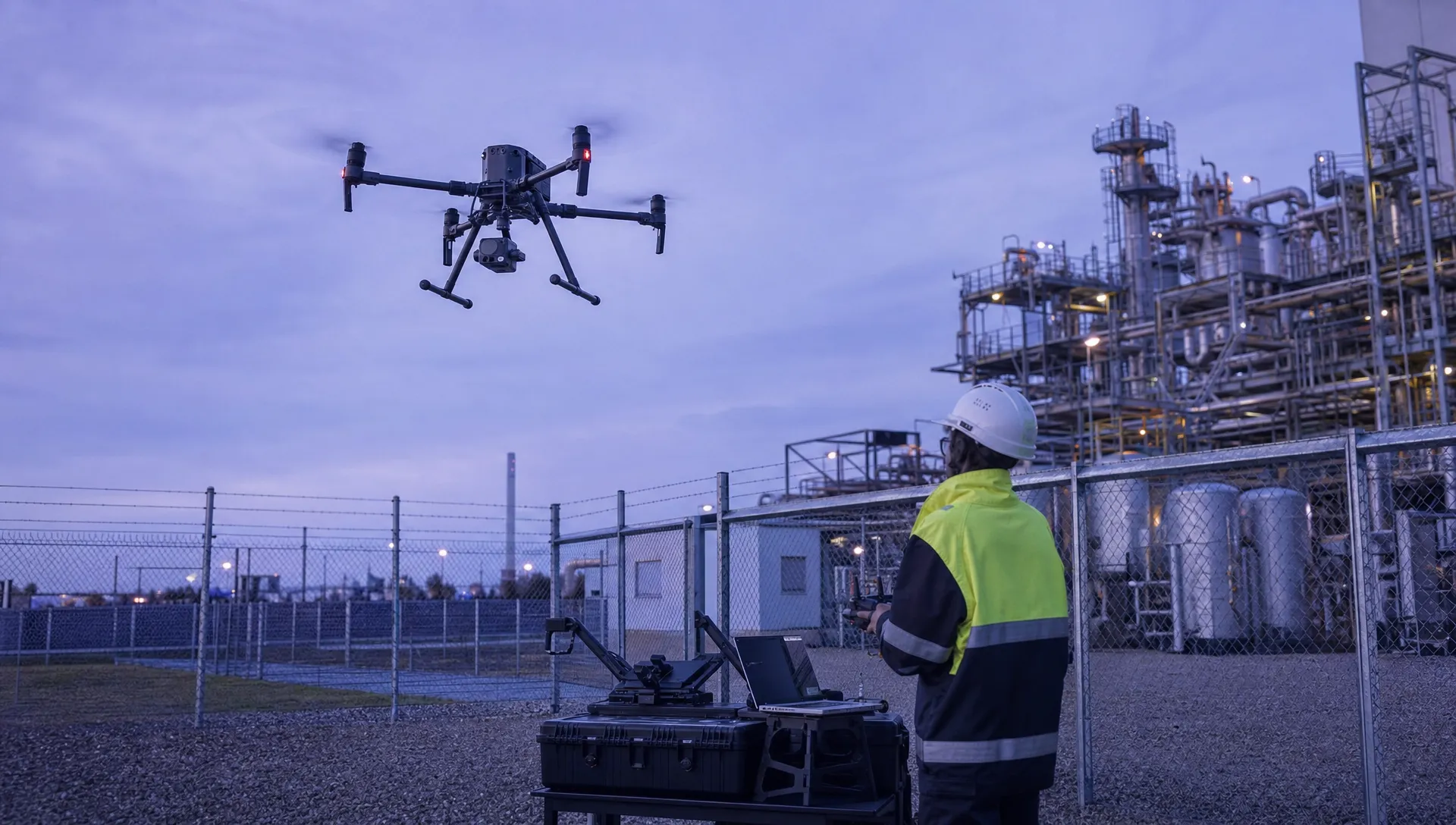
Near live infrastructure, drones for commercial use need more than a high-resolution sensor. The aircraft must support the required observation distance without pushing the crew towards hazardous proximity.
Evaluate positioning and communications behaviour around the actual structures involved. Thin wires, reflective surfaces and complex geometry can challenge sensing systems, so obstacle detection should not be your only protection.
For thermal work, confirm whether the deliverable requires radiometric data or simply a visual indication of temperature differences. Sensor suitability and the inspection method need to match that requirement.
Also check the installed configuration. Payload changes can affect endurance, handling and clearance. A capability demonstrated with one sensor arrangement is not automatically evidence for another.
Emergency response: prioritise usable capability under pressure
Emergency services need an aircraft the available crew can deploy, operate and recover reliably. Setup complexity, unclear alerts and awkward handovers can undermine a technically capable system.
Evaluate the observation task before selecting the payload. Searching an open area, monitoring a fire and documenting an incident scene may require different combinations of image detail, thermal capability and coverage.
Include poor visibility, congested communications and changing site conditions in the procurement discussion. Check who needs access to imagery and what handling restrictions apply to sensitive material.
Urgency should not become a reason to select an aircraft without defined limits. The purchase should support clear launch criteria and a straightforward decision to stop when conditions exceed them.
Use pass-or-fail gates before a weighted score
Separate mandatory requirements from preferences
Shortlisting drones for commercial use works best when unsuitable candidates are removed before optional features receive a score. Otherwise, a strong camera or attractive purchase price can compensate mathematically for a requirement that should never have been negotiable.
Mandatory gates might include achieving the required data quality from an acceptable position, operating within documented limits and providing a workable response to interrupted communications. The exact gates must come from your mission and risk assessment.
Contractual requirements also belong here. These may concern data handling, approved suppliers or support arrangements, but they are procurement constraints rather than evidence of flight safety.
If a candidate fails a gate, reject it or narrow its approved role. Do not disguise the failure inside an average score.
Rank the aircraft that remain
Once candidates pass the gates, compare factors such as usable endurance, transport effort, payload flexibility, crew workload and lifecycle cost.
Set the weighting before viewing demonstrations. A survey company may place greater weight on validated capture quality, while an emergency service may prioritise deployment simplicity and usable observation time.
Keep evidence quality beside each score. A documented specification, a witnessed demonstration and an unsupported sales claim should not carry equal confidence.
Your shortlist should make the trade-off visible: which mission the aircraft suits, where it needs restrictions and what remains unproven. It may reveal that two specialised aircraft are a better fit than one platform expected to perform every role.
Validate the shortlist with an acceptance trial
Acceptance testing turns a shortlist of drones for commercial use into an evidence-based purchase decision. Agree the test configuration, conditions and pass criteria before the demonstration so that results can be compared fairly.
Use a controlled site, competent personnel and manufacturer-approved procedures. Do not create hazardous failures simply to prove resilience. Where necessary, use supported simulation, bench checks or documented evidence instead of an unsafe live test.
Test the deliverable at the intended working distance
Collect representative data using the payload, flight geometry and stand-off distance your team expects to use. Process it through the intended workflow and check it against the actual acceptance criteria.
For surveying, that means evaluating the finished output rather than admiring individual photographs. For inspection, confirm that the relevant defects or features can be identified from acceptable positions. For emergency response, test whether the imagery answers the operational question quickly enough to be useful.
Include difficult but representative subjects. A demonstration over an easy target can conceal limitations that become expensive after purchase.
Measure useful endurance, not brochure endurance
Realistic endurance matters because drones for commercial use must complete useful work while retaining an appropriate recovery margin. Maximum advertised flight time is not the same as available task time.
Measure the mission with its actual payload, transit distance and operating conditions. Account for setup, launch, travel, observation or capture, return and landing.
Agree reserve criteria from the operating procedure and relevant manufacturer guidance rather than copying a universal percentage. Record conditions alongside the result so the team knows what the trial does and does not demonstrate.
An aircraft that completes the task only under favourable conditions may still be useful, but its role needs to reflect that limitation.
Check abnormal behaviour and crew workload
Review lost-link settings, positioning warnings, return behaviour and responses to low battery indications. Confirm how the crew recognises each condition and what action is expected.
Where supported and safe, demonstrate the relevant behaviour. Where it cannot be demonstrated responsibly, identify the remaining uncertainty and decide whether documentation or other evidence is sufficient.
Watch the operator as well as the aircraft. Confusing alerts, excessive configuration steps and difficult payload handling can introduce errors. A candidate should be assessed with the crew structure and equipment that will actually be used, not only with a manufacturer's demonstration pilot.
Keep the aircraft-to-risk match current
The purchase decision should produce an operating envelope: suitable mission types, approved configurations, known limitations and conditions that trigger reassessment.
Revisit it after significant changes to payloads, firmware, procedures or deployment environments. A platform accepted for rural surveying should not automatically inherit an urban inspection role.
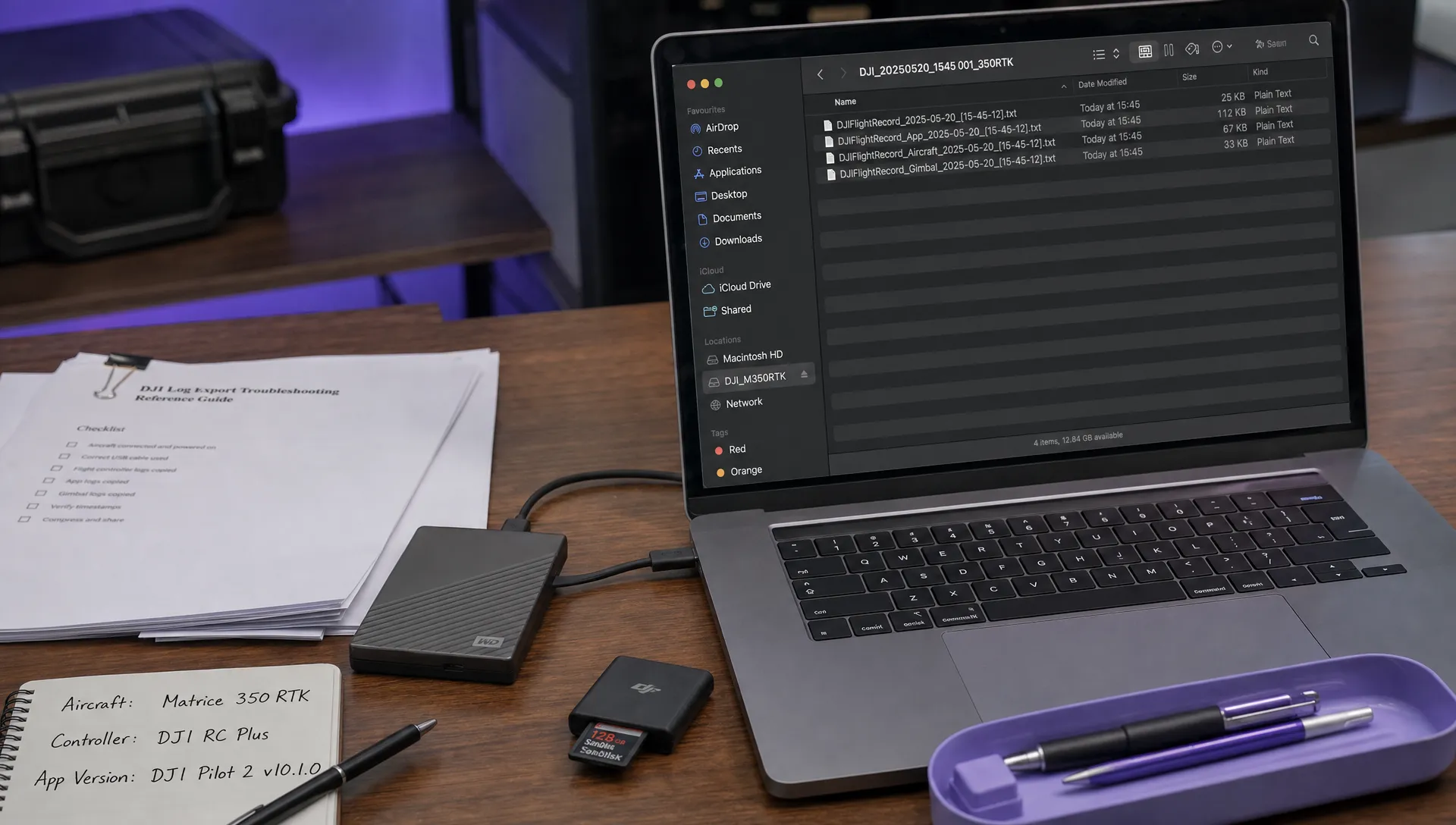
Reviewing drones for commercial use after deployment also requires evidence from actual flights. Examine warnings, battery behaviour, interrupted communications and aborted missions alongside maintenance records and crew observations. Where DJI logs form part of that review, use the DJI flight log analysis tool and interpret findings alongside the relevant manufacturer documentation. Logs are evidence, not a complete explanation of an event.
For teams operating several aircraft, a consistent drone fleet management approach helps structure the review. Keep the reason for each aircraft's assigned role visible, rather than relying on purchase history or individual preference.
Frequently asked questions
Are smaller drones always safer for commercial work? No. Lower mass can reduce some consequences, but the aircraft must still have sufficient capability and operating margin for the task. Compare the complete mission, including exposure, control performance and recovery options.
How should drones for commercial use be compared fairly? Define the mission and mandatory requirements first. Reject unsuitable candidates, then compare the remaining aircraft using the same configuration, test conditions and evidence standards.
Does obstacle avoidance remove the need for stand-off distances? No. Sensing has limitations and may not reliably detect every relevant object. Use documented capability as one part of your controls, not as a substitute for appropriate separation and operating procedures.
Can one aircraft cover surveying, utility inspection and emergency response? Sometimes, but each mission needs separate validation. Payload compatibility alone does not establish suitability. Check data quality, operating conditions, crew workload and recovery arrangements for every intended role.
Make the selection usable by your whole team
Before approving a purchase, require a short decision record covering the mission, mandatory gates, supporting evidence and operating limits. That record should explain both why the aircraft was chosen and when it should not be used.
If you are also reviewing how your team organises drone operations, compare the published Dronedesk feature list with your workflow requirements before deciding whether it fits your operation.
 How to Troubleshoot a DJI Log Export That Will Not Open →
 Drone Laws Near Airports for Repeat Inspection Contracts →
 FAA Restrictions on Drones During Stadium Events Explained →
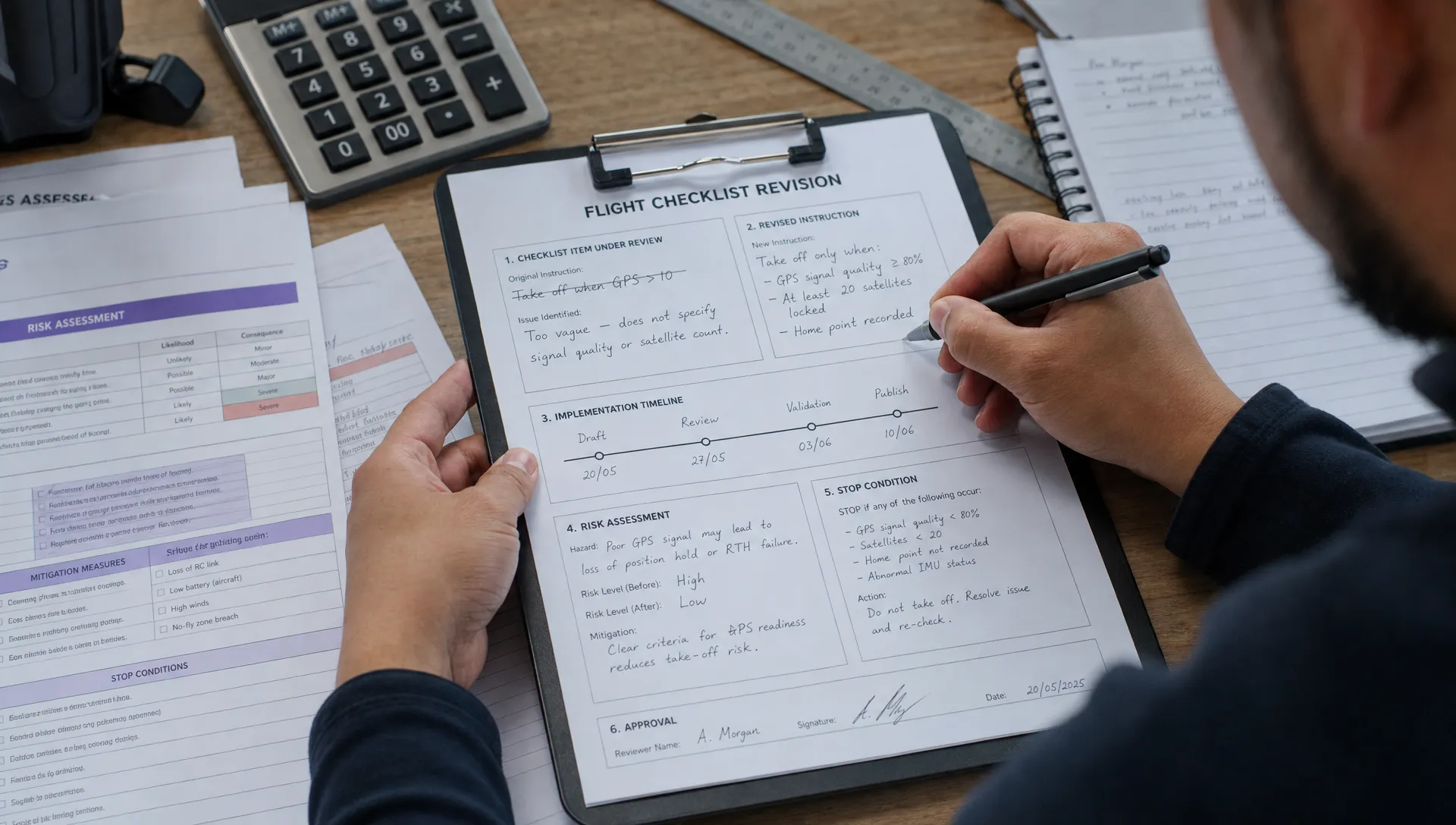 How to Update Drone Flight Checklists After a Near Miss →
 FAA Drone Regulations for Commercial Use in Paid Training →
 What a Drone Line of Sight Waiver Means for Project Scope →
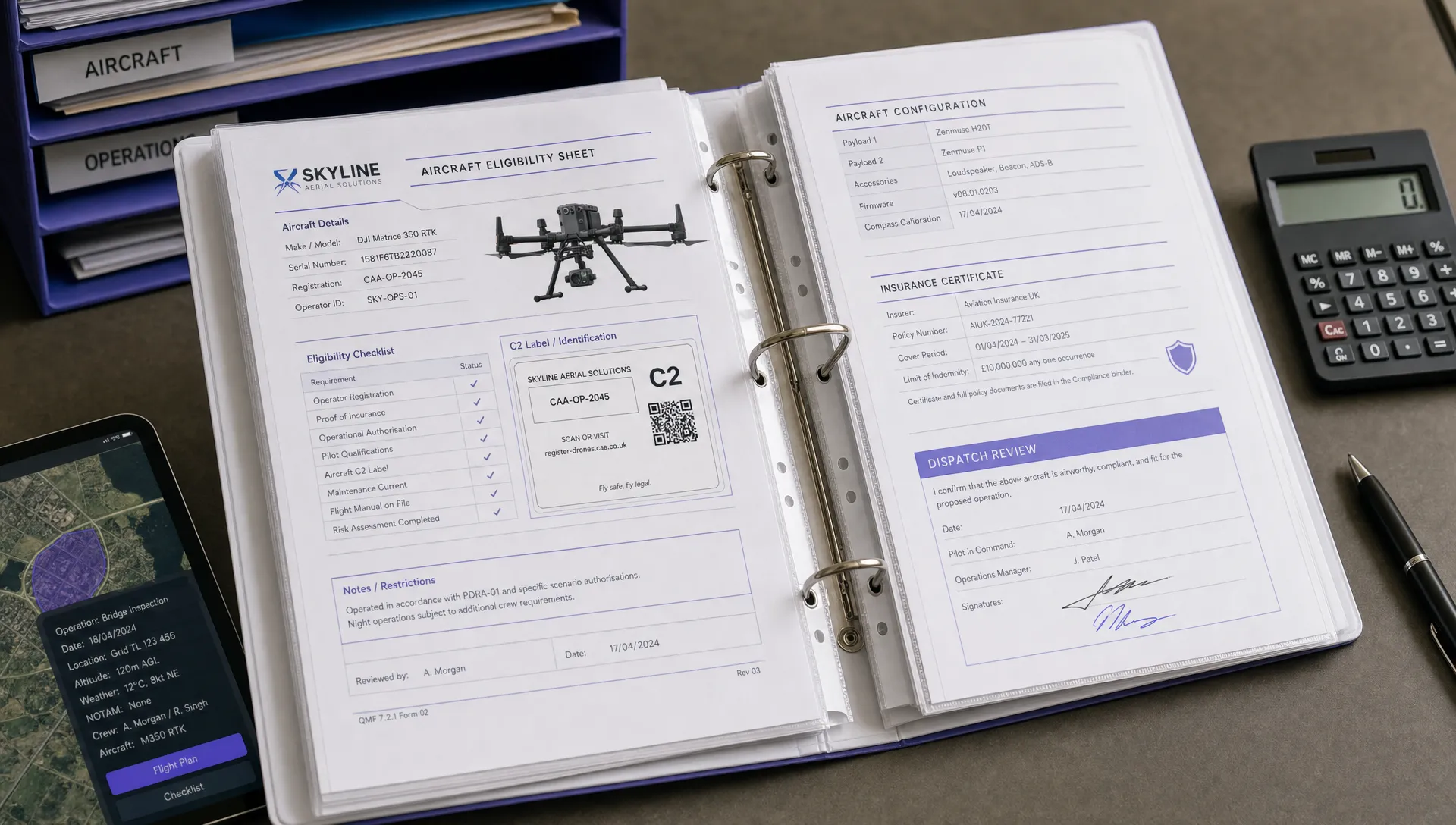 Drone Regulations for Commercial Use With Mixed Aircraft Fleets →
 FAA 107 Test Study Plans for Shift Workers →
 How to Match a DJI Flight Log to a Client Job →
 Drone Regulations Under 250 Grams for Mixed-Weight Fleets →