
FAA Drone Pilot License: A Manager’s Compliance Checklist
An FAA drone pilot license is necessary for the person acting as remote pilot in command on a standard Part 107 operation, but it is not approval for every flight your organisation wants to conduct. Managers also need to check pilot currency, aircraft registration, Remote ID compliance and the permissions required for the specific mission.
For survey companies, utility operators and emergency services, the practical question is whether the assigned crew and aircraft can legally complete today’s job. This checklist separates pilot credentials from operational permissions and sets out the evidence to review before dispatch.
Establish which rules govern the operation
Start by identifying the legal basis for the flight. Business inspections, mapping and other non-recreational missions generally fall under Part 107 when they meet its scope. Payment is not the deciding factor: an unpaid flight conducted for business purposes is not automatically recreational.
The FAA’s overview of small unmanned aircraft regulations explains the framework. Standard Part 107 operations involve aircraft weighing less than 55 pounds at take-off, including everything onboard or attached.
Public agencies need an additional decision. Eligible government operations may use a public aircraft operating framework, while agencies can also conduct flights under Part 107. An emergency-services badge does not itself establish the applicable authority or remove operational restrictions.
Record the operating framework in the job file before applying the rest of this checklist. If the mission relies on another authority, review that authority’s requirements rather than assuming this Part 107 checklist is sufficient.
An FAA drone pilot license establishes an individual credential, not the legal basis for every organisation, aircraft or mission.
FAA drone pilot license: the manager’s evidence checklist
Use this as a dispatch gate, not just an onboarding exercise. A document checked when someone joined the team may no longer establish their eligibility for today’s operation.
| Check | Evidence to review | Hold dispatch when |
|---|---|---|
| Operating framework | Documented basis for using Part 107 or another applicable authority | The team cannot establish which requirements apply |
| Pilot certification | Remote Pilot Certificate for the named remote pilot in command | Certification cannot be verified |
| Aeronautical knowledge currency | Qualifying training or testing evidence within the required period | Currency has not been established |
| Aircraft eligibility | Take-off weight, registration and Remote ID compliance | The assigned configuration is not compliant |
| Location permissions | Required airspace authorisation and relevant site permission | Required permission is missing or does not cover the job |
| Operational permissions | Applicable waiver or other authority, where needed | The planned flight exceeds standard limits without approval |
| Mission readiness | Crew briefing, aircraft checks and site assessment | Conditions or equipment make the flight unsafe |
Give each check a named owner. A shared spreadsheet or operations platform is only useful if someone is responsible for resolving missing evidence.
Verify the certificate and name the accountable pilot
The official credential is the Remote Pilot Certificate with a small UAS rating. Check that the evidence belongs to the person assigned as remote pilot in command, not another employee whose certificate happens to be stored in the same folder.
Review the certificate alongside the pilot’s identity and supporting currency evidence. A training completion certificate alone is not a replacement for the Remote Pilot Certificate. The FAA’s remote pilot certification guidance explains both certification and recurrent training.
Name the remote pilot in command for each operation, including subcontracted work. Under Part 107, that person has responsibility for the operation and final authority over it. A manager’s commercial approval does not override the pilot’s decision that a flight cannot be conducted safely.
If an uncertificated person handles the controls, the direct-supervision arrangement must meet Part 107 requirements, including the remote pilot in command’s ability to immediately take direct control. Do not treat proximity to a certificated colleague as sufficient supervision.
For contractors, request the same evidence you would require from employees. A supplier agreement or insurance certificate does not establish pilot certification or operational permission.
Checking an FAA drone pilot license should therefore finish with a named, eligible pilot assigned to the actual mission, not merely a certificate copy in a supplier folder.
Track currency separately from certificate validity
A Remote Pilot Certificate does not expire, but the pilot must meet the aeronautical knowledge recency requirements to exercise its privileges. This distinction causes avoidable scheduling problems when managers track only whether someone “has a licence”.
Under 14 CFR Part 107, qualifying aeronautical knowledge training or testing must have been completed within the previous 24 calendar months. The applicable route depends on the pilot’s qualifications. Check the evidence against the FAA’s current guidance rather than treating every training document as interchangeable.
Your pilot register should show the qualifying completion date, the supporting document and the next currency deadline. Set an internal reminder early enough to resolve gaps before allocating work. Keep that administrative reminder distinct from the regulatory deadline.
An FAA drone pilot license check that overlooks recurrent training can leave a team with a certificated pilot who is not currently eligible to act as remote pilot in command.
Also consider readiness beyond the paperwork. Currency does not demonstrate familiarity with a newly assigned aircraft, payload or inspection procedure. Record any company-specific competency checks separately so nobody mistakes them for FAA certification requirements.
Check the aircraft in its actual mission configuration
Approve the aircraft and payload combination that will fly, not just the model listed in your fleet inventory. Added sensors, mounting hardware and other equipment affect take-off weight and handling.
For Part 107, each drone must be registered individually. Confirm the registration is valid, the aircraft is marked as required and the registration evidence is available for the operation. The FAA’s drone registration guidance sets out the requirements.
Then establish how the aircraft complies with Remote ID requirements, or document a valid exception where one applies. Do not assume that a familiar manufacturer name, recent purchase or pilot certificate settles this question. Check the aircraft’s compliance basis and any operating limitations associated with it.
The preflight review must also establish that the aircraft is in a condition for safe operation. Unresolved damage, suspect batteries or a payload that has not been properly secured should stop dispatch until addressed.
An FAA drone pilot license does not compensate for an unregistered aircraft, missing Remote ID compliance or an unsafe configuration.
For larger teams, keeping aircraft identity and readiness records together supports the broader process described in this drone fleet management guide. Separate the identity of the aircraft from the status of today’s mission configuration.
Match airspace approval to the actual flight
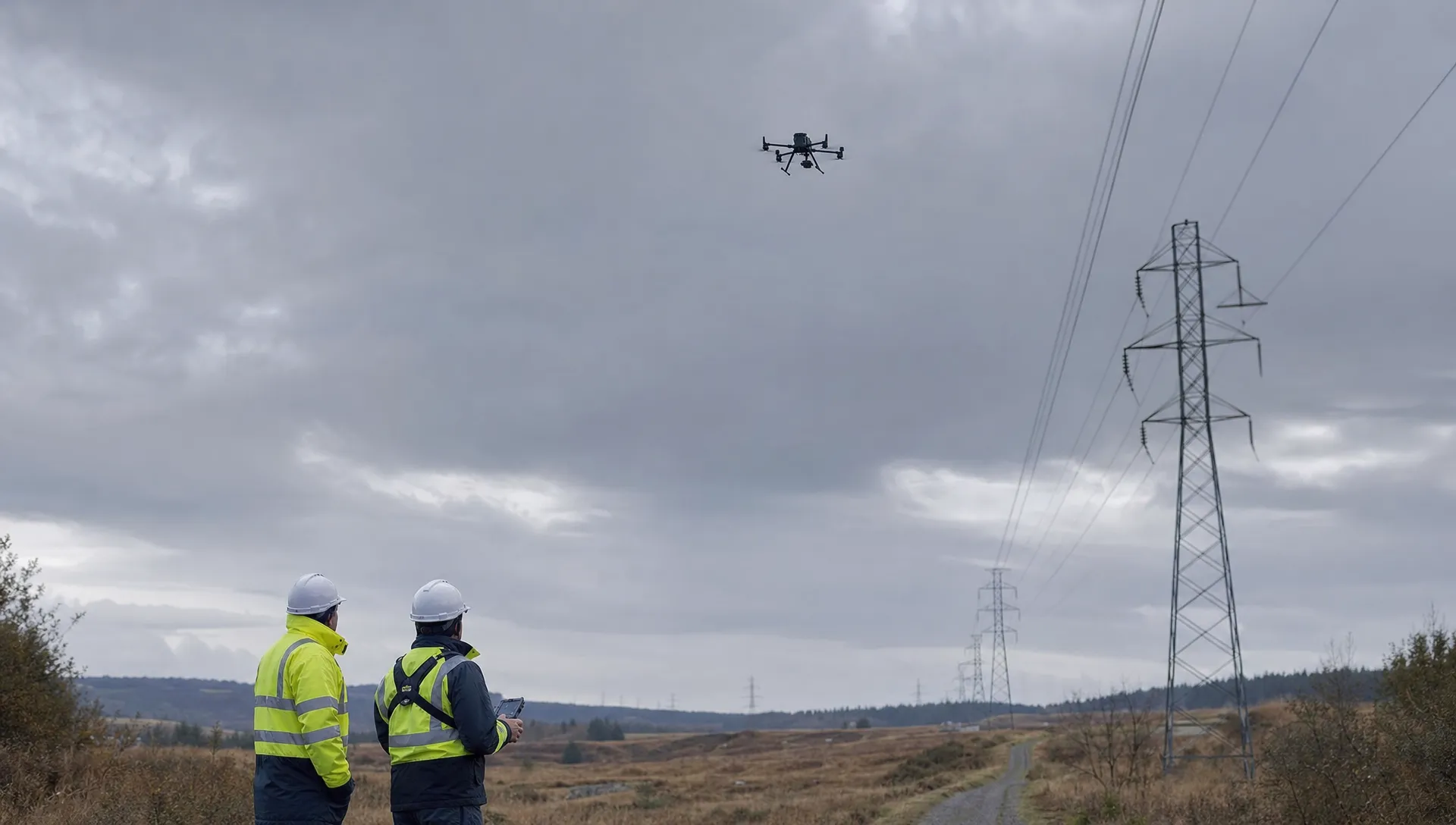
Holding an FAA drone pilot license does not automatically authorise access to controlled airspace. Check whether the intended location requires FAA authorisation and whether the permission obtained covers the planned operation.
Part 107 requires prior authorisation for operations in Class B, Class C and Class D airspace, or within the lateral boundaries of the surface area of Class E airspace designated for an airport. The FAA’s airspace authorisation guidance explains the available approval routes.
Read the issued authorisation, not just the application confirmation. Compare its geographical coverage, altitude, dates and operating conditions with the job plan. A previous approval for a nearby site is not evidence that the new assignment is covered.
Check relevant flight restrictions and notices as part of planning and again before launch. This is especially important around emergency incidents, where restrictions may change after the original job assessment.
Keep airspace permission separate from permission to use the site. An FAA authorisation does not itself grant access to private land, a utility compound or a restricted launch location.
If the location, time window or flight profile changes, reassess the approval before accepting the revised scope. Client urgency is not a substitute for permission.
Identify operations that need additional conditions or approval
Night flights and flights over people
Night operations are permitted under Part 107 when the applicable requirements are met. These include the required knowledge qualification and anti-collision lighting visible for at least three statute miles. Check the relevant requirements and aircraft equipment rather than treating “night capable” as an aircraft specification alone.
Flights over people require a separate assessment. Permission depends on the applicable operational category and its requirements, including aircraft eligibility and restrictions relevant to the flight. A construction helmet or an instruction to “stay clear” does not establish compliance.
The FAA’s operations over people guidance also addresses operations over moving vehicles. For utility inspections and roadside surveys, assess those provisions explicitly rather than treating a road as ordinary empty ground.
Flights outside standard Part 107 limits
Beyond visual line of sight, departures from standard altitude limits and certain other operations require an applicable waiver or another valid operating authority. Review the proposed activity against the rules, then review the actual terms of any approval.
The FAA’s Part 107 waiver guidance identifies provisions that can be waived and explains the application process. A submitted application is not permission to fly.
An FAA drone pilot license cannot replace a required waiver, and one organisation’s waiver should never be assumed to cover another operator’s mission.
Translate approval conditions into the crew briefing. Requirements concerning personnel, equipment, operating area or procedures need to be understood by the people conducting the flight, not simply stored in an office folder.
Build a job record that explains the decision to fly
A useful job file answers four questions: who was responsible, which aircraft flew, what permissions applied and why the operation was considered safe under the conditions encountered.
Retain the relevant credential and currency evidence, aircraft identification, approvals, site assessment and completed company checks. Record changes made on site, particularly when they affect the approved operating area or mission profile.
A written assessment makes the decision easier to review. This guide to building a drone flight risk assessment can help structure the process around hazards and practical controls rather than a generic template.
Distinguish company policy from legal requirements. Routine written risk assessments, detailed flight logs and a particular document-retention period are not universal Part 107 requirements merely because your organisation chooses to use them. Specific approvals or other applicable obligations may impose additional requirements.
For post-flight review of DJI records, the DJI flight log analysis tool is a relevant resource. Flight analysis complements the job record but does not establish that a pilot was current or that the flight had the necessary authorisation.
Keeping an FAA drone pilot license on file is useful; connecting it to the pilot, aircraft and permissions used on a particular job is more useful when investigating a complaint or incident.
Make dispatch approval a repeatable process
Use three review points: onboarding, job planning and launch. Onboarding establishes the baseline credentials. Planning checks the mission and permissions. The launch review confirms that the aircraft, crew and conditions still match the plan.
Avoid a single permanent “compliant” label beside each pilot’s name. Certification can remain valid while currency lapses, aircraft assignments change or a job moves outside an authorisation’s scope.
Use an explicit hold status for missing evidence. The person approving dispatch should be able to see what is unresolved, who owns it and what must happen before release. Give the remote pilot in command a clear route to stop or revise the operation without commercial pressure.
Include incident escalation in the procedure. Under Part 107’s accident-reporting rule, specified accidents must be reported to the FAA within 10 calendar days. Reporting triggers include serious injury, loss of consciousness and qualifying damage to property other than the drone exceeding $500.
Managing an FAA drone pilot license as part of this wider process prevents the certificate from becoming a misleading shorthand for complete operational compliance.
Frequently asked questions
Does an FAA drone pilot license expire? The Remote Pilot Certificate does not expire. However, pilots must meet the applicable aeronautical knowledge recency requirements before exercising its privileges, including qualifying training or testing within the previous 24 calendar months.
Does every team member need a Remote Pilot Certificate? No. Roles have different requirements. The person acting as remote pilot in command under Part 107 must be appropriately certificated and current. An uncertificated person may manipulate the controls only under a qualifying direct-supervision arrangement.
Does Part 107 certification permit emergency flights anywhere? No. Certification does not remove airspace restrictions or other operating requirements. Emergency-services teams must establish the applicable authority and obtain any permissions their operation requires.
Is an operations platform proof of compliance? No. Software can hold records, but a completed entry cannot make an expired registration valid or replace an FAA approval. Managers need reliable evidence and a process for resolving gaps.
Turn the checklist into your team’s workflow
Before dispatch, require a clear operating basis, a named eligible pilot, a compliant aircraft and permissions that match the mission. Confirm the current official requirements and the conditions of any issued approval whenever the operating plan changes.
Compare your documentation needs with Dronedesk’s published features. Use this checklist to assess the fit, then establish who owns each check and what evidence your team must retain before rolling out the workflow.
 FAA Drone Pilot License: A Manager’s Compliance Checklist →
 Part 107 Classes: How to Choose Training That Fits Your Role →
 Drones for Commercial Use: How to Match Aircraft to Risk →
 Weather App for Drone Flying: Checks Beyond Wind Speed →
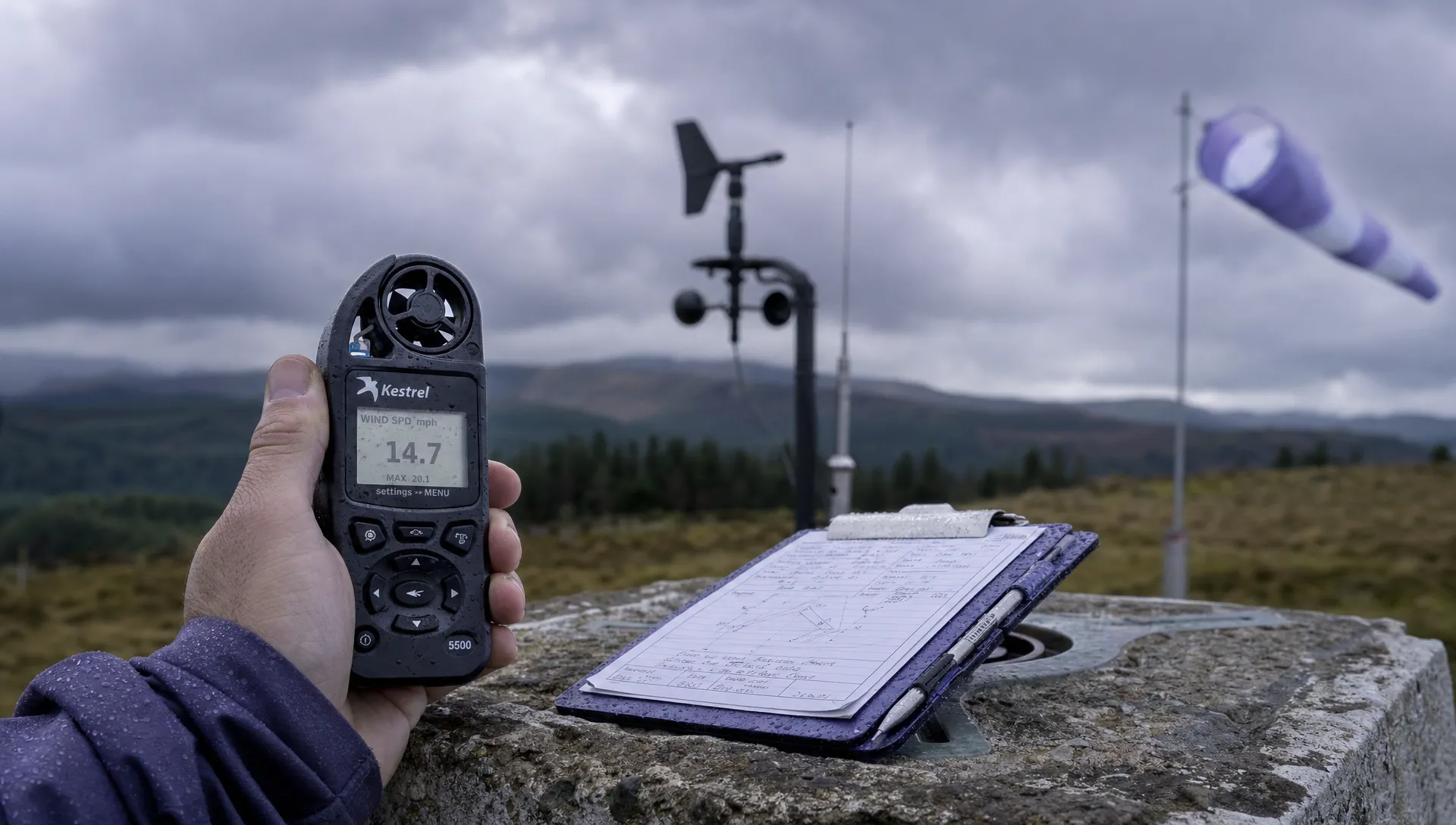 How to Assess a Drone Flying Conditions App Before a Mission →
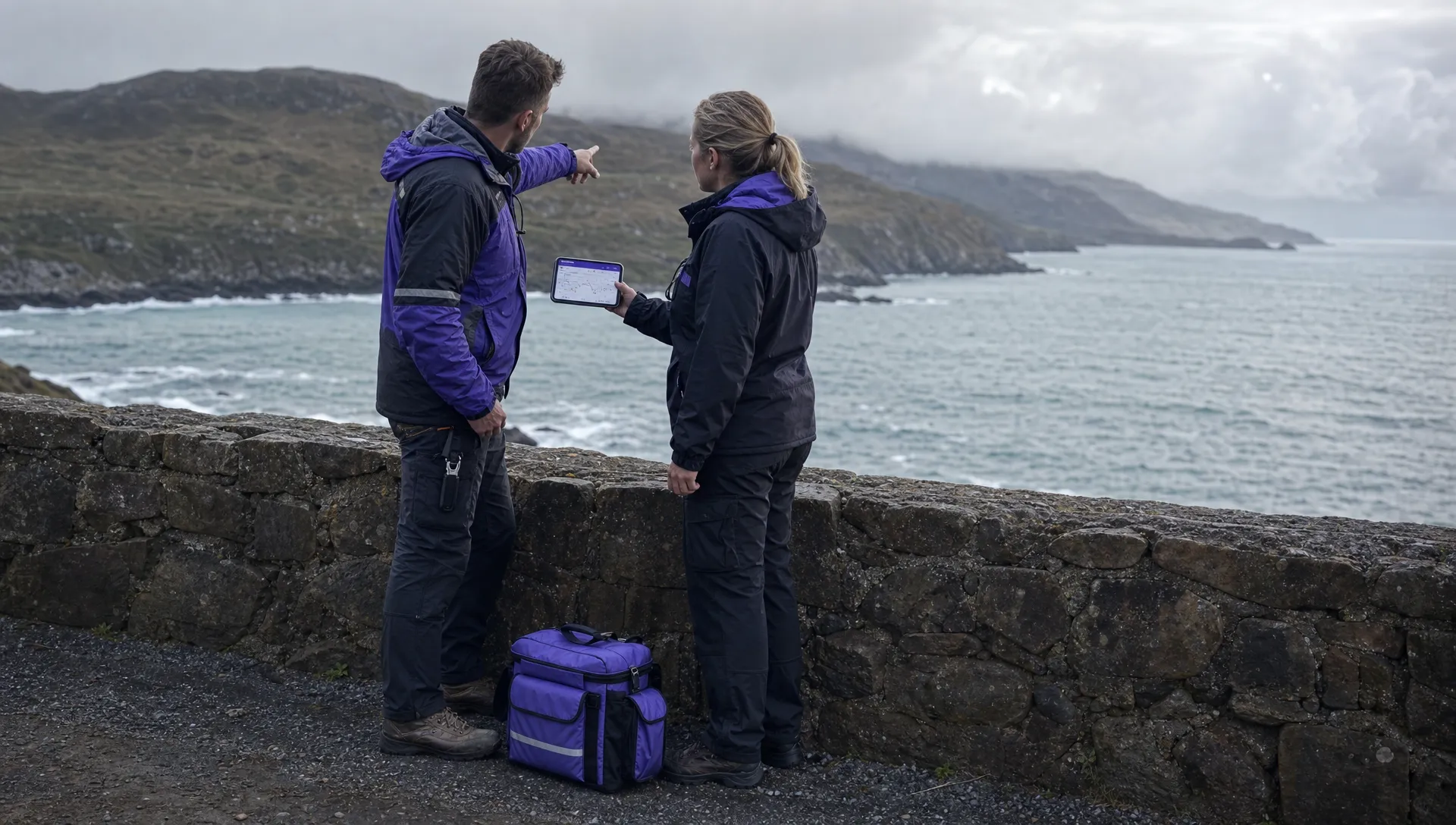 How to Compare a Drone Flying Weather App for Site Teams →
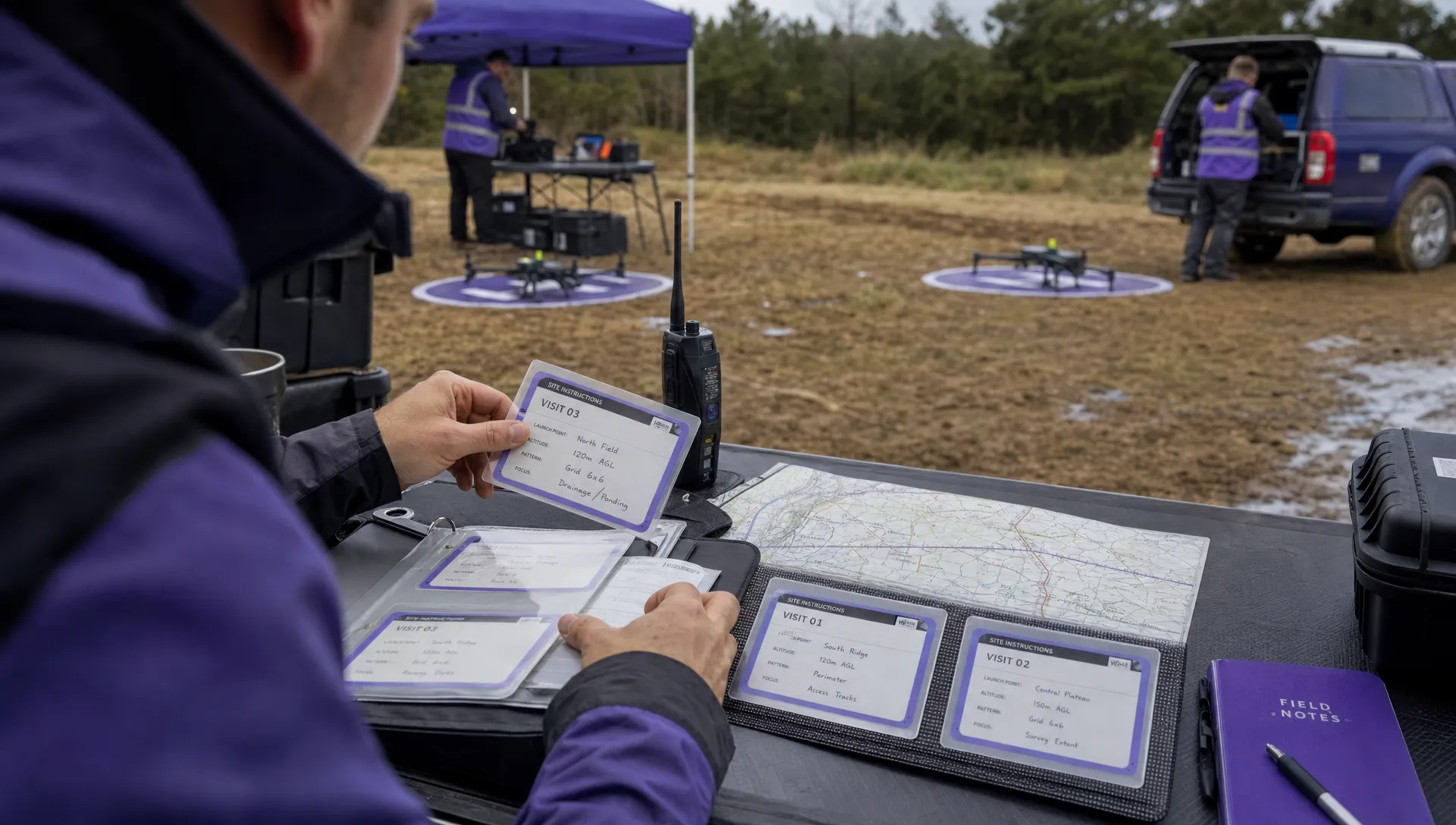 Drone Flight Software: A Buyer’s Guide for Multi-Site Work →
 BVLOS Drone License: Understanding the US Approval Path →
 How to Build a Drone Business Operations Manual →
 Part 107 License Records Every Commercial Operator Needs →