
Part 107 Classes: How to Choose Training That Fits Your Role
The right part 107 classes should fit the work you intend to do, not just your preferred study format. A survey technician, independent drone operator and emergency-service team member may need similar foundational knowledge, but their field-training needs differ. Before comparing course adverts, decide whether you need knowledge-test preparation, practical flying instruction or training for a particular mission. Those are different purchases, even when a provider packages them together.
This guide focuses on choosing US-focused training, with a practical framework for comparing courses and identifying what you may need alongside them.
Start with the outcome you need
Write a one-sentence training objective before looking at providers. For example: “I need structured knowledge-test preparation, followed by supervised practice planning inspection missions.” That gives you a clearer buying criterion than “I need a drone course”.
Separate your needs into three areas:
- Knowledge preparation: Understanding the concepts and interpreting the information used in aviation decision-making.
- Practical flying: Developing aircraft handling, equipment familiarity and safe responses to changing conditions.
- Role-specific capability: Applying those skills to surveying, inspections, incident support or other operational work.
A course may address one area thoroughly while giving the others only a brief introduction. That is not necessarily a weakness, provided its scope matches your needs and its advertising makes the boundaries clear.
For questions about the certification process, consult the FAA’s official remote pilot guidance rather than treating a training provider’s sales page as definitive. Your course-selection decision should distinguish between learning support, a provider’s completion document and the FAA certification process.
How to compare part 107 classes by format
Format affects whether you will finish the course and how easily you can resolve misunderstandings. Choose around your working pattern and learning needs, not the assumption that one delivery method is always superior.
Self-paced online learning
Recorded lessons suit learners who need flexibility around shifts, site visits or existing employment. Look for a clear sequence, searchable explanations and practice questions that explain why an answer is correct.
Check the support arrangements carefully. Access to videos is not the same as access to an instructor, and an unanswered question can stall progress. Ask how long you retain access and whether updates are included.
Live online or classroom teaching
Scheduled teaching can help learners who benefit from accountability and discussion. It also gives instructors opportunities to identify misconceptions before they become established habits.
Ask about group size, opportunities to work through charts and whether missed sessions can be recovered. A live course offers limited extra value if every session consists of someone reading slides without questions or applied exercises.
Blended programmes
Blended delivery can combine flexible theory study with instructor-led discussion or practical sessions. Verify exactly what “practical” means: demonstrations, simulator exercises and supervised aircraft handling are different experiences. Request a sample timetable rather than relying on the package name.
Match the syllabus to your operational role
When comparing part 107 classes, use your likely assignments to identify the supplementary training you need. The same foundational course can be useful across several roles without being a complete preparation programme for each one.
| Your role | Priorities when assessing a course | Training to consider alongside it |
|---|---|---|
| Independent drone operator | Clear explanations, realistic planning exercises and accessible instructor support | Aircraft handling, client briefings and site assessment |
| Survey or mapping technician | Chart interpretation, weather reasoning and structured mission planning | Ground control, coordinate systems and mapping quality assurance |
| Utility inspection team member | Scenario-based decisions, hazard recognition and crew communication | Asset-specific inspection methods, sensor use and site procedures |
| Emergency-service operator | Time-pressure scenarios, clear team roles and communication | Incident integration, supervised exercises and organisation-specific procedures |
These are selection priorities, not promises that every provider covers the topics. Ask for examples of the actual exercises and how instructors assess them.
Surveying and utility inspections
Technical experience does not automatically transfer to aviation decision-making. A capable surveyor may still need support interpreting airspace information, while an experienced pilot may need separate instruction in coordinate systems or inspection reporting.
For survey teams, ask whether learners must explain their planning choices rather than simply follow a mission template. Mapping instruction should also make its scope clear: collecting imagery and demonstrating that a deliverable meets a project’s accuracy requirements are different tasks.
For utility teams, look for exercises involving obstacles, access restrictions, changing weather and communication with site personnel. Thermal inspection training, where relevant, needs to address interpretation as well as sensor operation.
Treat part 107 classes as one component of the training plan, then commission specialist instruction for the gaps. A provider claiming to prepare someone for every commercial mission should explain what practical assessment supports that claim.
Emergency services and mixed-experience teams
Emergency-service training should include decision-making under pressure without rewarding haste. A useful exercise might ask learners to work through incomplete information, agree responsibilities and identify conditions that would change their plan.
For any mixed-experience team, a short diagnostic exercise can reveal where support is needed. Some learners may understand weather well but struggle with charts; others may fly confidently yet give weak explanations for operational decisions.
Ask whether the instructor can adapt examples to your work while retaining consistent learning outcomes. Uniform delivery is administratively convenient, but it can leave beginners behind and give experienced staff little useful feedback.
For a team purchase, part 107 classes should offer a way to identify individual knowledge gaps, not just a shared completion deadline. Keep practical assessment separate so a strong quiz score does not become your only measure of readiness.
Look for evidence of teaching quality
A polished website is not evidence of effective instruction. Request a sample lesson and use it to judge how the provider explains an unfamiliar concept.
Ask providers to map their syllabus to the relevant FAA Airman Certification Standards, and to explain how they maintain their material. An “updated” badge tells you less than a dated change history and a clear review process.
Useful evidence includes explanations of wrong answers, worked examples and feedback on decisions. A bank of questions without reasoning may encourage memorisation rather than understanding.
Before buying, put these questions to the provider:
- What does the package include? Request a breakdown of lessons, instructor contact, practice resources and any practical sessions.
- Who answers learner questions? Ask about their teaching experience, relevant operational experience and usual response arrangements.
- How are weak areas identified? Look for topic-level feedback rather than a single overall score.
- How are materials maintained? Ask who reviews changes and whether previous learners receive revised content.
- What are the purchase conditions? Check access expiry, rescheduling, refunds and the precise terms of any guarantee.
Published pass rates need context. Ask how the figure was calculated, which learners were counted and over what period. Without that information, it is difficult to compare providers fairly.
The strongest part 107 classes make their teaching methods visible before purchase. Prefer evidence you can inspect over claims such as “everything you need” or “guaranteed success”.
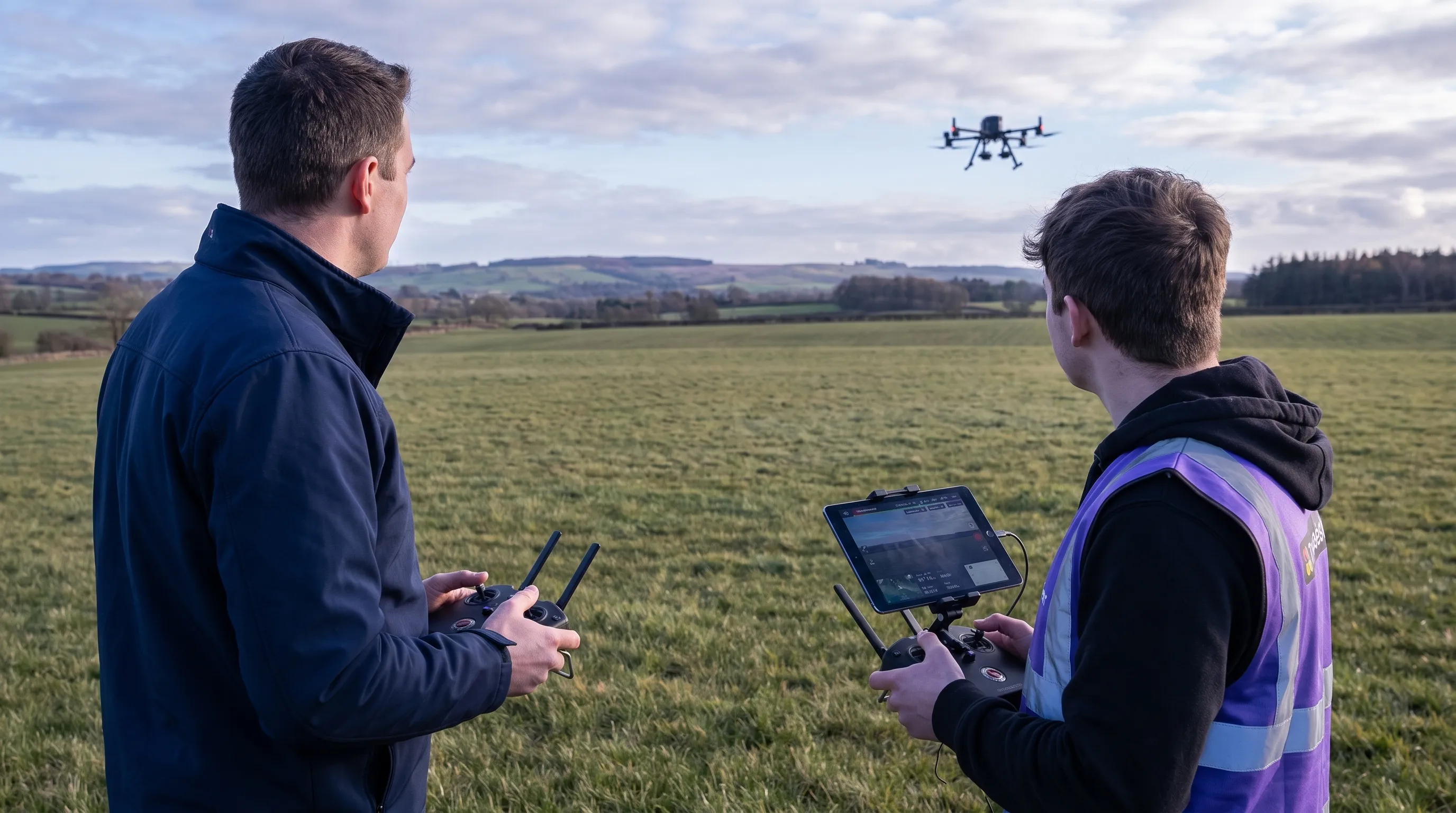
Check whether knowledge transfers to a real mission
A useful course should help learners explain a decision when the situation changes. Ask whether exercises require them to interpret unfamiliar information, identify missing details and reconsider a plan.
For example, present a proposed inspection site with nearby obstacles, limited access and a weather forecast that changes during the working day. The learner should describe what needs checking, what remains uncertain and what would trigger a change of plan. The aim is reasoned judgement, not guessing what an instructor wants to hear.
For teams working around airports, a course should develop an orderly checking process rather than encourage reliance on a single map screenshot. Dronedesk’s guide to planning drone flights around airports offers a related planning topic to work through alongside your training.
Ask how the provider assesses practical exercises, if offered. Attendance alone tells you little about whether someone can repeat a task independently or recognise a developing problem.
Before buying part 107 classes with hands-on elements, confirm the aircraft used, learner-to-instructor ratio and what each learner actually gets to practise. Also ask how unsuitable weather or cancelled sessions are handled.
Compare total cost, not just the course price
The advertised price is only part of the training budget. Your comparison should account for paid study time, instructor support, travel, access extensions and any separately charged testing or practical instruction.
For a team, time away from operational work can be significant. A low-cost course that learners repeatedly abandon may be poorer value than a structured option with scheduled support. Conversely, staff who study effectively on their own may gain little from compulsory classroom attendance.
Build a simple like-for-like comparison using the same training objective for each provider. Record what is included, what is excluded and what you would still need to purchase. Do not assign value to optional extras your team will never use.
Read guarantee conditions closely. Check what evidence the provider requires, what deadlines apply and whether the remedy is a refund, additional access or further instruction.
When weighing part 107 classes, prioritise the combination most likely to close your actual skills gaps. The cheapest package and the most comprehensive package can both be the wrong choice if they do not fit your learners.
Run a small trial before enrolling the whole team
Where practical, have one or two representative learners complete a sample module before committing the full training budget. Choose people with different starting knowledge so you can test both accessibility and depth.
Ask each learner to explain a concept in their own words, work through an unfamiliar example and submit a question to the provider. Their experience will tell you more than a quick review of the lesson library.
Agree how you will assess progress before the main programme begins. Useful measures include the ability to explain mistakes, apply knowledge to a new scenario and identify when more information is needed. Completion percentages alone do not demonstrate these abilities.
After knowledge preparation, use a supervised planning exercise to connect learning with your organisation’s procedures. A worked drone flight risk assessment can provide a starting point for discussing hazards and documenting decisions.
A small trial helps you choose part 107 classes on observed learning quality rather than brand familiarity. It also reveals what support your team will need after the course ends.
Frequently asked questions
Are online courses suitable for beginners? They can be, particularly when lessons follow a clear sequence and questions receive useful answers. Beginners should look for worked examples, explanations of unfamiliar terminology and feedback that identifies specific misunderstandings.
Will an exam-preparation course teach me to fly? Check the syllabus rather than assuming it will. Knowledge preparation and aircraft handling are different training activities. If supervised flying is included, ask what each learner practises and how performance is assessed.
How much study time should I budget? Use a sample lesson and diagnostic exercise to estimate your starting point. Prior aviation knowledge, study habits and access to support all affect the time needed. For teams, protect study time instead of expecting everyone to fit learning around a full workload.
How do I choose between two similar providers? Compare their explanations, instructor access, update process and purchase conditions. If both cover your knowledge needs, choose the part 107 classes that make it easier to resolve questions and apply learning to unfamiliar situations.
Choose the course and the next step together
Shortlist providers against a written training objective, inspect a sample lesson and identify the practical or specialist instruction you will still need. That creates a more useful training plan than buying the largest course bundle available.
As you plan the operational work that follows, review Dronedesk’s features against your organisation’s needs. Assess training and operational tools separately, with a clear purpose for each purchase.
 Part 107 Classes: How to Choose Training That Fits Your Role →
 Drones for Commercial Use: How to Match Aircraft to Risk →
 Weather App for Drone Flying: Checks Beyond Wind Speed →
 How to Assess a Drone Flying Conditions App Before a Mission →
 How to Compare a Drone Flying Weather App for Site Teams →
 Drone Flight Software: A Buyer’s Guide for Multi-Site Work →
 BVLOS Drone License: Understanding the US Approval Path →
 How to Build a Drone Business Operations Manual →
 Part 107 License Records Every Commercial Operator Needs →
 Drone Checklist Design Tips for High-Pressure Missions →