
FAA Drone Rules for Commercial Use on Construction Sites
On construction sites, FAA drone rules for commercial use govern more than the pilot’s certificate. A progress survey can also depend on airspace authorisation, aircraft eligibility, worker locations and whether the planned route stays within visual line of sight. Permission from the site manager is necessary for site access, but it does not replace permission to use the airspace or make flights over workers automatically lawful.
Publication check required: Live verification of the linked FAA and eCFR pages was not available for this draft. Check them for current requirements and amendments before publishing.
Establish the legal basis for the survey
This guide focuses on civil construction missions using small drones under Part 107. That framework generally covers activities such as progress photography, stockpile measurement and roof inspections with aircraft weighing less than 55 lb at take-off, including everything attached or carried. Heavier aircraft and operations conducted under another legal framework need a separate assessment.
The authoritative starting point is 14 CFR Part 107, particularly the provisions covering pilot qualifications, operating limitations and waivers. A construction contract or an unpaid internal survey does not turn a business-purpose flight into recreational flying.
The remote pilot in command must hold the appropriate FAA Remote Pilot Certificate and meet the aeronautical knowledge recency requirements. Under §107.65, that includes an applicable knowledge test or recurrent training within the previous 24 calendar months.
FAA drone rules for commercial use place responsibility for the flight with the remote pilot in command, not the person requesting the photographs. Establish that authority before arriving: a superintendent can explain the programme and site hazards, but the pilot must be able to postpone or stop an unsafe operation.
Check registration and Remote ID separately
Part 107 aircraft must be registered, including drones weighing 0.55 lb or less. The recreational registration exemption for some lightweight aircraft does not apply to these operations. Check the FAA’s drone registration requirements and ensure the aircraft is correctly marked.
Remote ID is a separate requirement. Drones required to be registered generally must comply with Part 89 unless an applicable exception or FAA authorisation permits otherwise. Review the FAA’s Remote ID guidance rather than assuming that registration or a pilot certificate covers it.
For a construction assignment, confirm the aircraft’s compliance method, registration details and operating status during the equipment check. A registration certificate does not demonstrate that Remote ID is functioning.
Applying FAA drone rules for commercial use to site airspace
Check the actual survey area, not just the address of the site office. Large developments can extend across airspace boundaries, while an approach route or return-to-home path may reach beyond the planned mapping footprint.
Under §107.41, operations in Class B, C or D airspace, or within the surface area of Class E airspace designated for an airport, require prior ATC authorisation. Where supported, LAANC provides a route to obtain that authorisation. The FAA explains the system through its LAANC programme.
A UAS Facility Map altitude is not permission to fly. It informs the authorisation process. The approval you receive, including its altitude, area, times and conditions, governs the operation.
Uncontrolled airspace does not remove the need to check temporary flight restrictions and other applicable airspace restrictions. Also consider nearby heliports and aircraft movements: construction sites can attract helicopters, including emergency and utility operations.
Make the approved operating area part of the site briefing. If the client adds a second compound or asks for images of an adjacent road, reassess the flight rather than extending the route informally. An airspace authorisation does not approve flights over people, waive visual line-of-sight requirements or provide access rights to neighbouring land.
Treat workers as people below the flight, not automatically as crew
Under FAA drone rules for commercial use, a worker does not become a direct participant in the drone operation simply by attending a briefing, wearing a hard hat or consenting to filming. The people constructing the building are normally doing a different job from the people operating the aircraft.
Section 107.39 generally prohibits flying over people unless they are directly participating in the operation, are protected by a qualifying covered structure or stationary vehicle, or the flight meets the applicable operations-over-people provisions.
The FAA’s operations-over-people guidance explains Categories 1 through 4. These categories combine aircraft eligibility with operating conditions. Buying a small drone, attaching a parachute or fencing the site does not, by itself, establish compliance.
For an ordinary survey without a verified operations-over-people basis, plan to avoid flying over workers. Agree a clear survey area with the site manager, pause conflicting work where necessary and establish what happens if someone enters the route. A briefing supports that arrangement; it is not a legal substitute for it.
Moving plant needs its own assessment
A person inside a moving excavator, delivery vehicle or haul truck is not covered by the stationary-vehicle exception. Operations over people inside moving vehicles have additional conditions under §107.145.
Before launch, identify plant routes and delivery windows. Prefer routes that avoid occupied moving vehicles. If the operation relies on the specific moving-vehicle provisions, verify both the aircraft’s eligibility and every applicable operating condition.
Do not assume that an enclosed cab, private road or driver’s consent makes an overhead pass permissible.
Plan around cranes, structures and visual line of sight
The practical effect of FAA drone rules for commercial use is that a mapping route must fit the legal operating limits, not merely produce complete image coverage.
Part 107 generally limits altitude to 400 ft above ground level. Section 107.51 includes an exception when the aircraft is within a 400 ft radius of a structure and does not fly more than 400 ft above that structure’s immediate uppermost limit. This does not override a lower airspace-authorisation ceiling or other applicable restriction.
For example, an authorisation capped at 200 ft does not become a 400 ft approval because a crane stands nearby. Treat tower cranes as changing obstacles, including their jibs and operating envelopes, rather than convenient reference points for increasing altitude.
Visual line of sight also matters. Under §107.31, the required visual capability must be maintained throughout the flight using unaided vision, apart from corrective lenses. A camera feed or automated waypoint mission alone is insufficient.
A building can hide the aircraft even when the map shows it only a short distance away. Split the survey into smaller flights, reposition between flights or redesign the route. Adding an observer does not automatically authorise an otherwise beyond-visual-line-of-sight operation.
Reserve enough space and battery capacity for a safe recovery if workers, vehicles or a crane enter the planned route. Return-to-home settings should be assessed against both obstacles and the authorised operating limits.
Night work and waivers require separate decisions
FAA drone rules for commercial use can permit night operations under Part 107 without a night waiver when the requirements of §107.29 are met. These include the required pilot knowledge qualification and anti-collision lighting visible for at least three statute miles, with a flash rate sufficient to avoid a collision.
Floodlights on the construction site do not replace the aircraft’s required lighting. They can also create glare and deep shadows, making wires, crane components and nearby aircraft harder to distinguish.
Other departures from the standard operating rules may require a waiver. Use the FAA’s Part 107 waiver guidance to identify which provisions are waivable and what safety justification is needed.
A waiver and an airspace authorisation address different things. Check the scope and conditions of each approval. Neither is a general exemption from every other requirement.
Do not plan a hidden flight behind a building or a non-compliant overhead pass on the assumption that the project’s urgency provides an exception.
Turn the rules into a construction-site launch decision
A repeatable workflow makes FAA drone rules for commercial use easier to apply when the site changes between visits. Reusing a previous mission can save planning effort, but the old route is not evidence that today’s site is safe.
Use a short review that separates aviation permission from construction-site coordination:
| Check | Evidence to review | Construction-site concern |
|---|---|---|
| Pilot eligibility | Certificate and applicable recency evidence | A substitute pilot is assigned at short notice |
| Aircraft readiness | Registration, Remote ID status and pre-flight inspection | A different aircraft or payload is introduced |
| Airspace | Applicable authorisation and current restrictions | The survey expands beyond its original boundary |
| People and vehicles | Legal basis for the route and agreed ground controls | Trades or deliveries enter the survey area |
| Route and height | Visual line of sight, obstacles and altitude limits | New scaffolding or a crane blocks the planned route |
| Recovery | Suitable landing areas and contingency procedures | The usual landing area becomes occupied |
Record who will communicate with the site team and who can confirm that agreed ground controls are in place. The remote pilot should still verify conditions before take-off and throughout the flight.
If a control cannot be maintained, change the route, delay the survey or stop. A programme deadline does not resolve a failed launch check.

Keep records that explain the flight decisions
Documenting how FAA drone rules for commercial use were applied is more useful than keeping an unexplained folder of aerial images. For repeat construction visits, retain the mission scope, relevant permissions, aircraft and pilot details, risk assessment and significant changes made during the operation.
Part 107 does not prescribe a universal flight-log format for every routine mission. Specific authorisations, waivers or contracts may nevertheless impose record-keeping obligations. Separate those requirements from records you maintain as good operational practice.
Flight logs can help reconstruct timings and aircraft movements, but they do not prove that workers were clear of the route or that the correct airspace permission existed. For DJI missions, consider the DJI flight log analysis tool alongside the mission’s planning and site-coordination records.
Also establish an accident-reporting process. Section 107.9 requires reporting to the FAA within 10 calendar days for accidents meeting its injury, loss-of-consciousness or property-damage criteria. The property-damage provisions exclude damage to the drone itself and include specific repair-cost and fair-market-value tests.
Do not treat every equipment fault as an FAA-reportable accident, or assume that an internal incident form replaces a required report. Check the provision against the actual circumstances.
Frequently asked questions
Does permission from the construction company allow flights over workers? No. Site permission addresses access and coordination. FAA drone rules for commercial use still require a lawful basis for flying over people. A worker briefing, hard hat or consent does not automatically satisfy that requirement.
Can I fly over a completely fenced construction site? Fencing can support ground controls, but it is not a blanket exemption. You must still assess airspace, aircraft eligibility, people, moving vehicles and the other operating limitations. Restricted-access conditions matter in some operations-over-people provisions, but they are only part of the test.
Is LAANC approval needed for every construction survey? No. The need for airspace authorisation depends on the airspace involved. Where prior authorisation is required, LAANC may be available. Even without an authorisation requirement, check applicable restrictions and avoid interfering with other aircraft.
Can an automated mapping mission fly behind a building? Automation does not remove the visual-line-of-sight requirement. If the building prevents the required visual capability from being maintained, redesign the mission or operate under an applicable FAA approval that permits the departure from the standard rule.
Does construction progress photography count as recreational flying if nobody pays separately for the flight? The absence of a separate flight fee does not make a business-purpose mission recreational. For ordinary civil construction surveys using qualifying small drones, Part 107 is the usual framework.
Review the workflow before the next site visit
Choose one recent construction mission and check whether its records explain the airspace decision, worker controls, route limits and changes on the day. Any missing answer is a useful starting point for improving the next survey.
If you are evaluating operations software, compare those requirements with the Dronedesk features page. Keep the legal decision separate from the software choice: a platform can be evaluated against your workflow, but using it is not, by itself, evidence of FAA compliance.
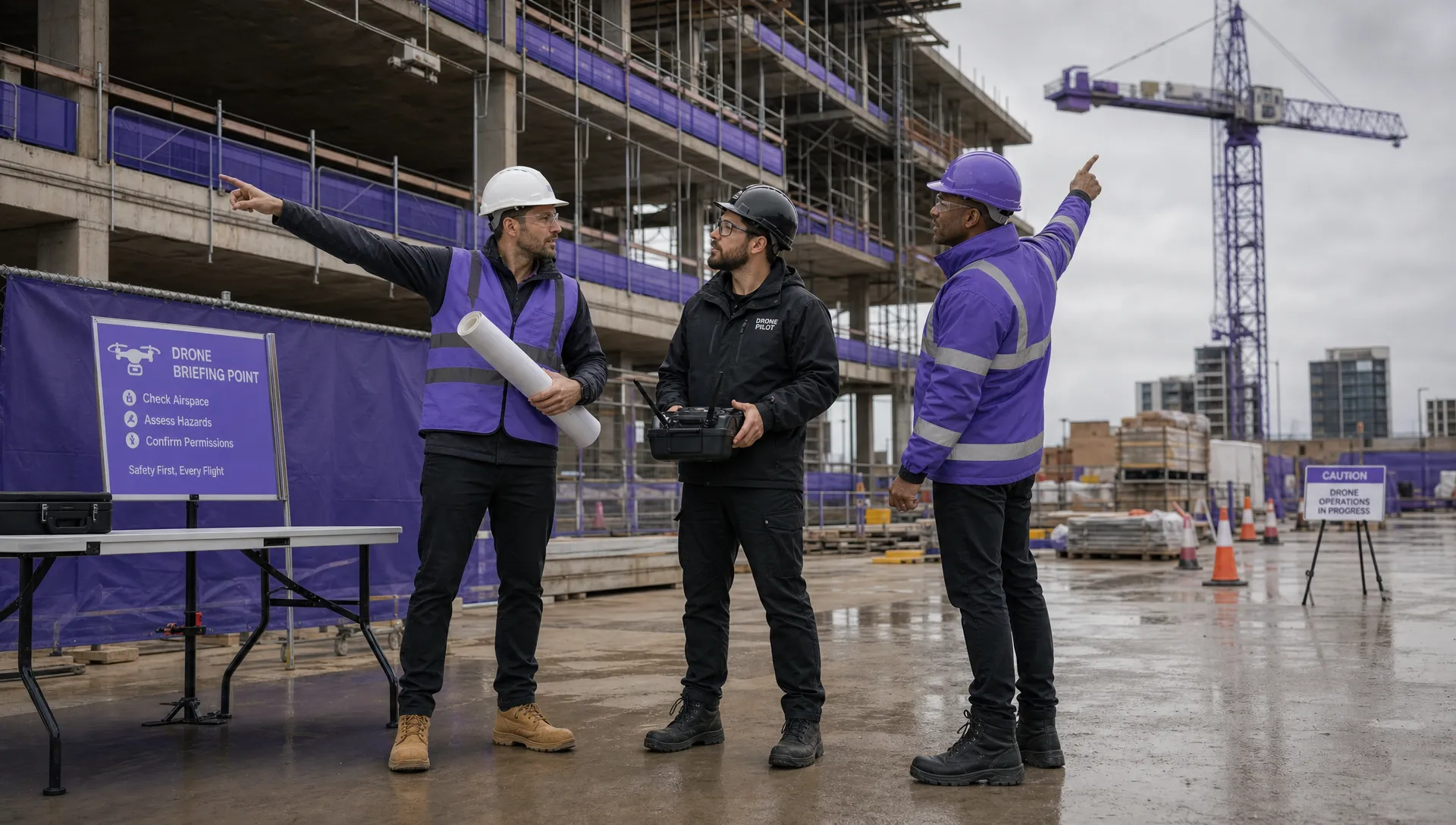 FAA Drone Rules for Commercial Use on Construction Sites →
 When Should You Retire a Commercial Drone? →
 Drone Fleet Management Software - The Platforms That Failed, and the Ones Still Flying →
 FAA Drone Pilot License: A Manager’s Compliance Checklist →
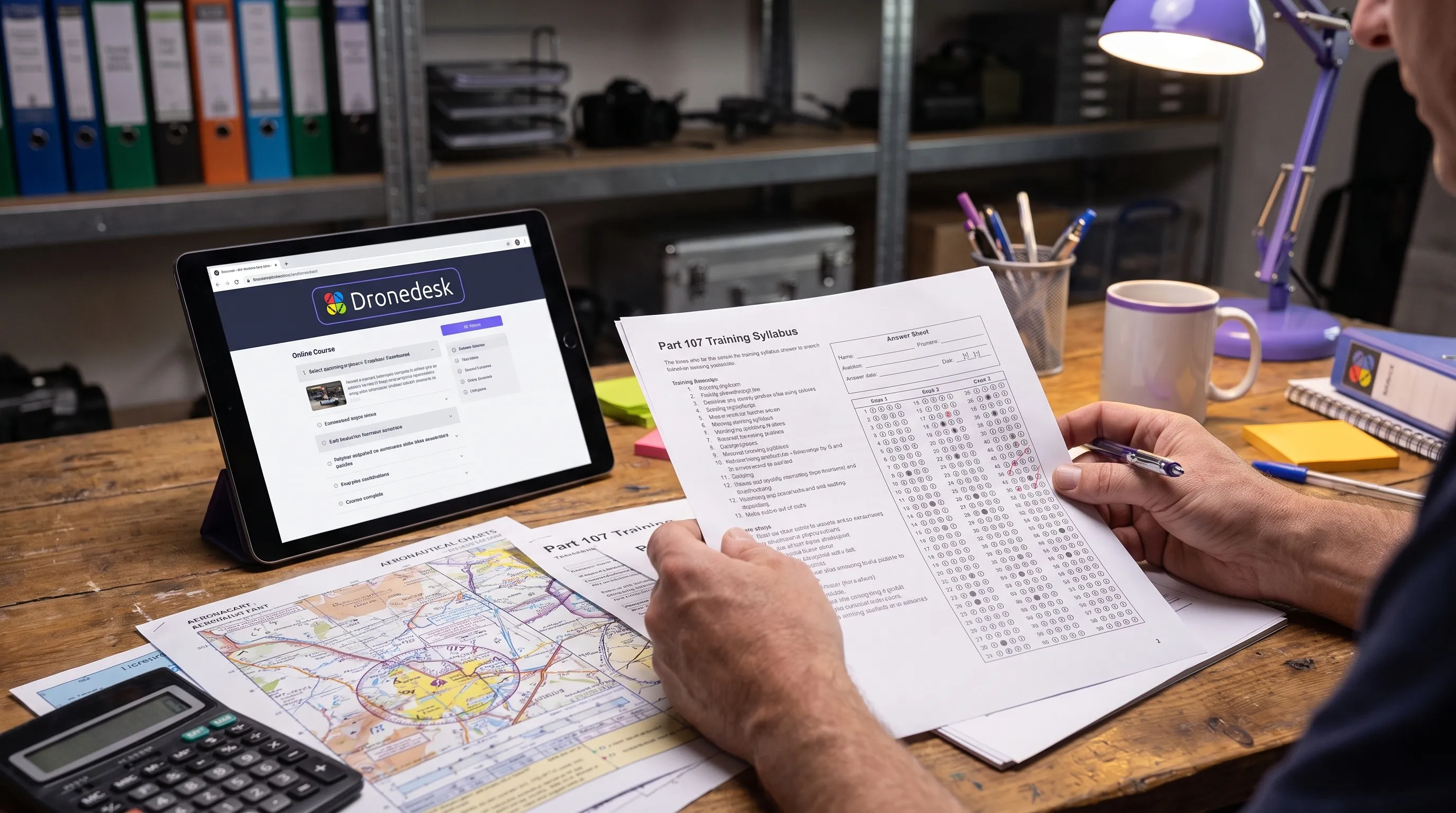 Part 107 Classes: How to Choose Training That Fits Your Role →
 Drones for Commercial Use: How to Match Aircraft to Risk →
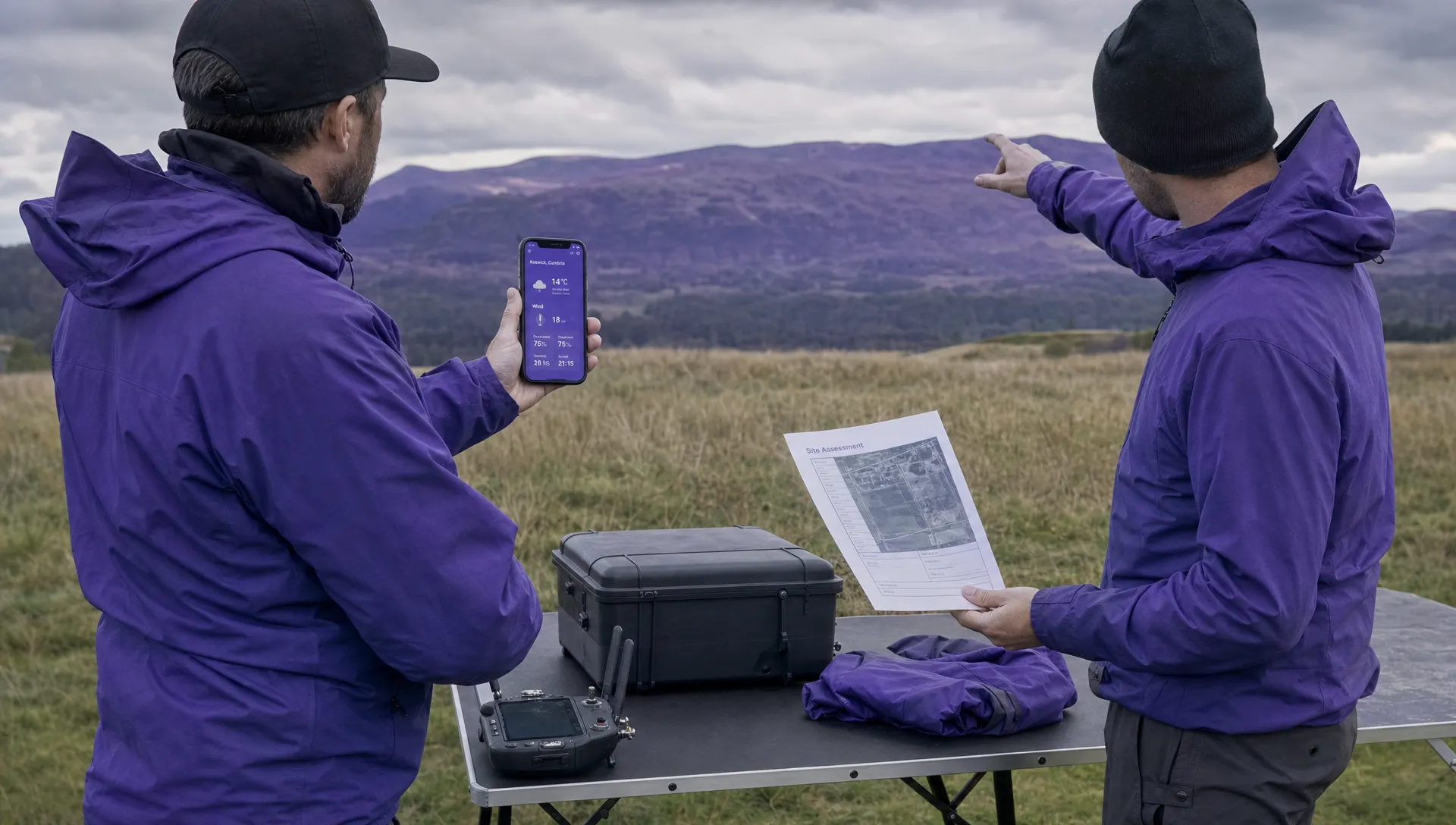 Weather App for Drone Flying: Checks Beyond Wind Speed →
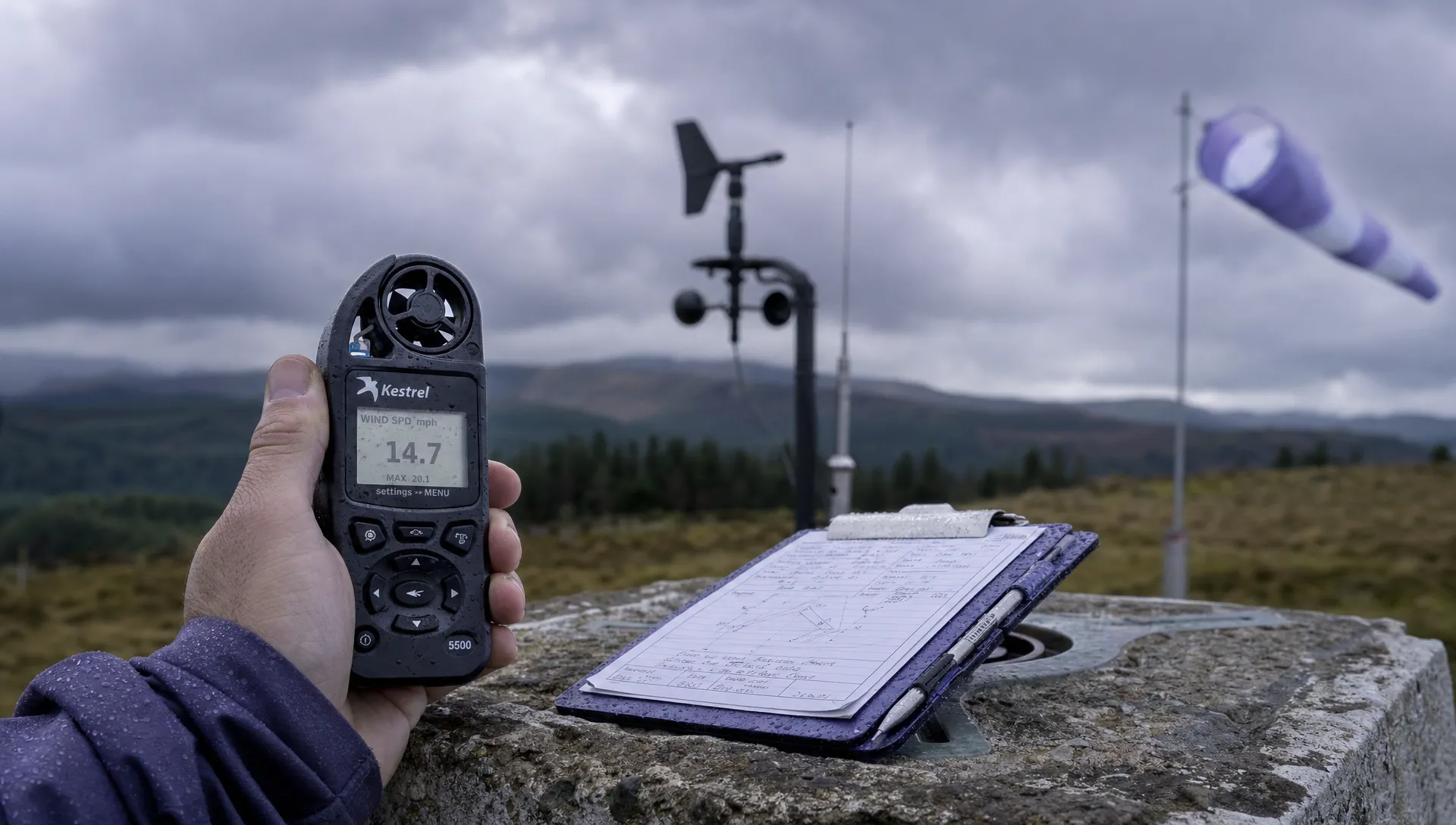 How to Assess a Drone Flying Conditions App Before a Mission →
 How to Compare a Drone Flying Weather App for Site Teams →
 Drone Flight Software: A Buyer’s Guide for Multi-Site Work →