
FAA Restrictions on Drones During Stadium Events Explained
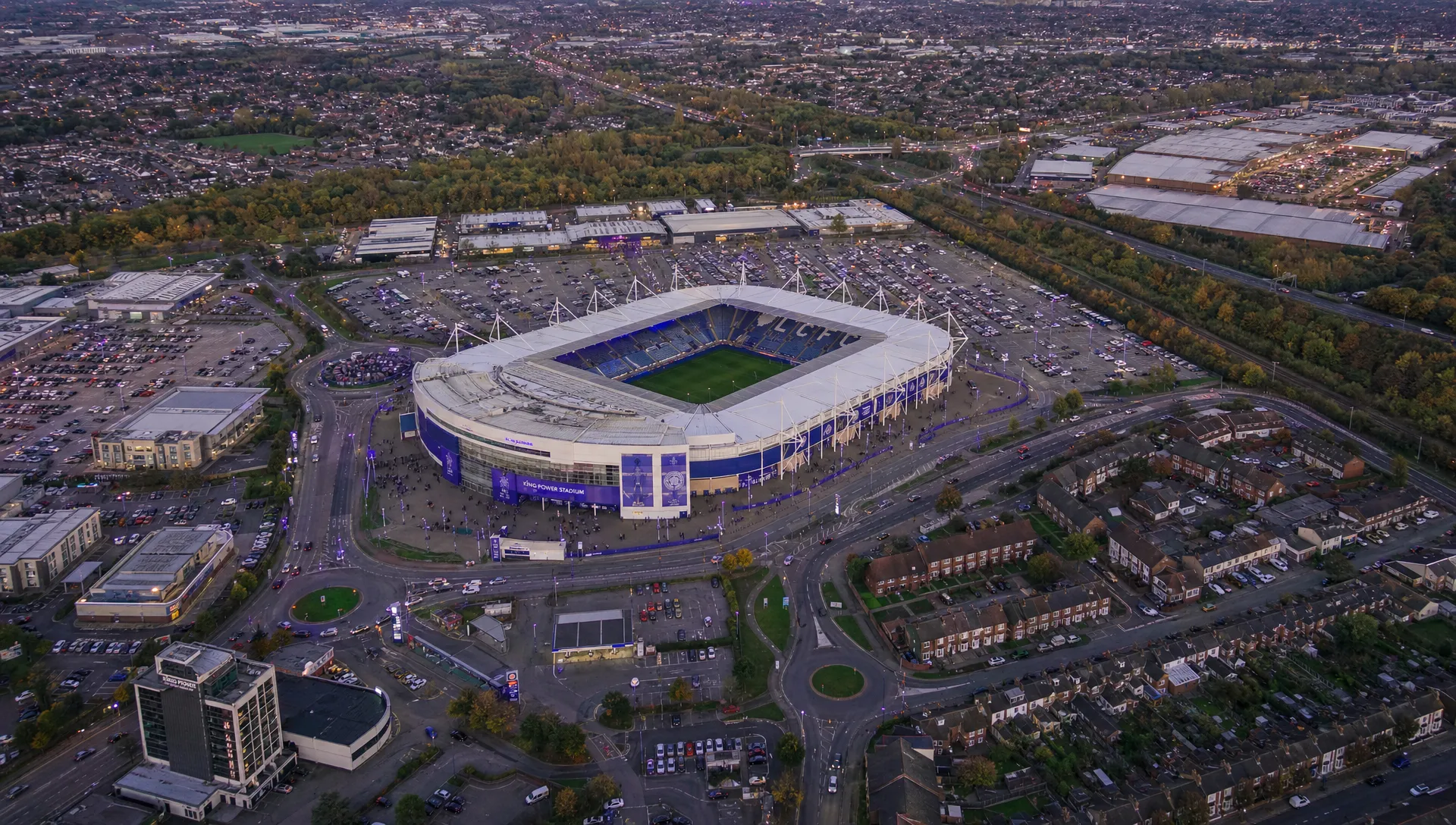
FAA restrictions on drones during covered stadium events can stop a routine roof survey, utility inspection or filming job well beyond the venue itself. The standard stadium restriction reaches three nautical miles around the venue and applies at heights used by ordinary drone operations. Permission from your client or the stadium does not remove it.
For operators, the practical task is to check the event, the restriction’s timing and the complete flight area before committing a crew. Use the FAA’s published guidance and the applicable live notices as your authority, rather than treating this guide or an app display as flight clearance.
The stadium restriction at a glance
The FAA’s stadium and sporting-event guidance sets out the basic restriction. For covered events, the operating limits are:
| Element | Standard stadium restriction |
|---|---|
| Horizontal extent | Within three nautical miles of the stadium or venue |
| Vertical extent | Up to and including 3,000 feet above ground level |
| Start | One hour before the event’s scheduled start |
| Finish | One hour after the event ends |
| Stadium capacity threshold | Seating capacity of 30,000 or more for the covered stadium events |
Three nautical miles is approximately 3.45 statute miles or 5.56 kilometres. A job described as “three miles from the stadium” therefore needs a proper distance check, including which unit the person supplying that distance used.
Which events trigger FAA restrictions on drones?
The standard rule does not cover every gathering at every sports venue. The FAA’s published guidance identifies Major League Baseball, National Football League and NCAA Division I football games. It also lists specified motorsport events using the names NASCAR Sprint Cup, Indy Car and Champ Series.
Check the current FAA notice when identifying a race, rather than assuming that every motorsport meeting has the same restriction. The applicable notice controls the event coverage and any exclusions.
For a covered stadium game, the seating-capacity test concerns what the venue can hold, not how many spectators attend. A poorly attended game at a qualifying stadium does not become unrestricted because most seats are empty.
Conversely, an empty stadium, concert, practice session or different sporting competition should not automatically be treated as a covered game under this particular rule. Separate security restrictions or event-specific temporary flight restrictions may still apply. “Not covered by the standard stadium rule” is not the same as “cleared to fly”.
Timing: plan around the event’s actual finish
The restriction begins one hour before the scheduled start and continues until one hour after the event ends. Your planned flight duration must fit outside the restricted period unless you have approval that specifically permits the operation.
Delays, extra innings, overtime and interruptions can affect the finish. A calendar entry showing an expected end time is not enough to establish when flying may resume.
FAA restrictions on drones also affect work that begins legally but would continue into the restricted period. For example, if a covered game is scheduled for 19:00, the standard restriction begins at 18:00. An inspection planned for 17:40 to 18:15 cannot simply continue because the aircraft took off before activation.
Build time for landing, securing equipment and handling an unexpected interruption into the job plan. For work after the event, confirm that the event has ended and the required hour has elapsed before departure.
Check the whole operating area, not just take-off
The restriction applies to the aircraft’s position. Launching outside the boundary does not permit a flight path that enters it, and launching on private property inside the boundary does not create an exemption.
Assess the survey polygon, inspection route and intended recovery locations against the restricted area. If the job sits close to the edge, also consider the space needed for positioning, contingencies and a safe return. A compliant take-off point is insufficient if the planned operation crosses the boundary.
FAA restrictions on drones within this airspace still apply to low-level work. Staying below 400 feet, flying beneath the stadium roofline or remaining close to a building does not avoid a restriction extending up to 3,000 feet above ground level.
The stadium check is also separate from airport and controlled-airspace checks. A site can be outside the stadium restriction but still require another approval. Our guide to planning drone flights around airports covers that separate planning problem.
Why LAANC, a pilot certificate and venue permission are insufficient
A Part 107 remote pilot certificate establishes pilot qualifications. It does not give unrestricted access to security-restricted airspace. Similarly, permission to use stadium property addresses access to that property, not the federal airspace restriction.
LAANC authorisation addresses operations in the controlled airspace covered by that authorisation. It does not, by itself, authorise entry into a stadium temporary flight restriction. The FAA distinguishes these requirements in its airspace restrictions guidance.
For an operation inside the restricted area during the active period, FAA restrictions on drones require you to establish whether the mission qualifies for an applicable authorisation or exception. Do not assume that a broadcast contract, an inspection order or a general operating approval supplies that permission. Obtain approval that explicitly covers the proposed operation and comply with its conditions.
Where an application needs specialist support, the drone operations consultants directory lists vetted consultants who can advise on complex authorisations. A consultant can help prepare an application, but cannot guarantee approval or replace the approving authority.
Emergency services need an applicable approval too
A public safety purpose is not a blanket exemption. Police, fire and other emergency teams must establish which approvals and restrictions apply to their particular operation.
The FAA’s emergency operations guidance explains the Special Governmental Interest process for eligible time-sensitive operations. Teams should use their established FAA coordination procedures and confirm the scope of any approval before flying.
Distinguish an urgent response from planned event support. A routine security survey or scheduled training flight should not be treated as automatically authorised because an emergency service operates the aircraft.
A practical pre-flight check for stadium-area jobs
Checking a map once when quoting the job is not enough. Event schedules and other restrictions can change between booking and deployment. Assign responsibility for the final airspace decision rather than assuming the client, subcontractor or pilot has already handled it.
Use this short sequence to assess FAA restrictions on drones before dispatch:
- Identify nearby venues: Check whether the full operating area is within three nautical miles of a relevant stadium or race venue.
- Confirm the event: Verify the competition, date, scheduled start and venue capacity where applicable.
- Check official airspace information: Review the standing stadium notice, other applicable NOTAMs and any event-specific restrictions.
- Match approvals to the mission: Confirm that every required authorisation covers the location, time and proposed activity.
- Set a recheck point: Reassess before take-off and whenever delays change the planned operating window.
The FAA’s TFR service is an official source for temporary restrictions, but do not treat the absence of a venue-specific entry as proof that the stadium rule is inactive. The standard stadium restriction is implemented through a standing notice, so checking the fixture schedule remains necessary.
Keep the event details, sources checked and approval conditions with the job’s planning record. This helps the next crew member understand the decision instead of repeating assumptions made during booking.
What to do when the restriction affects your job
If you do not hold the required approval, change the operation rather than trying to find an informal exemption. Rescheduling outside the restricted period may be simpler than seeking access during an event. Moving the job is only useful if the complete flight area remains outside the restriction and satisfies the other applicable rules.
Explain the constraint to the client before mobilisation. FAA restrictions on drones can affect an ordinary inspection several miles from the stadium, even when the venue has no connection with the customer’s property.
If the drone is already airborne when you discover a restriction affecting the flight, prioritise ending the operation safely. Do not continue the assignment merely because it is almost complete. Record what happened and review why the planning check failed.
Frequently asked questions
Can I fly a drone below 400 feet near an NFL stadium? Not during an active stadium restriction unless the operation is specifically permitted. The restriction includes the low-level airspace used by drones. Outside that period, other airspace and operating requirements still apply.
Does the restriction apply to a drone weighing less than 250 grams? Low weight does not exempt an aircraft from a stadium flight restriction. Registration requirements and airspace restrictions are separate questions.
Does a DJI geofencing unlock mean I can fly? No. A manufacturer’s unlock changes a technical limitation in the aircraft’s system. It is not FAA permission to enter restricted airspace.
Are concerts automatically covered by the standard stadium rule? A concert is not automatically covered merely because it takes place in a large stadium. Check for event-specific restrictions and every other applicable operating requirement before deciding that a flight is permitted.
Can I inspect a building outside the stadium grounds during a game? The property boundary is not the airspace boundary. Check the building and complete flight route against the three-nautical-mile restriction, its active times and any other applicable restrictions.
Make the stadium check part of job acceptance
Before confirming a stadium-area assignment, establish whether FAA restrictions on drones affect the location and operating window. Recheck before departure, keep the decision with the job paperwork and make any approval conditions available to the pilot.
If you are reviewing how your team organises its operating process, compare Dronedesk’s features with your requirements. Whatever tools you choose, the final decision must rest on the applicable FAA notices and permissions.
 FAA Restrictions on Drones During Stadium Events Explained →
 How to Update Drone Flight Checklists After a Near Miss →
 FAA Drone Regulations for Commercial Use in Paid Training →
 What a Drone Line of Sight Waiver Means for Project Scope →
 Drone Regulations for Commercial Use With Mixed Aircraft Fleets →
 FAA 107 Test Study Plans for Shift Workers →
 How to Match a DJI Flight Log to a Client Job →
 Drone Regulations Under 250 Grams for Mixed-Weight Fleets →
 Drone Safety Guidelines for Working Near Water →
 FAA Rules and Regulations for Drones on Shared Worksites →