
FAA Rules and Regulations for Drones on Shared Worksites
FAA rules and regulations for drones still apply when a construction manager has cleared the launch, every worker is wearing PPE and the landowner has given permission. Those arrangements help control the ground operation. They do not authorise controlled-airspace access or automatically make a flight over workers lawful.
For survey contractors, utility teams and emergency services, a shared worksite adds another problem: people, vehicles and other aircraft can enter an area after the drone team has assessed it. A workable plan must connect aviation requirements with whoever controls those movements.
Pre-publication verification required: This is a draft. Live checking of the linked official FAA and eCFR sources was not available, so their current requirements must be confirmed before publication or operational use.
How FAA rules and regulations for drones apply to shared worksites
This guide addresses civil operations under Part 107, the usual framework for small-drone surveying, inspections and other work-related flights. Public aircraft operations and other authorisation routes need separate assessment. A work flight does not become recreational simply because nobody charges for it.
Start with the FAA’s Part 107 overview, then check the applicable provisions in the official Part 107 regulations.
| Planning question | What the drone team needs to establish |
|---|---|
| Who controls the flight? | A designated remote pilot in command (RPIC), with the required certification and aeronautical knowledge recency. |
| Is the aircraft eligible? | The small unmanned aircraft weighs less than 55 lb, including everything onboard or attached, and meets applicable operating requirements. |
| Is its identification compliant? | Registration, external marking and applicable Remote ID requirements have been addressed. |
| Can the route remain compliant? | Visual line of sight, altitude, airspace and people-related requirements fit the proposed flight. |
| Is night work planned? | The pilot training and anti-collision lighting requirements in §107.29 have been addressed. |
FAA rules and regulations for drones establish the aviation baseline, not a complete construction or utility safety system. Site access, privacy, contractual restrictions and occupational safety obligations need their own checks.
For aircraft identification, use the FAA’s Remote ID guidance rather than assuming registration alone settles the issue.
Treat other contractors as non-participants unless their role justifies otherwise
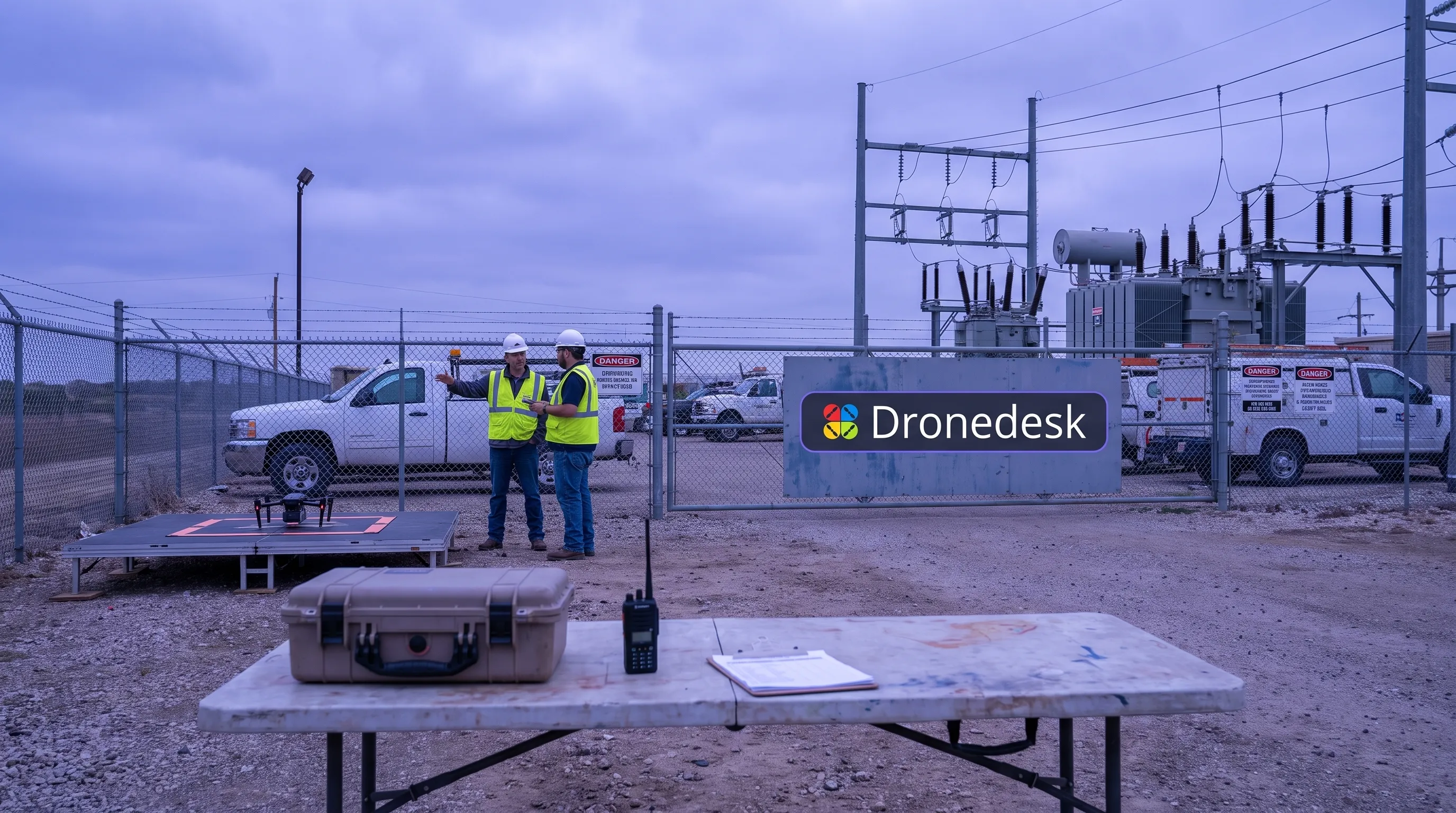
A fenced site is not necessarily an empty site. Electricians, survey assistants, security staff and delivery drivers may all enter the proposed flight area without being part of the drone operation.
Under §107.39, flights over people need an applicable legal basis. That could involve people directly participating in the operation, qualifying protection from a covered structure or stationary vehicle, an eligible operation under the rules for operations over people or appropriate FAA relief.
The distinction matters because a toolbox talk does not automatically turn every attendee into flight crew. A visual observer has an operational role. A worker who has merely been told that a drone will be nearby does not acquire that role through notification alone.
Under FAA rules and regulations for drones, employment on the project, a signed acknowledgement or a hard hat does not by itself establish permission to fly over someone.
The practical starting point is a route that avoids non-participants. If overflight is necessary, establish the relevant legal basis before scheduling the job. Check the aircraft’s eligibility and operating conditions against Part 107 Subpart D, not just its weight or marketing description.
A closed or restricted-access site can matter to certain Category 3 operations. It is not a blanket exemption from the remaining aircraft and operating requirements.
Separate worker notification from vehicle control
A notified workforce can still create an uncontrolled flight area if deliveries, forklifts or maintenance vehicles keep moving through it. Agree who can close each access route, how the closure is confirmed and what happens when someone needs to enter.
Occupied moving vehicles need particular attention. Do not assume a truck cab provides the same regulatory basis as a qualifying stationary vehicle. Operations over people inside moving vehicles have specific conditions under §107.145.
For many shared-site jobs, the simpler approach is to schedule a short flight window while affected vehicle routes are held clear. If the route reopens, the pilot pauses or changes the operation rather than relying on an earlier briefing.
FAA rules and regulations for drones distinguish between notifying people and satisfying the conditions for flying over them. A traffic-management plan supports that assessment, but does not replace it.
Check airspace separately from site permission
The person who grants access to a substation, bridge or construction compound cannot grant FAA airspace authorisation.
Controlled-airspace operations covered by §107.41 require prior ATC authorisation. LAANC can provide access to authorisations where available, while other requests follow the relevant FAA process. Neither a site booking nor an unanswered message to an airport substitutes for that authorisation.
Check the actual operating area, altitude, dates and conditions. The standard Part 107 altitude limit is 400 ft above ground level, with a specific structure provision in §107.51. An airspace authorisation can impose a lower limit. For additional planning context, consider these airport drone rules and flight-planning checks.
Applying FAA rules and regulations for drones also means checking restrictions that can change after the job is booked. Review the FAA’s airspace restrictions guidance, relevant notices and temporary flight restrictions before launch.
Emergency-response work is not an automatic exemption. Identify the actual operating authority rather than assuming the urgency of the task supplies one. On sites used by helicopters or other aircraft, establish how the drone crew will receive warnings and clear the area. The obligation to yield to other aircraft remains.
Give each shared-site control an owner
The RPIC has final authority and responsibility for the operation under §107.19. The site manager may control access, but cannot require the pilot to continue an unsafe or non-compliant flight.
Translate the plan into named responsibilities. Avoid instructions such as “security will handle it” when several contractors use different security teams.
| Control | Responsibility to agree before launch |
|---|---|
| Take-off and landing area | Who establishes the boundary, checks it and keeps it clear? |
| Worker access | Who confirms affected work areas are clear and communicates changes? |
| Vehicle movements | Who can hold deliveries and reopen the route? |
| Other drone teams | Who coordinates flight windows, operating areas and communications? |
| Stop and restart decisions | What triggers a pause, and what must be reassessed before resuming? |
Where two drone contractors are present, agree more than different launch pads. Their routes, contingency landing areas and communications may still conflict. Under §107.35, a person cannot simultaneously act as pilot or visual observer for more than one unmanned aircraft unless appropriate FAA relief applies.
Turning FAA rules and regulations for drones into a usable site procedure requires clear handovers, particularly when shifts change or a second contractor arrives mid-job. Record these controls in a job-specific drone flight risk assessment, then brief the people who must carry them out.
A useful stop condition is observable: a person enters the inspection corridor, a delivery crosses the boundary or radio contact with the access controller is lost. “Stop if it feels unsafe” is not a substitute for agreed triggers.

Example: a survey flight during an active delivery window
Consider a survey contractor mapping a shared construction site. A utility crew is working beside the survey area, trucks are using the haul road and another contractor intends to inspect a roof later that morning.
The original survey route crosses the haul road and passes above the utility crew. Landowner permission and a completed induction do not settle either issue.
Before launch
The survey RPIC checks whether the planned route has a lawful basis for any overflight of people or occupied moving vehicles. If that basis has not been established, the route or working arrangements must change.
The site manager arranges a temporary delivery hold and moves the affected crew outside the inspection corridor. The two drone teams agree separate operating windows. The survey crew confirms the relevant airspace conditions, aircraft readiness and visual line-of-sight arrangements.
During the flight
A delivery arrives early. The access controller reports it before opening the route. The RPIC uses the agreed safe response, such as holding clear or landing, and reassesses before resuming. The controller does not wave the truck through on the assumption that the pilot will notice.
Applying FAA rules and regulations for drones here means controlling a changing operation, not treating the morning briefing as permission for every later movement.
At handover
The survey crew confirms the aircraft is down and the flight area is released. The roof-inspection team conducts its own checks. It does not inherit the first contractor’s assessment simply because both flights occur on the same property.
Keep evidence of decisions and changes
A shared-worksite record should explain what the team intended to do, what conditions it relied on and what changed. A generic “site approved” tick box cannot answer those questions.
Retain the relevant airspace authorisation and conditions, aircraft eligibility evidence where applicable, the agreed operating area, briefing details and changes to access arrangements. Also keep any documents required by the applicable approval or operating category.
Part 107 includes pre-flight assessment and briefing duties under §107.49. The worksite record suggested here is a practical way to support coordination, not a claim that the FAA mandates this exact document format.
If an incident occurs, distinguish immediate site response from regulatory reporting. Under §107.9, qualifying accidents must be reported to the FAA within 10 calendar days. The reporting criteria include serious injury, loss of consciousness and qualifying damage to property other than the small unmanned aircraft. Check the rule’s precise thresholds when assessing an event.
Evidence of how FAA rules and regulations for drones were applied is more useful than a statement that everyone “followed procedure”. Record who controlled the affected area, what the pilot knew and when the operation changed. Other employer, client or emergency-reporting duties may also apply.
Frequently asked questions
Does a site manager’s permission allow a drone flight? It can establish permission to use the site, subject to the manager’s authority. It does not replace FAA requirements concerning the pilot, aircraft, airspace, people or vehicles. Treat site access and aviation permission as separate checks.
Can everyone on site become a participant by attending a briefing? No. Notification is not the same as direct participation in the drone operation. A briefing can help coordinate work, but it does not automatically make unrelated contractors flight crew or establish permission to fly over them.
Does a drone below 250 g avoid the rules on a commercial worksite? No. Low weight does not remove Part 107 requirements from an operation conducted under that framework. Category 1 operations over people have additional conditions beyond weight, and aircraft used under Part 107 require registration regardless of being below the recreational registration weight threshold.
Can a visual observer make a flight behind a building lawful? Do not assume so. The operation must satisfy §107.31 or have applicable FAA relief. A camera feed and an observer stationed somewhere on the site do not automatically establish compliance.
Must a worksite stop operating whenever a drone flies? FAA rules and regulations for drones do not create a universal requirement to close an entire worksite. The necessary controls depend on the route, people, vehicles, aircraft eligibility and operating authority. A targeted closure may work, but it must actually control the affected area.
Match your operations system to the agreed procedure
Define the site responsibilities and approval checks before choosing how to administer them. Then compare Dronedesk’s published features with the information your team needs to manage. No software should be treated as a substitute for the pilot’s assessment or the permissions required for the flight.
 FAA Rules and Regulations for Drones on Shared Worksites →
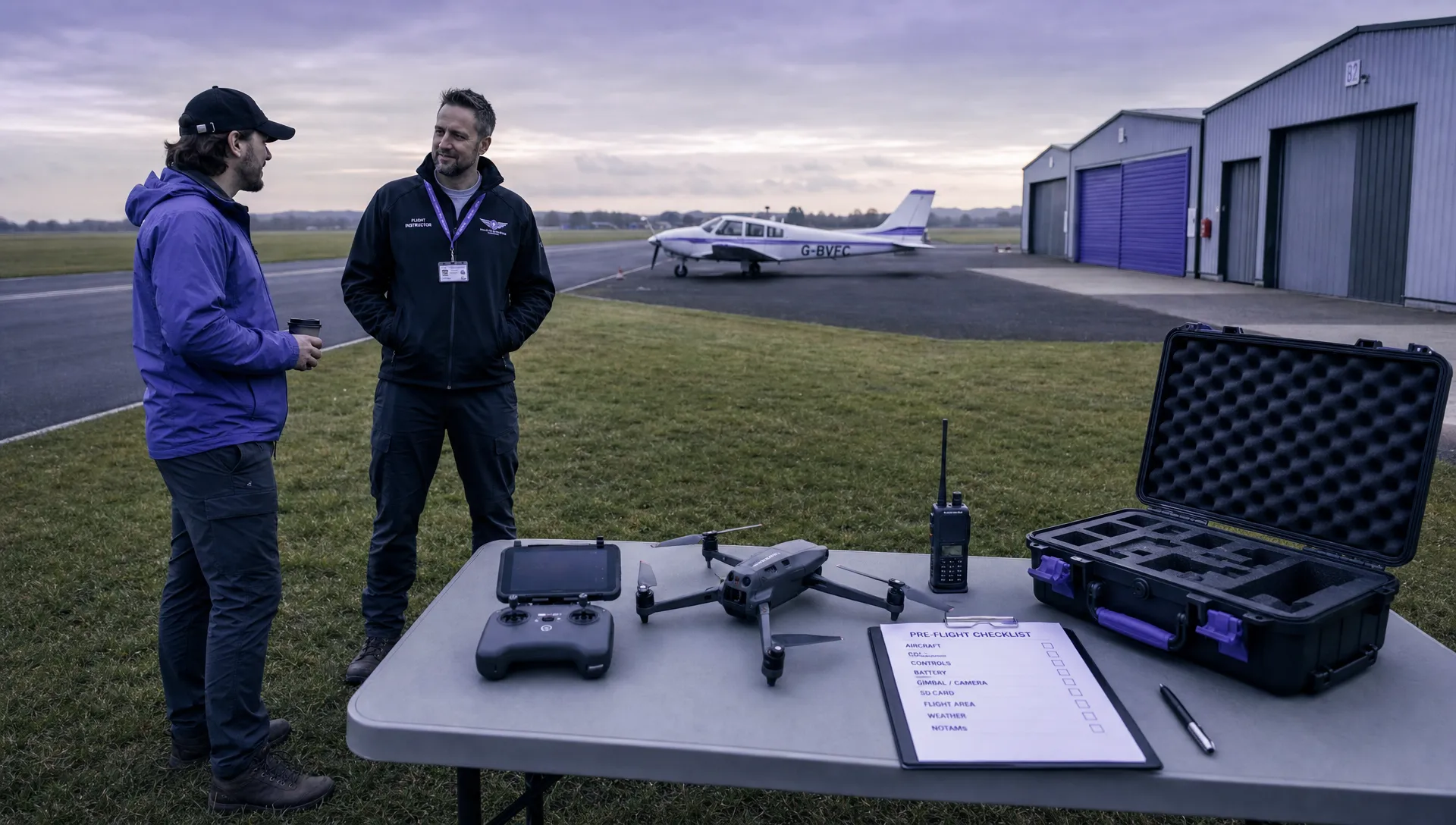 Drone Pilot 107 Refresher Training After a Career Break →
 How to Track Drone Regulations Worldwide as a Business →
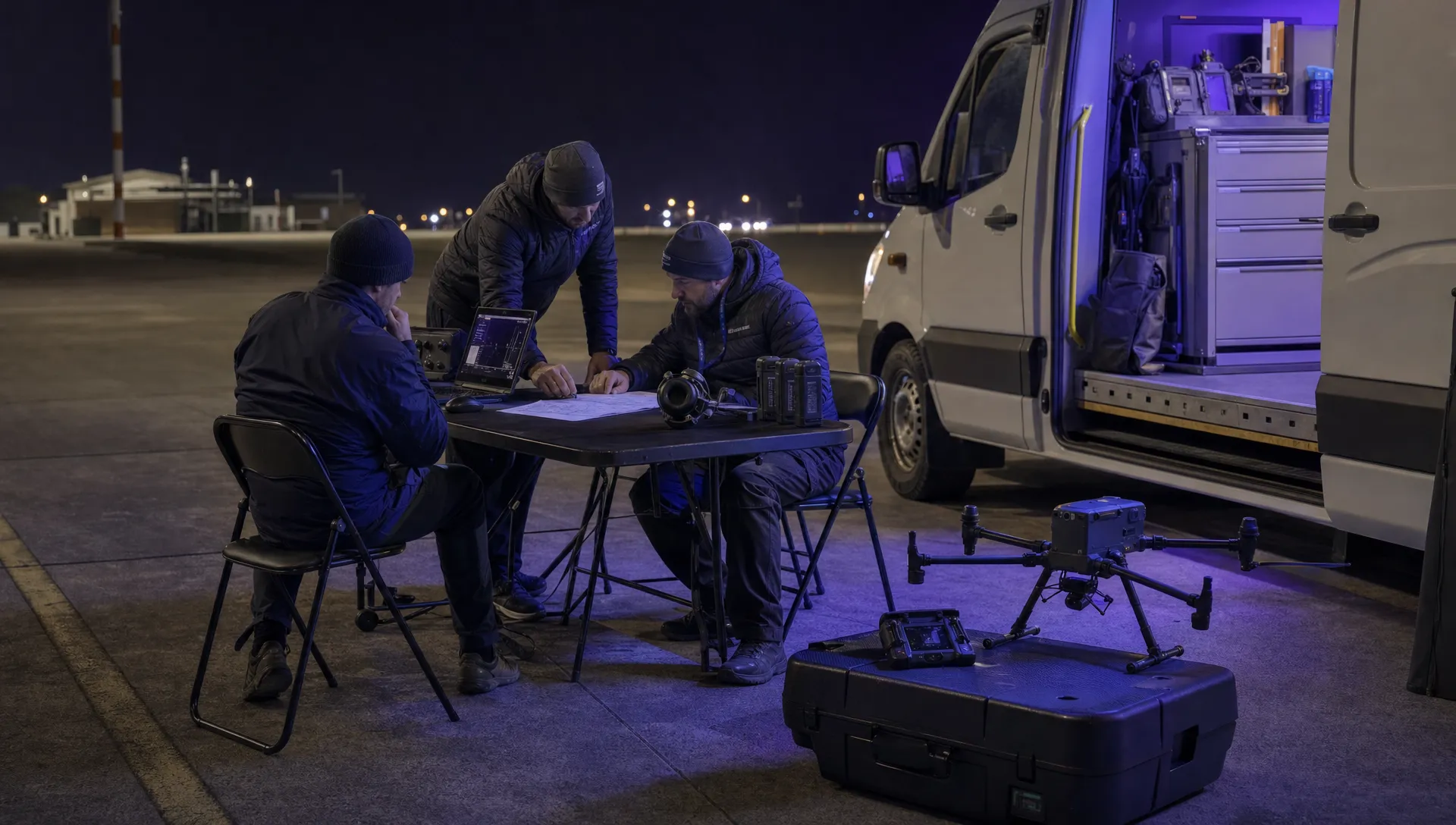 FAA Rules for Flying Drones at Night During Emergency Missions →
 How to Onboard an FAA 107 Pilot for Utility Inspections →
 FAA Drone Rules for Commercial Use on Construction Sites →
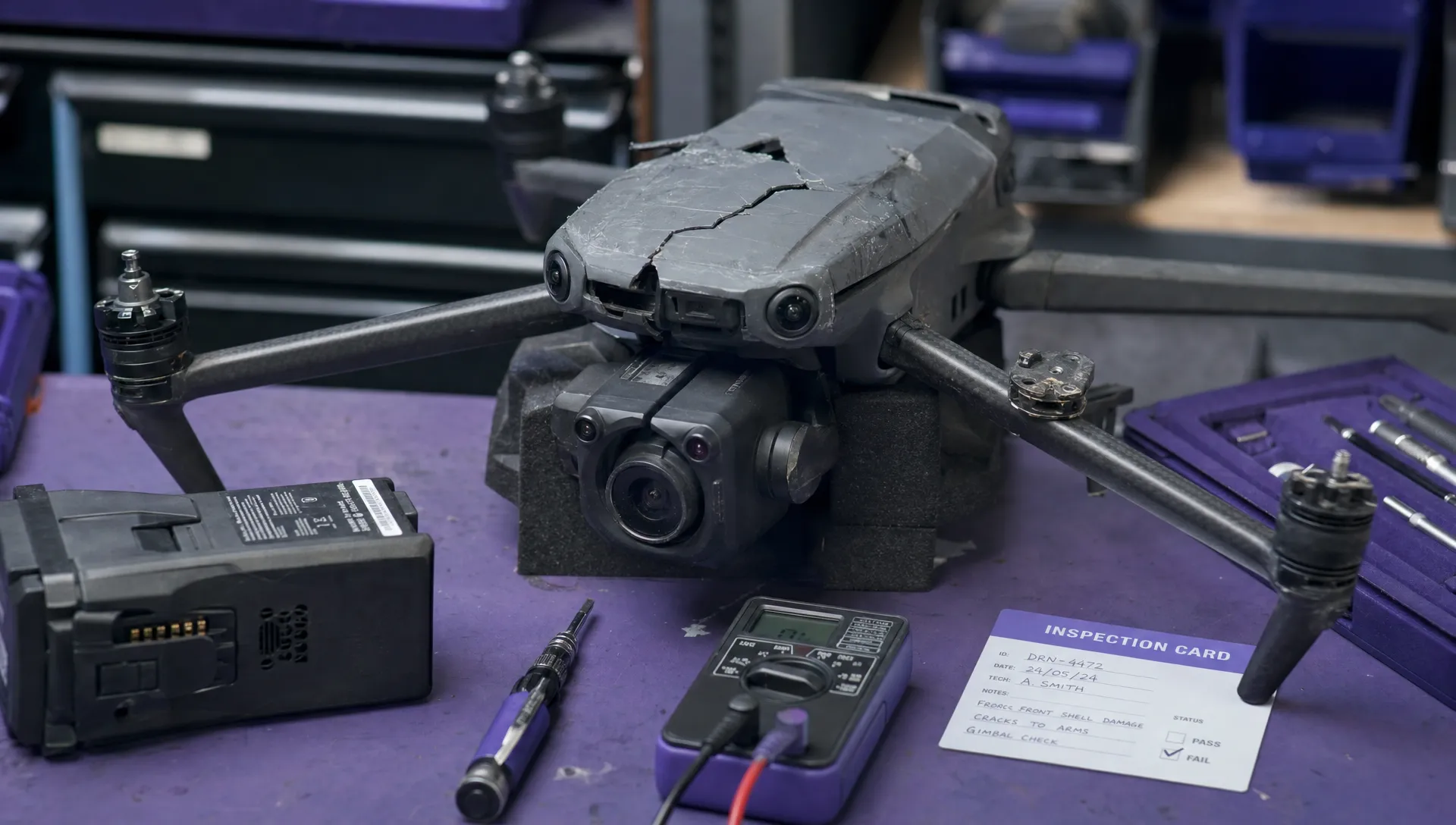 When Should You Retire a Commercial Drone? →
 Drone Fleet Management Software - The Platforms That Failed, and the Ones Still Flying →
 FAA Drone Pilot License: A Manager’s Compliance Checklist →
 Part 107 Classes: How to Choose Training That Fits Your Role →